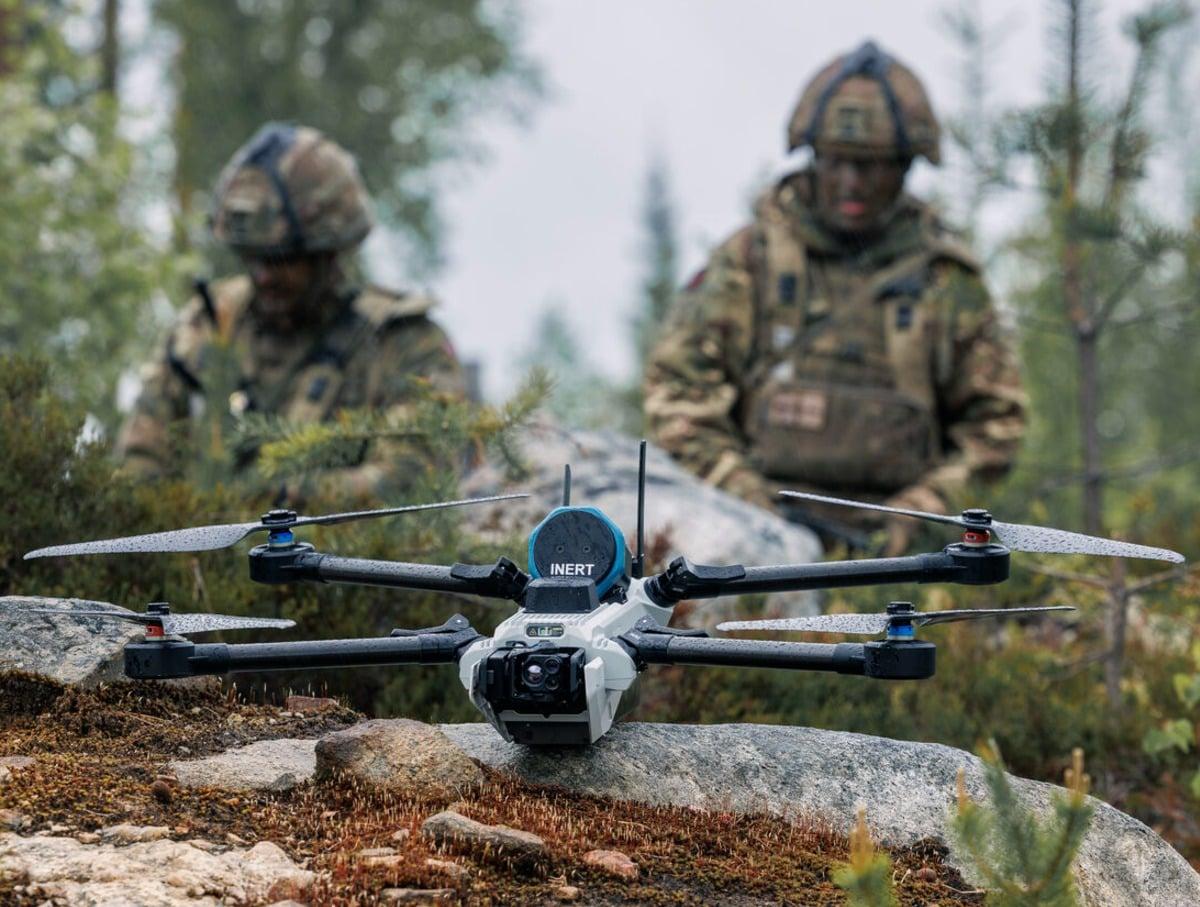
British Troops Test Killer Drones 43 Miles From Russia
Companies Mentioned
Why It Matters
The exercise signals NATO’s shift toward drone‑centric infantry tactics, boosting both lethality and soldier survivability on the alliance’s expanded eastern flank.
Key Takeaways
- •3 Rifles deployed 70 km from Russia, testing Ghost and Bolt drones.
- •Exercise involves ~4,500 NATO troops across UK, Finland, France, Hungary, USA.
- •Near Surface Infantry Battalion integrates drones, sensors, ATAK for real‑time targeting.
- •Drone‑to‑shooter loop lets soldiers engage targets without line‑of‑sight.
- •Finland’s NATO entry doubles alliance’s land frontier with Russia to 1,340 km
Pulse Analysis
The arrival of Finland in NATO reshaped the alliance’s northeastern flank, adding more than 1,300 km of shared border with Russia. Exercise Northern Star, staged 70 km from the frontier, brought together roughly 4,500 soldiers from the United Kingdom, Finland, France, Hungary and the United States. By training in the dense boreal forests and lake‑strewn terrain of eastern Finland, NATO forces are rehearsing operations that would be impossible on open plains. The drill underscores the alliance’s intent to project power close to the Kola Peninsula, where Russian strategic assets are concentrated.
At the heart of the British contribution is the 3 Rifles battalion, now organized as a Near Surface Infantry Battalion. The unit fielded Anduril’s Ghost autonomous UAV for medium‑range reconnaissance and the Bolt loitering munition for one‑way strikes. Data from Ghost is streamed to an Android Tactical Assist Kit (ATAK) worn on each soldier’s chest, creating a shared digital picture of the battlefield. When a target is identified, Bolt can be launched from a safe distance, delivering kinetic effect without exposing the operator to direct fire. This sensor‑to‑shooter pipeline compresses the kill chain to minutes.
The operational impact is twofold: lethality rises while survivability improves. Infantry squads can now engage high‑value targets that would previously require artillery or air support, freeing higher‑level assets for other missions. Moreover, the networked approach forces adversaries to contend with a constantly updating common operating picture, complicating their own decision cycles. As NATO integrates similar drone‑centric concepts across other member armies, the traditional notion of foot‑soldier combat is being rewritten, heralding a future where autonomous systems and human decision‑making operate in seamless tandem.
British troops test killer drones 43 miles from Russia
Comments
Want to join the conversation?
Loading comments...