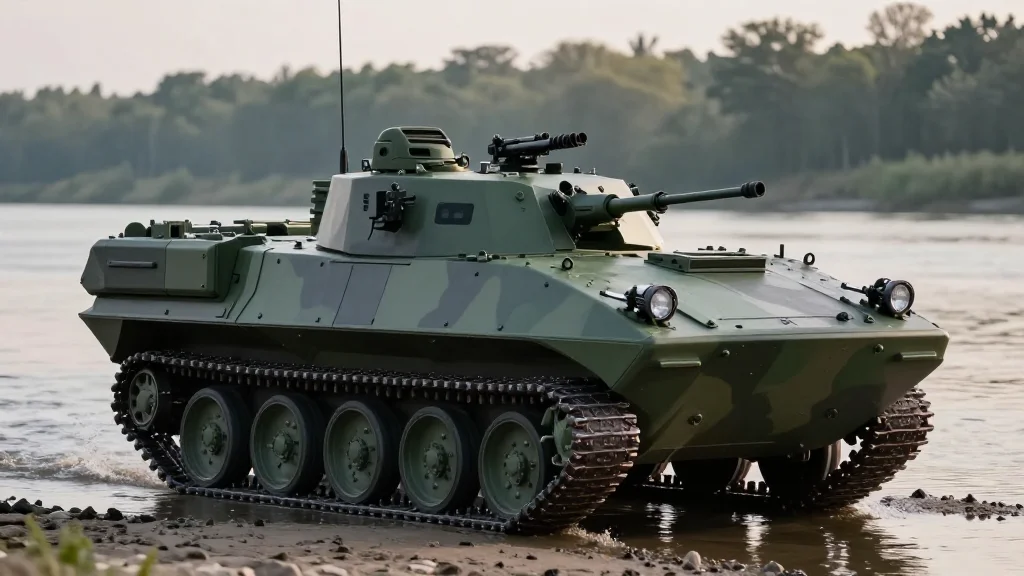
BTR-4 Bucephalus APC: Ukraine’s ‘Assault Workhorse’
Why It Matters
The Bucephalus sustains Ukraine’s frontline mobility while showcasing indigenous armor development, influencing future APC procurement worldwide.
Key Takeaways
- •BTR‑4 Bucephalus features three‑compartment layout improving crew safety
- •Remote weapon station boosts survivability and adds 30 mm cannon firepower
- •Estimated 145 of ~250 units lost, highlighting high attrition rate
- •Amphibious design with water‑jets enables 10 km/h water speed
- •Global APC market projected to grow, Ukraine sustains domestic production
Pulse Analysis
Ukraine’s BTR‑4 ‘Bucephalus’ marks a decisive step in the country’s effort to indigenize its armored fleet. First fielded in 2014, the platform has been continuously refined based on battlefield feedback against Russian forces. The latest variant replaces the dated three‑door layout of the BTR‑70/80 with a three‑compartment design that isolates the engine, improves internal passage, and enhances troop protection. By integrating a domestically produced 3TD‑series diesel engine, the APC maintains high road speed while preserving the amphibious capability that distinguishes Eastern‑block designs from many Western counterparts.
The Bucephalus upgrades its firepower with the BM‑7 Parus remote weapon station, mounting a 30 mm ZTM‑1 cannon, a 30 mm grenade launcher and a 7.62 mm machine gun, plus optional anti‑tank guided missiles. Positioning the gunner inside the hull raises survivability against direct hits, while the commander’s panoramic sight streamlines target acquisition. Armour now resists 14.5 mm rounds frontally and 12.7 mm on the sides, and modular add‑on kits allow slat or panel armor for evolving threats. Open‑source analysis suggests roughly 145 of an estimated 250 BTR‑4s have been destroyed, underscoring the vehicle’s intensive combat use.
Global demand for armored personnel carriers remains robust, with analysts projecting sustained growth as nations modernize their ground forces. Ukraine’s ability to produce the BTR‑4 domestically, alongside projects like the 155 mm Bohdana artillery system, demonstrates a strategic shift toward self‑reliance amid Western aid flows. The Bucephalus’ amphibious capability and modular armor make it attractive for export markets seeking versatile, cost‑effective solutions. As the conflict drives innovation, the platform’s evolution could influence future APC designs, reinforcing the importance of adaptable, locally sourced combat vehicles in a rapidly changing security environment.
BTR-4 Bucephalus APC: Ukraine’s ‘assault workhorse’
Comments
Want to join the conversation?
Loading comments...