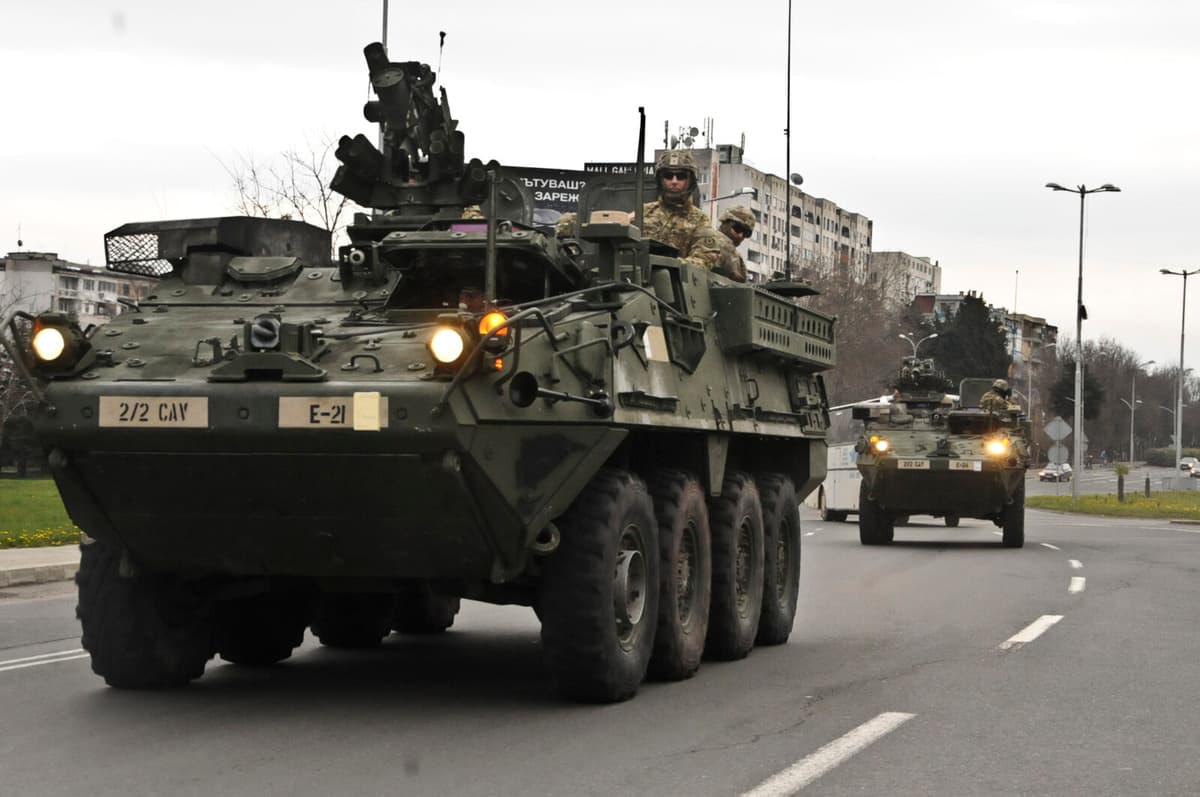
Why It Matters
The Stryker influx upgrades Bulgaria’s mechanized capabilities, boosting NATO interoperability and deterring regional threats. It also stimulates the national defence sector through local assembly contracts.
Key Takeaways
- •Five Strykers arrive in Burgas for 61st Brigade
- •Additional eight Strykers provided free for training
- •Final assembly will occur at TEREM‑Ivaylo facility
- •Modernisation aligns Bulgaria with NATO interoperability standards
- •Program complements ongoing F‑16 fighter acquisition
Pulse Analysis
The Stryker family, an eight‑wheeled, modular combat platform, offers rapid deployment, protected mobility and a range of mission modules from infantry transport to fire‑support. Bulgaria’s choice reflects a strategic pivot from legacy Soviet‑era hardware toward a vehicle that can seamlessly integrate with NATO’s digitised battlefield networks. By pairing the Stryker rollout with its F‑16 fighter program, Sofia is constructing a balanced, joint‑force capability that enhances both land and air power while signaling commitment to Western defence standards.
Operationally, the five newly delivered Strykers will augment the 61st Mechanized Brigade, a unit that regularly participates in NATO’s Eastern Flank exercises. The additional eight training vehicles allow crews to develop proficiency ahead of full‑fleet integration, shortening the learning curve and ensuring readiness for high‑intensity scenarios. This capability boost improves Bulgaria’s contribution to collective defence, deters potential aggression in the Black Sea region, and strengthens interoperability with allied mechanised formations that already field Stryker or comparable platforms.
Beyond the battlefield, the procurement embeds a domestic industrial component by mandating final assembly at the TEREM‑Ivaylo facility. This arrangement nurtures local expertise, creates skilled jobs and lays groundwork for future upgrades or co‑production of allied systems. As Bulgaria continues to align its defence posture with NATO, the Stryker programme serves as a template for leveraging foreign technology while cultivating an indigenous defence industrial base, positioning the country for deeper strategic partnerships and sustained capability growth.
Bulgaria receives first Stryker armored vehicles
0
Comments
Want to join the conversation?
Loading comments...