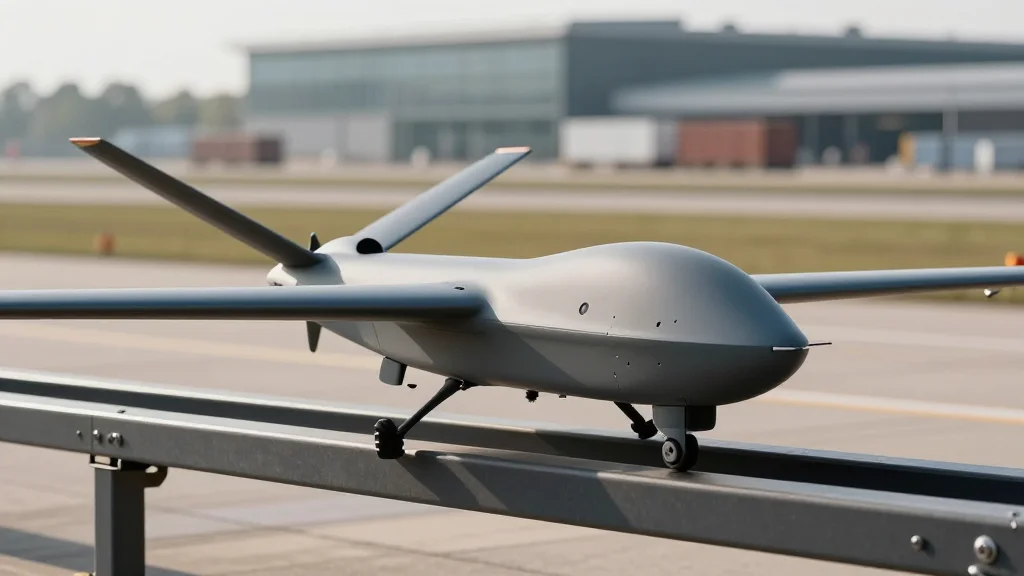
Bundeswehr Launches Loitering Munition Spending Spree with $2.16 Billion Unassigned
Companies Mentioned

Why It Matters
The procurement accelerates Germany’s push to modernize its short‑range strike capability, bolstering domestic defense firms and reshaping Europe’s loitering‑munition market.
Key Takeaways
- •Rheinmetall secures €300 million (US$344 M) FV‑014 drone contract.
- •Framework totals €2.4 billion (~US$2.75 billion) for loitering munitions.
- •Deliveries start H1 2027; qualifications begin Q2 2026.
- •Unassigned funds could be allocated to HX‑2 and Virtus systems.
Pulse Analysis
Germany’s latest defence push reflects a broader European trend toward autonomous, low‑cost strike platforms. Loitering munitions—sometimes called “suicide drones”—offer commanders rapid, precision engagement without the logistical footprint of traditional artillery. By earmarking roughly US$2.75 billion, the Bundeswehr signals a strategic shift from legacy munitions to networked, AI‑enabled systems that can operate in contested airspaces while reducing collateral damage. This investment also aligns with NATO’s emphasis on “future combat air‑defence” concepts, where small, proliferated drones complement larger fighter fleets.
Rheinmetall’s FV‑014 contract, valued at US$344 million, marks the first concrete award under the new framework after earlier scheduling setbacks. The drone combines high‑resolution ISR sensors with a precision‑guided warhead, enabling both reconnaissance and strike missions from a single platform. Qualification slated for mid‑2026 and deliveries beginning in early 2027 give the company a runway to refine software and integrate German‑made subsystems. Meanwhile, competing offers from Helsing’s HX‑2 and Stark Defence’s Virtus illustrate a diversifying supplier base, suggesting the Bundeswehr will spread risk and foster competition among domestic innovators.
The unassigned portion of the budget creates a strategic sandbox for the German armed forces. Decision‑makers can channel remaining funds toward emerging technologies such as swarming algorithms, electronic‑warfare payloads, or hybrid man‑machine teams. For the European defence industry, the programme offers a lucrative export springboard, as allied nations watch Germany’s procurement choices closely. Ultimately, the loitering‑munition spend not only upgrades Germany’s tactical capabilities but also cements its role as a catalyst for next‑generation autonomous weapons across the continent.
Bundeswehr launches loitering munition spending spree with $2.16 billion unassigned
Comments
Want to join the conversation?
Loading comments...