Can America Make the Chip that Rules the World?
Companies Mentioned
Why It Matters
Domestic chip production secures supply chains and bolsters U.S. competitiveness in the China‑U.S. technology rivalry. Intel’s ability to design and manufacture in one country positions America to regain leadership in high‑performance computing.
Key Takeaways
- •Intel is the sole U.S. firm designing and fabricating advanced chips domestically
- •Oregon cleanroom operates at sub‑10‑nanometer precision for AI and data‑center workloads
- •New packaging line integrates 2.5‑D and 3‑D stacking for higher performance
- •U.S. policy ties Intel’s expansion to national security and supply‑chain resilience
Pulse Analysis
The United States is accelerating its push for semiconductor sovereignty after years of offshoring critical chip production. Recent legislation, including the CHIPS Act, earmarks billions of dollars to incentivize domestic fabs, and Intel has emerged as the flagship beneficiary. By consolidating design, wafer fabrication, and advanced packaging under one roof, Intel can shorten development cycles, protect intellectual property, and respond more quickly to government directives. This integrated model contrasts sharply with the fragmented supply chains of Asian rivals, where design houses and foundries operate independently.
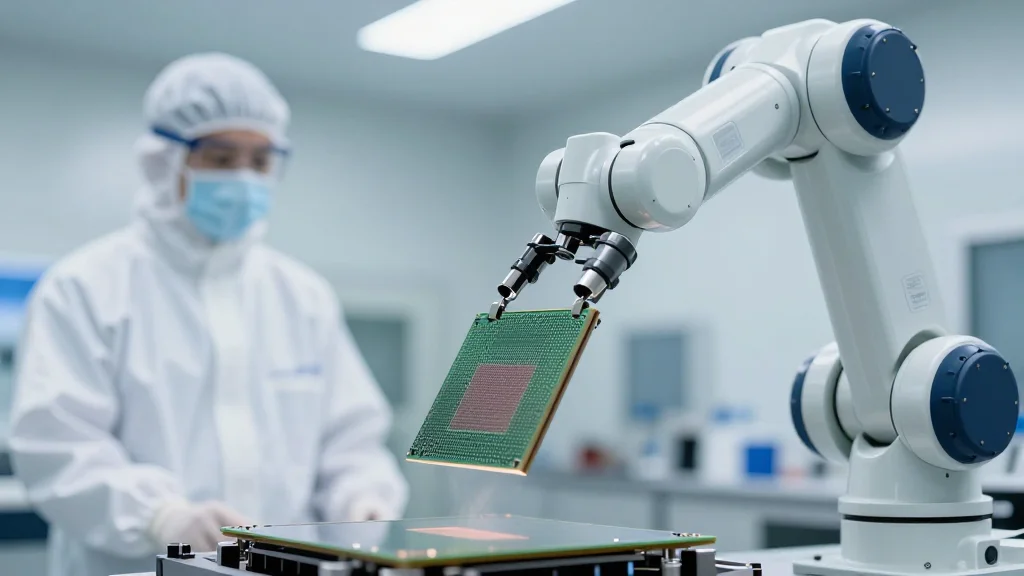
Intel’s Oregon campus showcases the depth of its investment. The cleanroom, equipped with EUV lithography tools, is capable of producing 5‑nanometer and future 3‑nanometer chips that power AI accelerators and cloud servers. Adjacent R&D labs focus on next‑generation materials such as silicon‑carbon alloys and novel transistor architectures, while the newly unveiled packaging facility employs 2.5‑D interposers and 3‑D chip‑on‑wafer stacking to boost bandwidth and energy efficiency. These capabilities, previously confined to Asian megafabs, signal a strategic shift toward home‑grown high‑performance silicon.
The broader implications extend beyond technology. As U.S.-China relations strain, reliance on foreign fabs poses a geopolitical risk; any export controls or supply disruptions could cripple critical sectors from defense to finance. Intel’s domestic expansion thus serves as a hedge against such shocks, aligning corporate growth with national security objectives. Moreover, the move is expected to stimulate a regional ecosystem of suppliers, talent pipelines, and research partnerships, potentially revitalizing the American manufacturing landscape and reasserting the U.S. as a leader in the global chip hierarchy.
Can America make the chip that rules the world?
Comments
Want to join the conversation?
Loading comments...