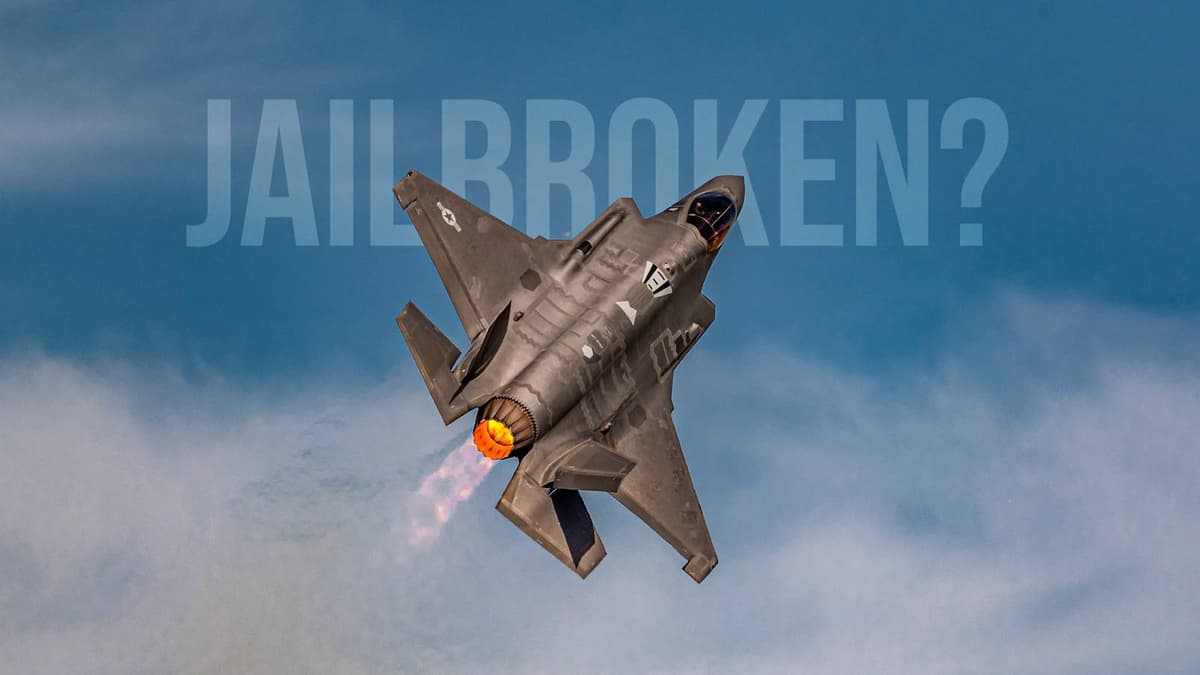
Can The F-35’s Software Really Be Jailbroken?
•February 28, 2026
0
Companies Mentioned

Why It Matters
Control over software updates determines combat readiness and strategic independence for partner air forces, making any perceived backdoor a diplomatic flashpoint. The issue could force allies to reconsider costly participation, jeopardizing the F‑35’s interoperability advantage against near‑peer threats.
Key Takeaways
- •US controls F‑35 software updates via Eglin base
- •Netherlands claims possible jailbreak, lacks technical details
- •Israel uniquely authorized to modify F‑35 software
- •Partner nations fear lockout, risking interoperability loss
- •Program projected over $2 trillion, straining allies' budgets
Pulse Analysis
The Lockheed Martin F‑35 Lightning II remains the centerpiece of NATO airpower, but its software architecture is tightly governed by the United States. All mission‑critical firmware, including threat‑recognition algorithms and stealth management, is signed and distributed from the Eglin Air Force Base in Florida. Partner nations receive these updates through secure links, but they cannot independently certify or alter the code. This centralized model guarantees uniform performance but also creates a dependency that many allies view as a strategic vulnerability, especially as the fleet expands worldwide.
The notion of “jailbreaking” an F‑35, popularized by a Dutch minister’s viral remarks, conflates consumer‑device hacking with military‑grade cybersecurity. Achieving root access would require bypassing cryptographic signatures and the Air Force’s authentication servers—a task that, while theoretically possible, would trigger extensive counter‑measures and likely render the aircraft inoperable. Israel’s F‑35I “Adir” is the sole example of a partner granted legal rights to integrate indigenous software, a privilege earned through a unique security‑cooperative agreement. This precedent underscores how tightly the U.S. guards the platform’s code base.
Beyond the technical debate, the software control issue carries significant strategic and fiscal weight. With the program’s total lifecycle cost projected to exceed $2 trillion, partner nations already pay a premium for airframes, training, and sustainment. Any perception that the United States can unilaterally disable or limit capabilities threatens alliance cohesion and could prompt withdrawals, eroding the economies of scale that keep unit costs manageable. Maintaining trusted, mutually accessible software pathways is therefore essential to preserve the F‑35’s interoperability advantage against peer competitors such as China and Russia.
Can The F-35’s Software Really Be Jailbroken?
0
Comments
Want to join the conversation?
Loading comments...