Companies Mentioned
Why It Matters
The M1’s NATO compliance and modularity lower acquisition and sustainment costs for allies, accelerating capability upgrades across the alliance. It also demonstrates how cross‑border industrial collaboration can deliver platforms that individual nations could not develop alone.
Key Takeaways
- •INKAS M1 MRAP merges French mobility with Canadian engineering
- •NATO STANAG compliance eases sales to all alliance members
- •Modular design supports transport, command, medevac, reconnaissance roles
- •Single platform reduces logistics, training, and maintenance costs
- •Partnership showcases integrator model for nations lacking full‑scale development
Pulse Analysis
The mine‑resistant ambush‑protected (MRAP) vehicle has moved from a stop‑gap solution in Iraq and Afghanistan to a permanent fixture of NATO ground forces. Modern MRAPs meet STANAG 4569 ballistic and blast criteria, ensuring 360‑degree protection against IEDs and mines. The V‑shaped hull, now a design staple, deflects blast energy away from occupants, while advances in suspension and power‑train technology preserve mobility in rugged terrain. As allied armies modernise, compliance with these standards has become a prerequisite for any new armored platform.
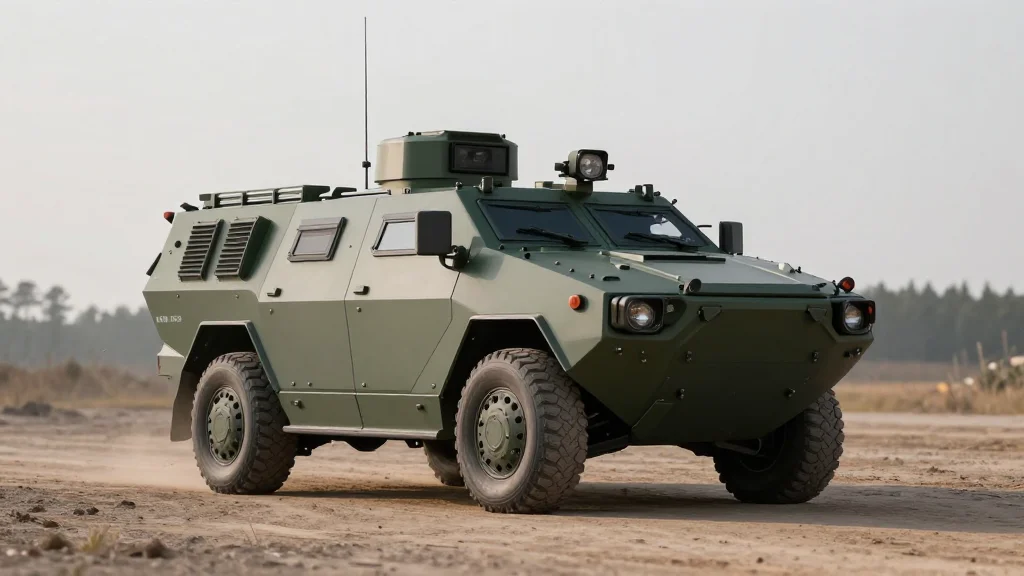
INKAS’s M1 exemplifies how Canada and France are leveraging complementary strengths to meet that prerequisite. French KNDS Mobility supplies a proven mobility architecture honed by Europe’s largest land‑defence group, while INKAS contributes decades of Canadian armored‑vehicle engineering and systems‑integration expertise. The joint effort positions the M1 as a true systems‑integrator product, stitching together off‑the‑shelf components into a cohesive, NATO‑aligned vehicle. This collaborative model allows both nations to punch above the weight of their individual defense budgets, delivering a platform that neither could have fielded alone.
The M1’s modular kit—troop carrier, command‑and‑control, medevac, reconnaissance—offers a single chassis for multiple missions, slashing logistics footprints and training cycles. For smaller NATO members, the cost‑efficiency of a common platform can accelerate capability upgrades without the expense of maintaining several specialized fleets. Moreover, NATO‑wide parts commonality and shared maintenance doctrine streamline joint operations, reinforcing alliance readiness. With STANAG compliance baked in, the M1 is poised to compete for contracts across Europe and North America, signaling a shift toward interoperable, integrator‑driven procurement in the armored‑vehicle market.
Canada and France team up to build new NATO-aligned MRAP
Comments
Want to join the conversation?
Loading comments...