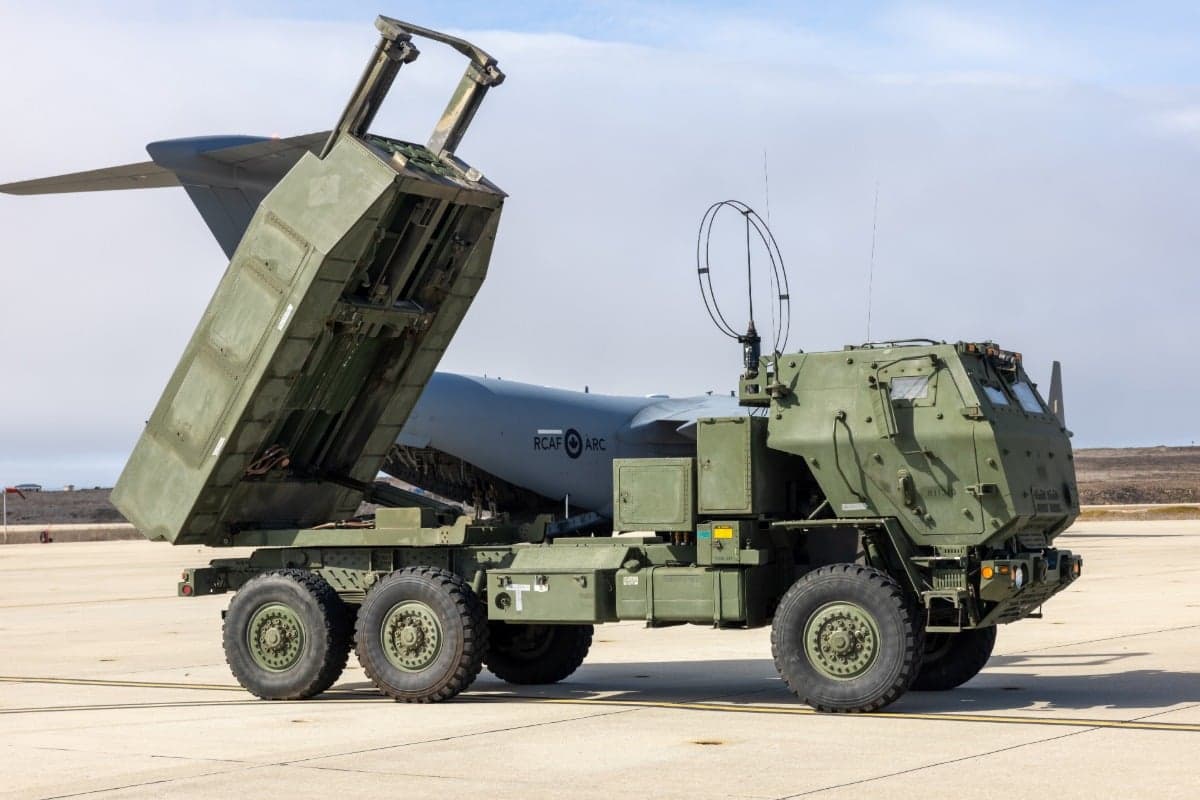
Canada Orders 26 HIMARS Launchers for $1.9 Billion
Companies Mentioned
Why It Matters
The acquisition gives Canada a strategic, long‑range strike tool that bolsters Arctic sovereignty and NATO interoperability, while supporting domestic defence industry growth.
Key Takeaways
- •Canada buys 26 HIMARS launchers for $1.9 billion USD
- •System reaches >300 km, enabling Arctic anti‑ship strike potential
- •First long‑range precision‑strike capability for Canadian Army
- •Delivery slated for 2029, requiring new training and infrastructure
- •Deal includes Canadian industrial offsets for domestic suppliers
Pulse Analysis
The HIMARS purchase marks a significant deepening of the United States‑Canada defence partnership, building on decades of joint procurement and interoperability. By securing a complete system package—launchers, munitions, spare parts, training and lifecycle support—Canada avoids the piecemeal approach that can delay fielding new capabilities. The $1.9 billion USD price tag reflects a full‑program cost model, aligning with Canada’s transparent procurement standards and ensuring that the budget covers everything from infrastructure upgrades to contingency funds.
Strategically, the long‑range precision strike offered by HIMARS reshapes Canada’s Arctic posture. With a reach exceeding 300 km, a battery positioned in the north could threaten shipping lanes and potential adversary installations along the Arctic coastline, a region where Canada has historically lacked robust firepower. The system’s mobility—air‑transportable by C‑130s and capable of rapid shoot‑and‑scoot tactics—also enhances NATO’s collective deterrence, echoing the weapon’s proven impact in Ukraine where it crippled Russian logistics and command nodes. This capability aligns with Canada’s stated goal of deterring aggression and protecting sovereignty in a rapidly evolving security environment.
Beyond the battlefield, the contract’s Industrial and Technological Benefits clause injects capital into Canadian aerospace and defence firms, fostering a domestic supply chain that can support future upgrades such as the Precision Strike Missile or land‑based anti‑ship variants. While the first launchers won’t arrive until 2029, the procurement timeline allows for the development of training pipelines, maintenance facilities and doctrinal frameworks, ensuring that when the systems are fielded they will be fully integrated into Canada’s joint force architecture. This holistic approach positions Canada to both contribute to allied operations and defend its expansive northern territories.
Canada orders 26 HIMARS launchers for $1.9 billion
Comments
Want to join the conversation?
Loading comments...