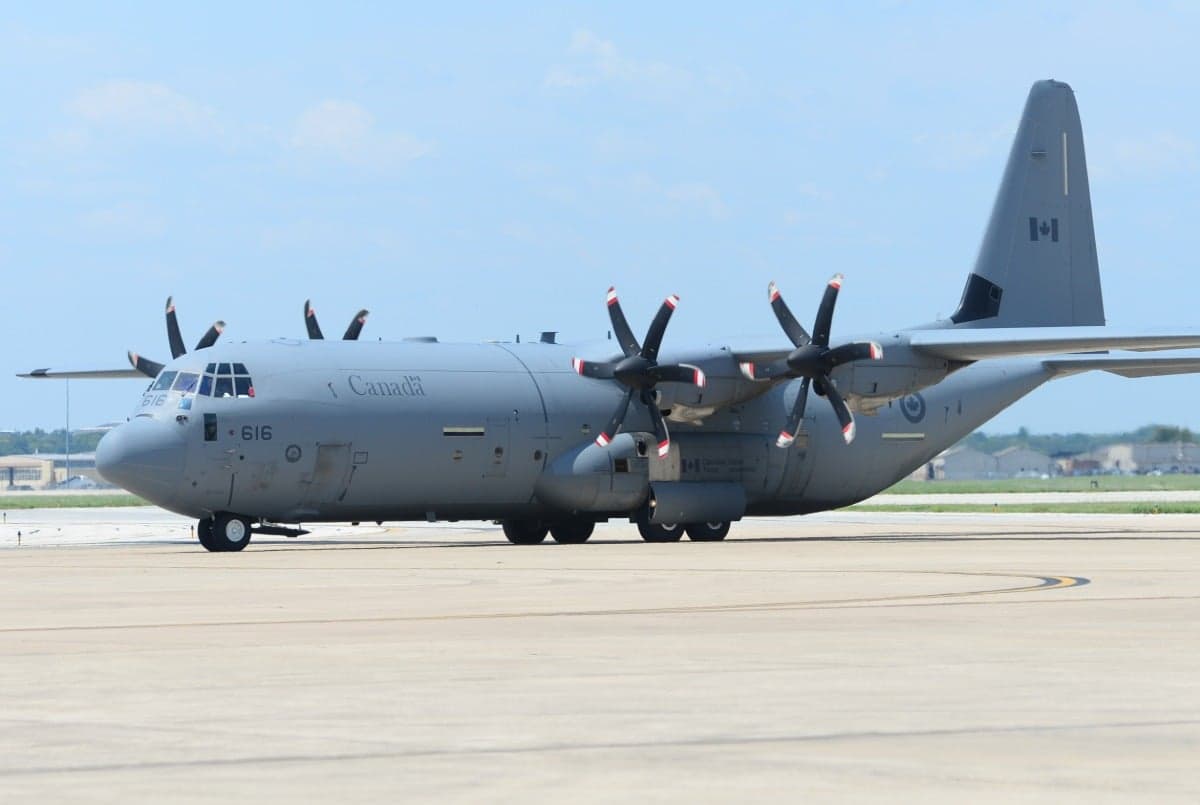
Canada Spends $1.15B to Upgrade Hercules Fleet
Why It Matters
The investment guarantees mission‑ready airlift capacity for Canada’s defence and humanitarian operations while signaling a concrete commitment to NATO’s defence‑spending expectations.
Key Takeaways
- •Canada allocates $1.15 B to extend and modernize CC‑130J fleet
- •$462 M contract extends maintenance support through June 2029
- •$684 M RCAF 105 upgrade modernizes avionics across 17 aircraft
- •Upgrades sustain 1,145 aerospace jobs and add $155 M GDP annually
- •Investment signals Canada’s commitment to NATO defense spending goals
Pulse Analysis
The Royal Canadian Air Force’s 17 CC‑130J Hercules aircraft form the backbone of Canada’s strategic airlift, moving troops, equipment and humanitarian aid across vast distances. First delivered under a $1.44 billion 2007 contract, the fleet’s advanced turboprop engines, glass cockpit and digital avionics have proven essential for Arctic resupply, disaster response, and NATO deployments. As airspace navigation and communication standards evolve, keeping the fleet technologically current is critical to maintaining interoperability with allied forces and ensuring unrestricted access to both civilian and military air corridors.
The two May 15 amendments address both sustainment and modernization. A $462 million extension secures spare parts, technical expertise and ongoing depot-level maintenance through mid‑2029, directly supporting an estimated $85 million of annual GDP and 620 aerospace jobs. The $684 million RCAF 105 upgrade package replaces legacy avionics with next‑generation flight‑management, navigation and communication systems, enabling compliance with upcoming air‑traffic requirements. Canadian firms such as Cascade Aerospace and Standard Aero will perform the installations, creating roughly 525 additional jobs and contributing another $70 million to GDP each year. In total, the contracts are projected to generate about $155 million of annual economic activity.
Beyond the immediate operational benefits, the spending underscores Canada’s resolve to meet its NATO obligations after years of falling short of the 2 percent GDP target. By coupling capability enhancements with tangible industrial benefits, the government delivers a dual message: reinforcing national security while supporting domestic high‑skill employment. The move positions Canada to continue participating in joint air‑lift missions, strengthens its bargaining power in future defence procurements, and signals to allies that it remains a reliable partner in collective security initiatives.
Canada spends $1.15B to upgrade Hercules fleet
Comments
Want to join the conversation?
Loading comments...