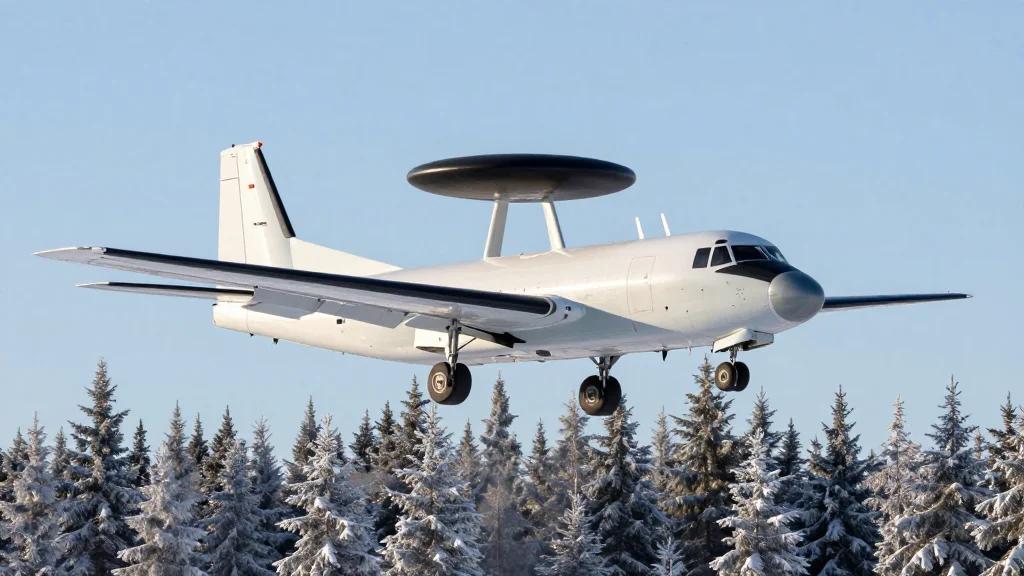
Canada Weighs Swedish GlobalEye vs US Radar Jets in $5 B AEW&C Hunt

Companies Mentioned
Why It Matters
The AEW&C acquisition is a cornerstone of Canada’s effort to modernise its air‑defence posture against emerging high‑speed missile threats. By selecting a platform that can seamlessly integrate with the F‑35 and NATO networks, Canada will enhance its situational awareness across the Arctic corridor, a region of increasing strategic competition. Moreover, the procurement will either cement Canada’s reliance on U.S. defence suppliers or diversify its industrial base toward European partners, influencing future procurement decisions and alliance dynamics. A successful programme could also stimulate the Canadian aerospace supply chain, with integration work slated for facilities in Mirabel and Bombardier’s Toronto plant. The resulting industrial activity may generate skilled jobs and foster domestic expertise in advanced radar and sensor technologies, strengthening Canada’s long‑term defence self‑reliance.
Key Takeaways
- •Canada plans to buy six AEW&C aircraft for over $5 billion CAD (≈$3.7 billion USD).
- •Three contenders: Saab GlobalEye, L3Harris Aeris X, Boeing E‑7 Wedgetail.
- •Both GlobalEye and Aeris X would be built on Bombardier Global 6500 jets made in Toronto, ensuring high Canadian content.
- •Decision reflects a political choice between deeper U.S. integration or broader Euro‑North‑American ties.
- •Selected platform must interoperate with Canada’s F‑35 fleet and NATO air‑defence networks.
Pulse Analysis
Canada’s AEW&C tender arrives at a pivotal moment for Arctic security. The region’s melting ice has opened new maritime routes, inviting heightened activity from Russia and China. An advanced radar platform capable of early detection of hypersonic threats is therefore not just a capability upgrade but a strategic necessity. Historically, Canada has leaned heavily on U.S. systems, but the inclusion of Saab’s GlobalEye signals a willingness to diversify, a trend mirrored in recent debates over the Gripen versus F‑35.
From a market perspective, the competition could reshape the North American aerospace supply chain. L3Harris’s promise to integrate the Aeris X in Mirabel could lock in a domestic jobs pipeline, while Boeing’s willingness to perform Canadian‑based integration may be a concession to win political favour. Saab, meanwhile, leverages its existing relationship with Bombardier, positioning the GlobalEye as a high‑content, low‑logistics option. The final award will likely hinge on a blend of lifecycle cost, interoperability with the F‑35’s data‑link architecture, and the ability to meet the 2025‑2026 delivery schedule.
Looking ahead, the chosen system will set a precedent for future procurement cycles, especially as Canada eyes additional fifth‑generation platforms and missile‑defence upgrades. A decision that favours European hardware could open doors for further collaborations on drones, electronic warfare and cyber‑defence, gradually reducing Canada’s dependence on a single ally. Conversely, a U.S. win would reinforce the existing North‑American defence industrial base, ensuring seamless logistics but potentially limiting diversification. The stakes extend beyond radar performance; they touch on sovereignty, industrial policy and the geopolitical balance of the continent.
Canada weighs Swedish GlobalEye vs US radar jets in $5 B AEW&C hunt
Comments
Want to join the conversation?
Loading comments...