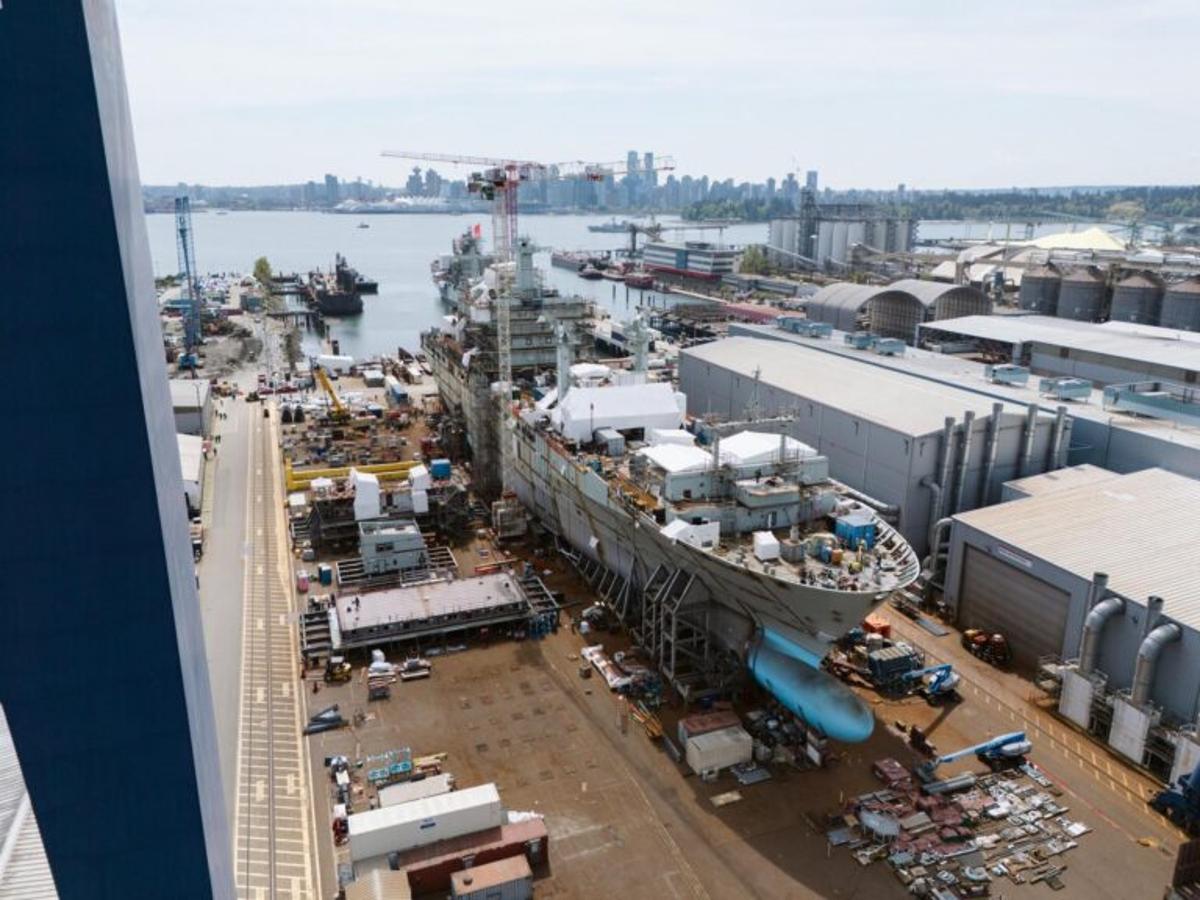
Canadian Navy’s Second Joint Support Ship Reaches Structural Milestone
Companies Mentioned
Why It Matters
The completion accelerates the Royal Canadian Navy’s ability to sustain long‑range deployments and support NATO operations, while reinforcing Canada’s domestic shipbuilding capacity under the National Shipbuilding Strategy.
Key Takeaways
- •Kingposts (30‑ton each) installed, completing structural consolidation.
- •RAS capability enables at‑sea refueling for Canadian and NATO fleets.
- •Launch targeted for end‑2026 after switchboard, shaft, hull work.
- •JSS2 will replace aging Protecteur‑class oilers, expanding support roles.
- •Construction under National Shipbuilding Strategy supports domestic shipbuilding jobs.
Pulse Analysis
The Royal Canadian Navy’s joint support ship (JSS) program was launched to address a critical gap left by the retirement of the Protecteur‑class auxiliary oilers. HM CS Preserver, the second vessel in the class, is designed to provide underway replenishment, medical services, helicopter support, and humanitarian assistance, effectively extending the operational endurance of Canadian and allied fleets. Built by Seaspan at the Vancouver Shipyards, the JSS program is a flagship component of Canada’s National Shipbuilding Strategy, which aims to revitalize the national industrial base and secure sovereign shipbuilding capability.
The recent installation of the 30‑ton RAS kingposts marks the ship’s structural consolidation—a milestone that signals the completion of all major hull welding and the integration of key superstructure elements. These kingposts are essential for the vessel’s replenishment‑at‑sea function, allowing fuel, ammunition, and supplies to be transferred while underway, a capability that enhances the navy’s self‑sufficiency and NATO interoperability. The use of Seaspan’s 300‑ton gantry crane underscores the technical complexity of the project and the shipyard’s capacity to handle heavyweight maritime components.
With structural work finished, the focus now shifts to activating the switchboard, installing exterior shafts, and applying underwater hull paint, all slated for completion before the anticipated launch at the close of 2026. Once commissioned, HM CS Preserver will enable Canadian warships to remain on station longer, support joint operations across the Atlantic and Pacific, and contribute to humanitarian missions. The timely delivery also validates the National Shipbuilding Strategy’s schedule, bolsters domestic employment in high‑skill trades, and positions Canada as a more autonomous maritime power within the NATO alliance.
Canadian Navy’s second joint support ship reaches structural milestone
Comments
Want to join the conversation?
Loading comments...