Defense News and Headlines
  • All Technology
  • AI
  • Autonomy
  • B2B Growth
  • Big Data
  • BioTech
  • ClimateTech
  • Consumer Tech
  • Crypto
  • Cybersecurity
  • DevOps
  • Digital Marketing
  • Ecommerce
  • EdTech
  • Enterprise
  • FinTech
  • GovTech
  • Hardware
  • HealthTech
  • HRTech
  • LegalTech
  • Nanotech
  • PropTech
  • Quantum
  • Robotics
  • SaaS
  • SpaceTech
AllNewsDealsSocialBlogsVideosPodcastsDigests

Defense Pulse

EMAIL DIGESTS

Daily

Every morning

Weekly

Sunday recap

NewsDealsSocialBlogsVideosPodcasts
DefenseNewsCase of Rocket Debris in Poland Under Scrutiny Once Again
Case of Rocket Debris in Poland Under Scrutiny Once Again
DefenseSpaceTechAerospace

Case of Rocket Debris in Poland Under Scrutiny Once Again

•February 2, 2026
0
Defence24 (Poland)
Defence24 (Poland)•Feb 2, 2026

Companies Mentioned

European Space Agency

European Space Agency

SpaceX

SpaceX

Why It Matters

The ESA investigation will sharpen Europe’s ability to assess uncontrolled re‑entries, reducing liability and safety risks for both satellite operators and ground jurisdictions.

Key Takeaways

  • •ESA launches €200‑500k debris investigation tender
  • •Falcon 9 fragment landed in Poland, no health risk
  • •Polish Space Agency faced criticism over outdated communications
  • •Prosecutor dropped charges, citing no criminal evidence
  • •Incident spurs EU focus on re‑entry risk modeling

Pulse Analysis

The uncontrolled descent of a Falcon 9 stage over Poland in early 2025 highlighted the growing challenge of managing space debris in densely populated regions. While the recovered fragment showed no radioactive contamination and posed no immediate danger to the public, the event underscored gaps in real‑time tracking and cross‑agency alerts. As low‑Earth‑orbit traffic intensifies, regulators are scrambling to ensure that de‑orbit predictions are reliable enough to prevent surprise landings on sovereign territory.

In response, the European Space Agency announced a competitive tender worth between €200,000 and €500,000 to conduct a transparent, non‑classified analysis of the breakup. The selected contractor will reconstruct the aerothermodynamic breakup, map impact coordinates, and reconcile orbital telemetry with ground‑based observations. By publishing the methodology and findings, ESA aims to create a reusable framework for future incidents, supporting the European Commission’s broader agenda on space sustainability and liability mitigation for commercial launch providers.

The fallout in Poland also triggered political repercussions. The Polish Space Agency’s delayed communication—sent to an obsolete email address—prompted criticism from the Ministry of National Defence and led to the removal of its president, Grzegorz Wrochna. This episode serves as a cautionary tale for national space authorities: robust, up‑to‑date liaison channels are essential when dealing with high‑risk re‑entries. As the industry moves toward larger constellations and more frequent launches, the incident will likely influence EU policy discussions on mandatory debris‑risk reporting and coordinated emergency response mechanisms.

Case of rocket debris in Poland under scrutiny once again

Wojciech Kaczanowski · 2 February 2026, 09:17

European Space Agency has announced a tender for an investigation into the incident involving debris from a Falcon 9 rocket that fell on Polish territory.

Its debris was found on Polish territory and secured by the police and the prosecutor's office.

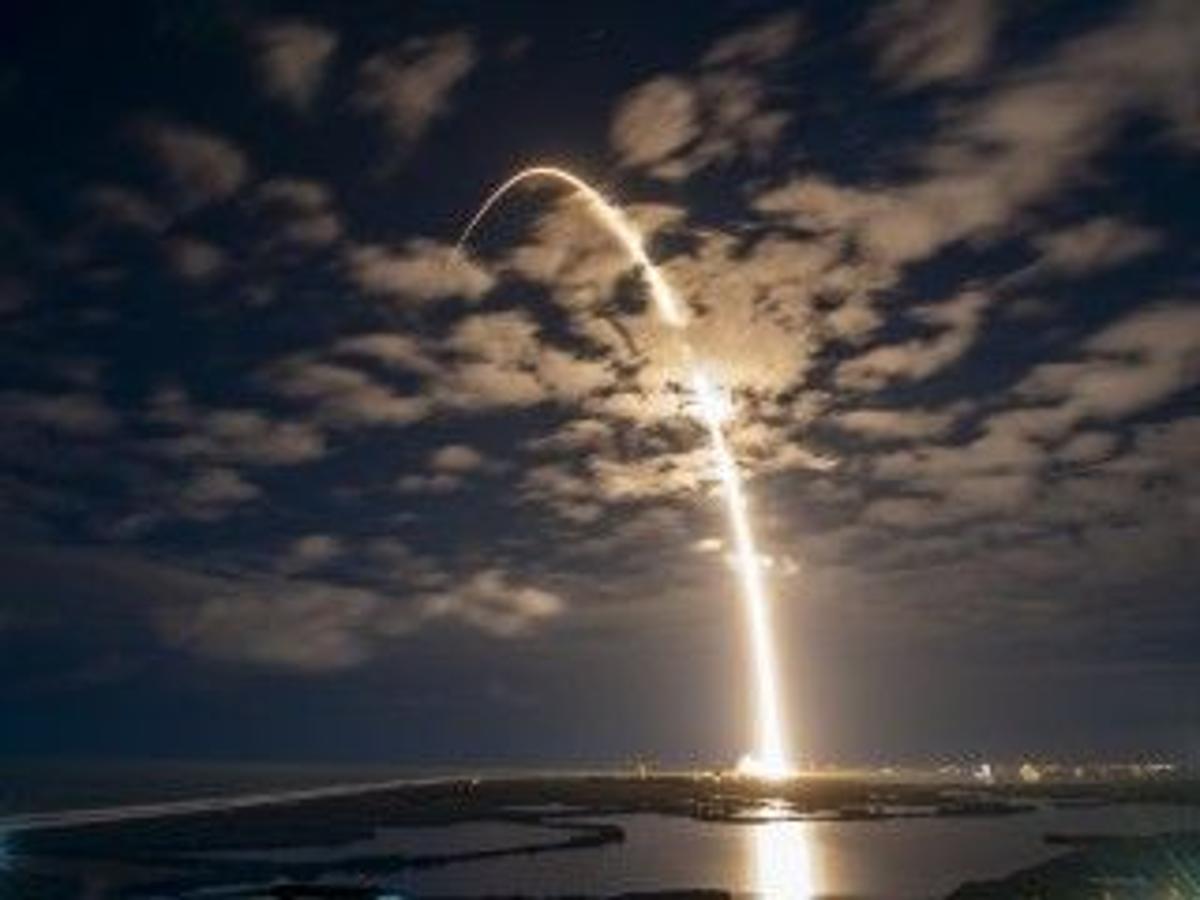
Photo. SpaceX

On 19 February 2025, a piece of SpaceX’s Falcon 9 rocket entered the atmosphere over Poland in an uncontrolled manner, as confirmed by the Polish Space Agency (POLSA). Its debris was found on Polish territory and secured by the police and the prosecutor’s office. According to information obtained from SpaceX, the potential rocket debris does not pose a threat to humans and does not exhibit radioactive properties.

In April, the spokesperson for the District Prosecutor’s Office in Poznań, Łukasz Wawrzyniak, informed the Polish Press Agency about the decision to discontinue the proceedings in the case.

“The prosecutor did not find any evidence of a crime. He did not find that anyone had been exposed to the risk of loss of life or serious injury. In his opinion, there was also no crime of destruction of property,” Mr Wawrzyniak said.

“Okazuje się, że pod Poznaniem spadły szczątki drugiego stopnia rakiety Falcon9” – foto. Adam Borucki

pic.twitter.com/cjNE1JZjuG – @poznan_moment, 19 February 2025

Re‑examination of the incident

Almost a year after the incident, the case continues to attract interest. The European Space Agency (ESA) has announced a tender to investigate the incident concerning the uncontrolled re‑entry of the rocket stage and its consequences. The task will be carried out without the use of classified information, using available records from ground systems, impact points and orbital‑trajectory data.

“The probable aerothermodynamics of the break‑up, including ablation, will be assessed and reconstructed,” the agency said. The results of the study will contribute to the development of knowledge about the predictability of re‑entry into the atmosphere and the risks involved. The price range specified in the tender announcement is between EUR 200 000 and EUR 500 000.

The case involving the rocket debris caused confusion in the state administration. In March 2025, Prof. Grzegorz Wrochna was dismissed from his position as president of the Polish Space Agency. ‘The reason for the dismissal of Grzegorz Wrochna, president of the Polish Space Agency, is irregularities in the performance of tasks related to the management of the agency,’ Małgorzata Dzieciniak, spokeswoman for the ministry, told Polish Press Agency.

Criticism of the Ministry of National Defence and the response of the Polish Space Agency

POLSA’s actions in the rocket case were criticised by, among others, the Deputy Prime Minister and the Head of the Ministry of National Defence. Władysław Kosiniak‑Kamysz announced that the Ministry of National Defence had not received a communication from the Polish Space Agency regarding the possible fall of rocket debris on Polish territory because POLSA had sent the communication to an e‑mail address that had been out of date for six months.

POLSA stated that it sends relevant reports to the ministries and services concerned, informing them about the situation in orbit and anticipated de‑orbiting. However, the agency stated that the messages ‘are for information purposes only, as it is impossible to predict whether the object will burn up completely, and the location of a possible fall cannot be predicted with an accuracy better than a few hundred kilometres’.

Read Original Article
0

Comments

Want to join the conversation?

Loading comments...