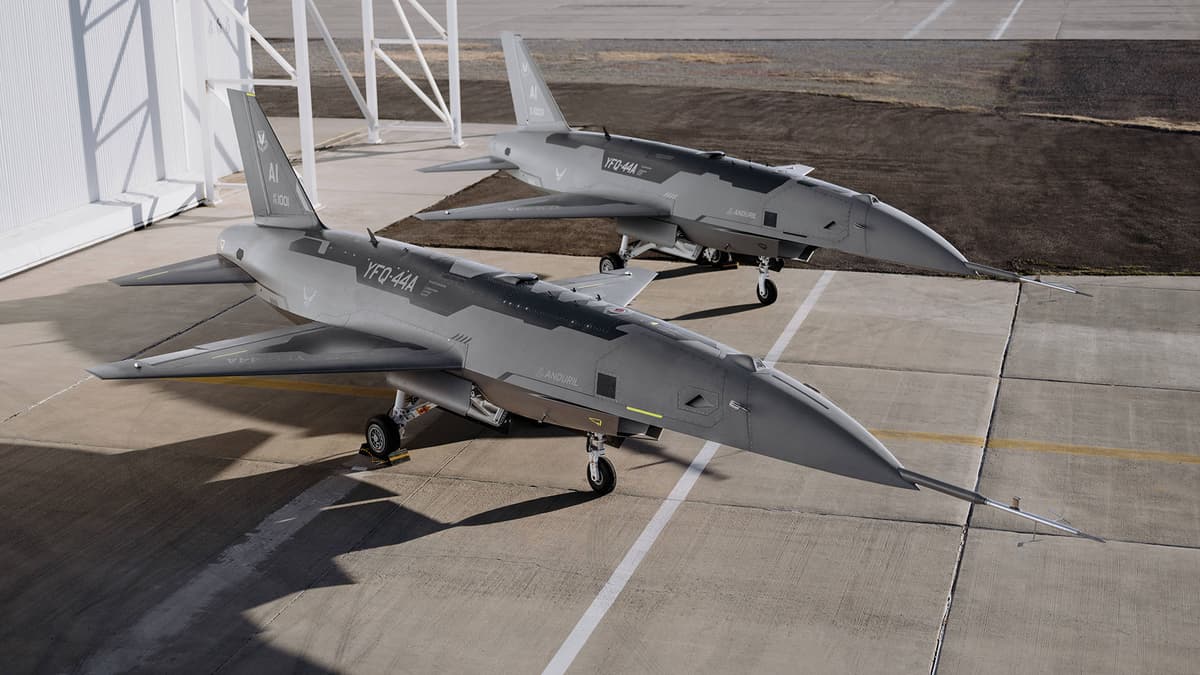
CCAs Start Carrying Inert Missiles, Live Fire Shots Expected Later This Year
•February 24, 2026
0
Why It Matters
Integrating weapons and planning live‑fire tests accelerates the deployment of autonomous wingmen, expanding air‑to‑air capacity while reducing risk to pilots. The rapid timeline signals a shift toward faster, more flexible force modernization across the Air Force’s future combat fleet.
Key Takeaways
- •Inert AIM-120 missiles now carried by CCA prototypes
- •Live-fire tests slated for later 2026
- •YFQ-42A and YFQ-44A platform decision due this year
- •Software from Shield AI and Collins Aerospace enables mission autonomy
- •Program aims to accelerate drone wingman deployment
Pulse Analysis
The Air Force’s recent milestone of mounting inert AIM‑120 missiles on its CCA prototypes underscores a strategic pivot toward rapid, low‑risk weapons integration. By using captive‑air training missiles, the service validates structural and aerodynamic impacts without exposing live ordnance, a practice that shortens the test‑and‑evaluate cycle. This approach mirrors commercial aerospace’s incremental certification models, allowing the CCA to progress from concept to prototype in just 16 months—a pace that outstrips traditional fighter development timelines.
Beyond hardware, the program’s success hinges on advanced software that grants the drones mission‑level autonomy while retaining human authority over lethal decisions. Shield AI and Collins Aerospace are supplying the mission‑control stacks that translate pilot intent into coordinated actions, effectively creating a “human‑machine team.” This architecture not only expands the strike envelope of legacy platforms like the F‑35A but also prepares the airframe for integration with future systems such as the sixth‑generation F‑47 and the B‑21 bomber, reinforcing a layered, network‑centric combat strategy.
The broader implications for defense procurement are significant. Accelerated CCA fielding promises to augment air‑to‑air capacity, mitigate pilot exposure in contested environments, and provide a scalable platform for future weapons upgrades. As the service moves toward live‑fire validation later this year, it signals confidence that autonomous wingmen can transition from experimental to operational status within a single fiscal cycle, reshaping the Air Force’s modernization roadmap and setting a new benchmark for rapid, responsible innovation.
CCAs Start Carrying Inert Missiles, Live Fire Shots Expected Later This Year
0
Comments
Want to join the conversation?
Loading comments...