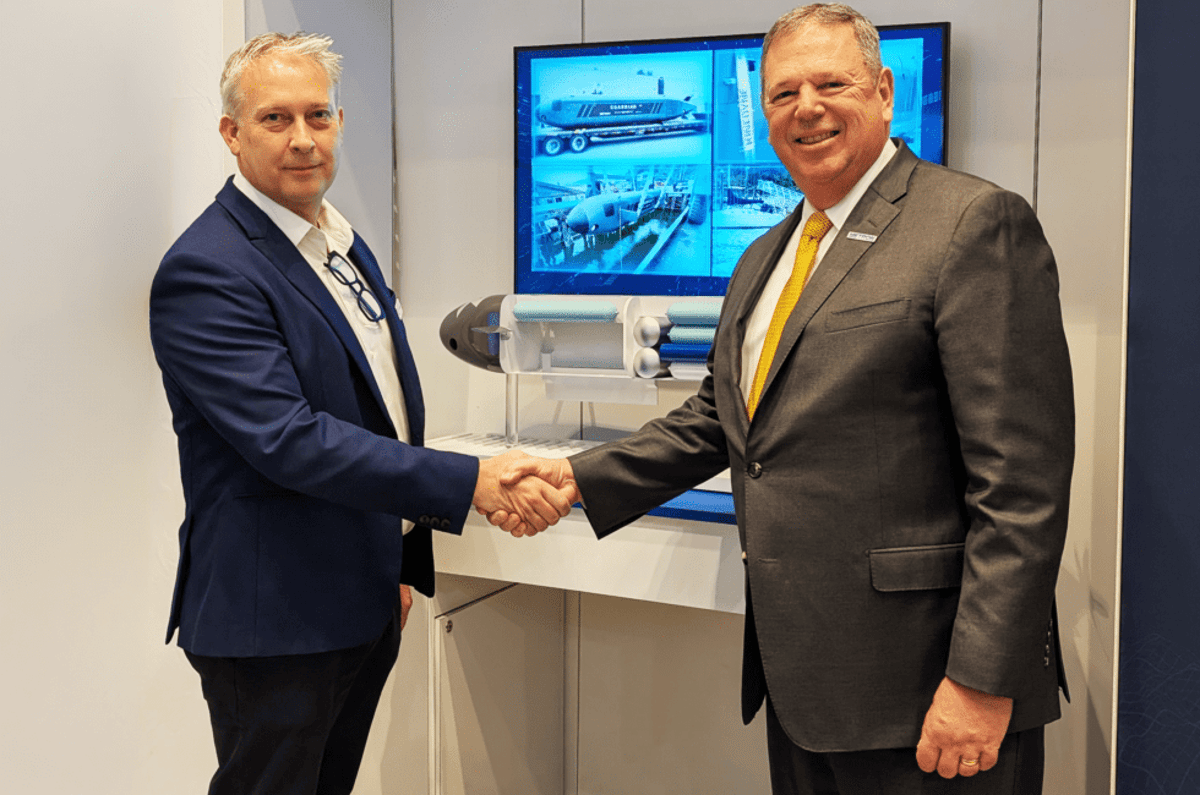
Cellula Robotics, Metron Forge 10-Year Partnership to Advance Next-Gen AUVs
Why It Matters
The alliance accelerates delivery of next‑generation undersea capabilities, strengthening U.S. naval readiness while offering defense customers a flexible, long‑term solution.
Key Takeaways
- •10-year partnership to develop autonomous undersea systems for US defense
- •Combines Cellula’s COTS long‑endurance AUVs with Metron’s autonomy software
- •Modular, open‑architecture design enables third‑party sensor integration
- •Aims for faster fielding and long‑term support for Navy missions
- •Builds on three‑year collaboration and recent AUV prototype contract
Pulse Analysis
The race to field autonomous undersea platforms has intensified as navies worldwide seek to extend surveillance, mine counter‑measure, and logistics capabilities beneath the waves. Traditional manned submarines are costly and limited in endurance, prompting defense budgets to allocate billions toward unmanned systems that can operate for weeks without resurfacing. In the United States, the Navy’s “Sea Power 2030” roadmap earmarks autonomous vehicles as a cornerstone for distributed maritime operations, creating a fertile market for innovators who can deliver reliable, long‑duration AUVs.
Cellula Robotics and Metron’s 10‑year pact directly addresses these strategic priorities by pairing Cellula’s proven commercial‑off‑the‑shelf, long‑endurance hulls with Metron’s sophisticated mission‑planning and autonomy stack. Their modular, open‑architecture framework allows rapid integration of new sensors, payloads, and third‑party technologies, reducing development cycles and lowering total ownership costs. For defense contractors, the agreement signals a shift toward collaborative ecosystems where hardware and software providers co‑deliver turnkey solutions, rather than competing in isolated silos. The emphasis on faster fielding and guaranteed long‑term support also mitigates procurement risk, a key concern for the Department of Defense’s acquisition processes.
Looking ahead, the partnership positions both firms to capture a sizable share of the projected $5‑6 billion U.S. undersea unmanned market through 2035. Their combined offering could set a benchmark for interoperability, prompting rival firms to adopt similar open‑architecture standards. Moreover, the alliance may influence future policy, encouraging the Navy to prioritize modular platforms that can evolve alongside emerging threats such as hypersonic anti‑ship missiles and autonomous swarms. As the undersea domain becomes increasingly contested, the Cellula‑Metron collaboration exemplifies how private‑sector agility can accelerate the delivery of next‑generation maritime capabilities.
Cellula Robotics, Metron forge 10-year partnership to advance next-gen AUVs
Comments
Want to join the conversation?
Loading comments...