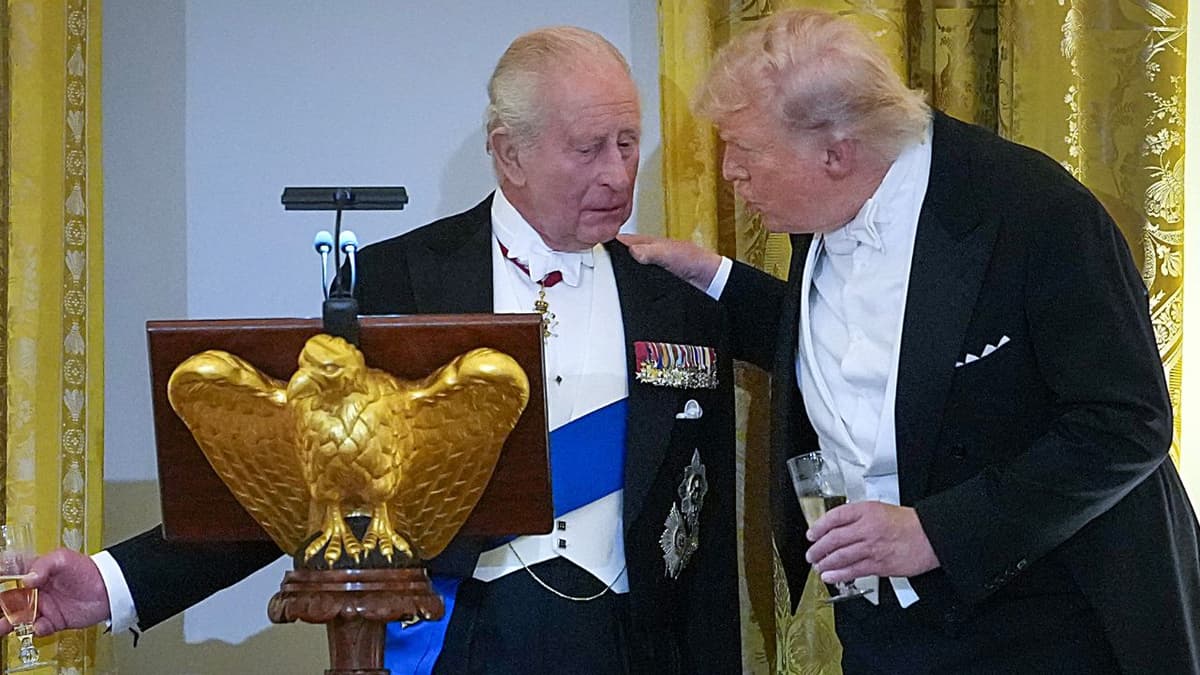
Charles Assassination Plot Exposed as Source Reveals the ‘Alarming Reality’ of How Security Could’ve Turned on the King & Trump
Companies Mentioned
Why It Matters
The revelation highlights that traditional security is no longer sufficient; governments must integrate cyber‑resilience into protective operations, reshaping how diplomatic and presidential travel is safeguarded.
Key Takeaways
- •Potential hack of protective drones targeting King Charles and President Trump
- •Security agencies now prioritize cyber‑weapon threats alongside physical attacks
- •State visit proceeded without breach, but contingency planning intensified
- •Experts warn drones could be repurposed as weapons in high‑profile events
- •Incident highlights growing need for resilient autonomous security systems
Pulse Analysis
The recent state visit of King Charles to Washington exposed a new frontier in protective security: the vulnerability of autonomous drones to cyber‑intrusion. While the alleged plot to hijack the aerial shield never materialized, it forced U.S. Secret Service and British security officials to reevaluate their risk models. Traditional threat assessments focused on physical proximity, but today’s adversaries can exploit software flaws, GPS spoofing, or command‑and‑control channels to turn a defensive asset into an offensive weapon. This shift has accelerated investments in encrypted communications, real‑time drone health monitoring, and AI‑driven anomaly detection.
Industry analysts note that the incident arrives at a time when drone usage in government protection is expanding rapidly. From aerial surveillance to crowd management, drones provide unparalleled situational awareness, yet their reliance on networked systems creates a single point of failure. Companies developing counter‑drone technologies are now seeing heightened demand for portable jamming solutions and autonomous threat‑neutralization platforms. Moreover, the episode has prompted diplomatic protocols to incorporate cyber‑contingency drills, ensuring that any loss of control can be swiftly mitigated without endangering the protected individuals.
For policymakers, the lesson is clear: security strategies must blend physical safeguards with robust cyber‑defense. As high‑profile visits become increasingly digitized, the cost of a successful drone hack could far exceed traditional attack scenarios, potentially compromising national leadership and international relations. By integrating resilient software architectures, continuous penetration testing, and cross‑agency intelligence sharing, governments can better protect leaders against the evolving threat landscape that blurs the line between kinetic and cyber warfare.
Charles Assassination Plot Exposed as Source Reveals the ‘Alarming Reality’ of How Security Could’ve Turned on the King & Trump
Comments
Want to join the conversation?
Loading comments...