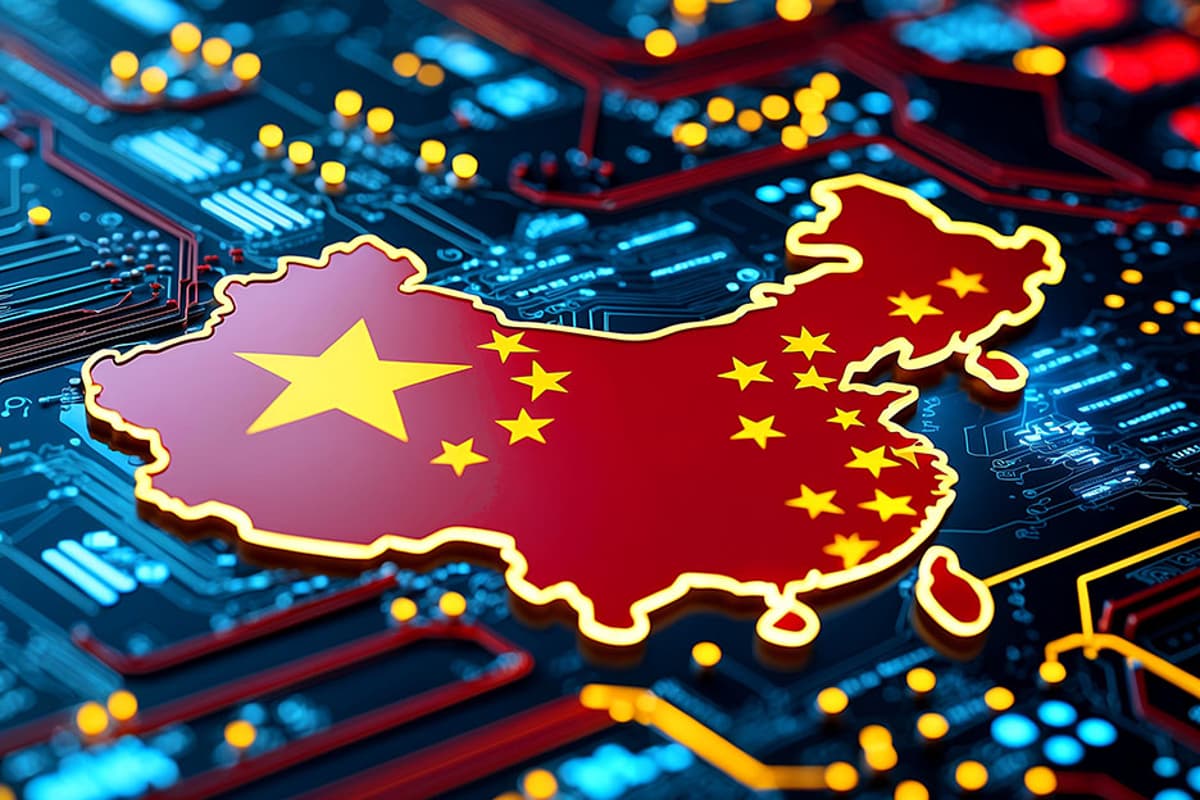
China Emerges as 'Peer Competitor in Cyberspace,' UK NCSC Head Warns
Why It Matters
The warning signals a heightened risk to UK and global critical infrastructure, prompting businesses to treat cyber resilience as a core strategic priority rather than a cost centre.
Key Takeaways
- •NCSC labels China a peer competitor in cyberspace.
- •UK sees four nationally significant cyber attacks weekly.
- •State‑linked attacks target infrastructure, not just ransom payouts.
- •AI adoption required for defense against sophisticated state actors.
Pulse Analysis
The United Kingdom’s cyber‑security posture is entering a new era as the National Cyber Security Centre (NCSC) publicly reclassifies China from a peripheral threat to a "peer competitor" in cyberspace. This terminology shift reflects the growing technical parity between Chinese state‑sponsored actors and Western adversaries, driven by massive investments in quantum‑ready cryptography, supply‑chain infiltration, and AI‑enhanced malware. Over the past year, the NCSC logged an average of four attacks of national significance each week, a frequency that eclipses previous peaks and underscores the systemic nature of the threat landscape. By framing the challenge in geopolitical terms, the NCSC signals that cyber‑defence is now a matter of national security, not merely IT hygiene.
For enterprises, the implications are profound. Traditional perimeter‑focused controls are insufficient against state‑level campaigns that aim to disrupt power grids, transport networks, and health‑care systems rather than simply extort money. Horne’s call to treat cybersecurity as a strategic investment pushes firms to allocate budget toward continuous monitoring, threat‑intel integration, and, crucially, AI‑driven detection and response platforms. Artificial intelligence can sift through massive telemetry to surface anomalous behaviour that human analysts might miss, while also automating patch prioritisation to close the software vulnerabilities that sophisticated actors exploit. This shift also demands cultural change: senior leadership must champion cyber‑resilience, embedding it into business continuity plans and board‑level risk assessments.
Looking ahead, the UK is likely to tighten regulatory expectations, potentially mandating minimum AI‑based defence capabilities for operators of critical infrastructure. Public‑private partnerships will become essential, with information‑sharing hubs offering real‑time threat intel and coordinated incident response. Companies that proactively adopt layered defences, invest in AI tooling, and embed cyber‑risk into their strategic planning will be better positioned to withstand the next wave of state‑sponsored attacks, turning a looming threat into a competitive differentiator.
China emerges as 'peer competitor in cyberspace,' UK NCSC head warns
Comments
Want to join the conversation?
Loading comments...