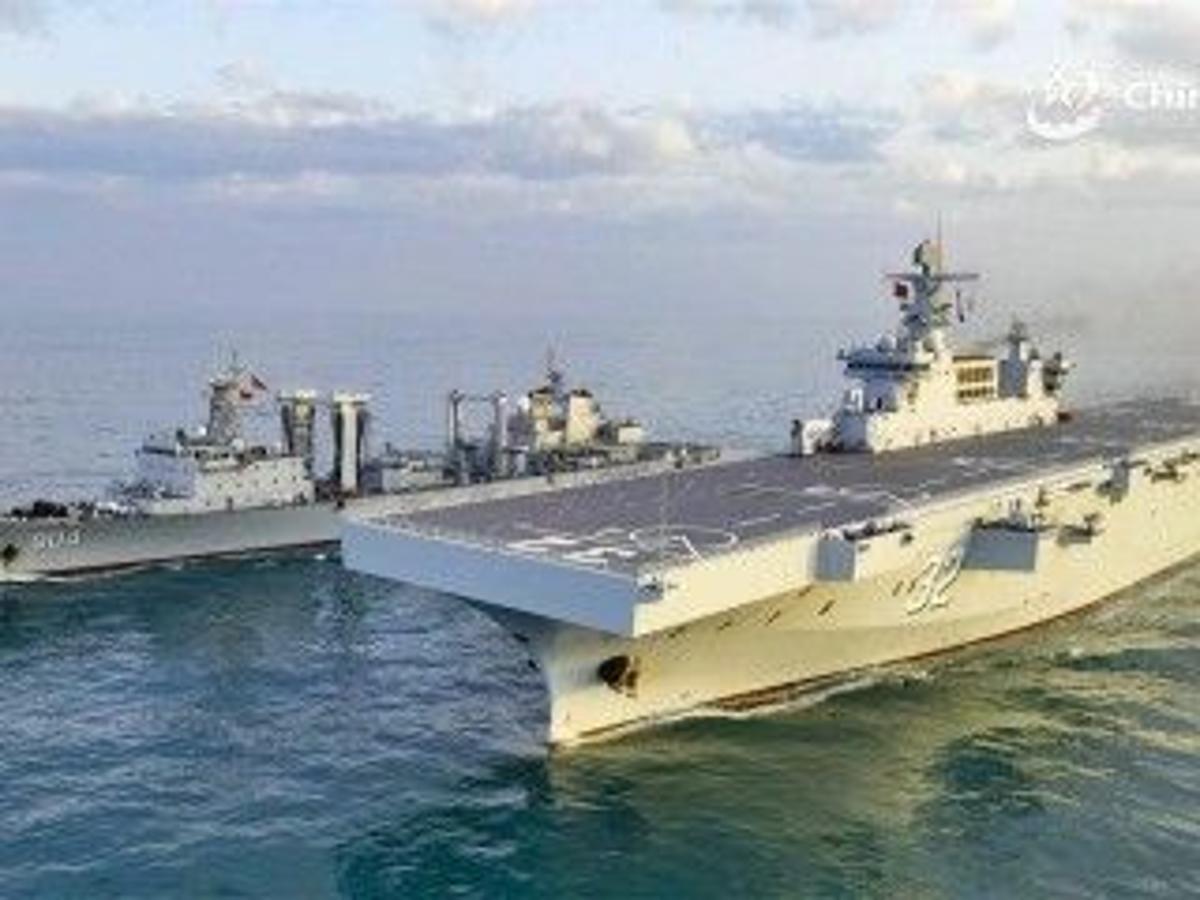
China Further Expands Its Maritime Footprint: Another Artificial Island Under Construction
Why It Matters
The new outpost extends Beijing’s power projection deeper into contested waters, reshaping the strategic balance and raising the risk of confrontation with neighboring claimants and external powers.
Key Takeaways
- •China begins building 1,500‑acre artificial island on Antelope Reef.
- •Island located in Paracel archipelago, near Vietnam’s coast, heightening disputes.
- •Planned facilities include helipads, suggesting future military outpost.
- •Expansion extends Beijing’s reach beyond Spratly to more distant waters.
- •Analysts warn new base could become flashpoint for Sino‑Vietnam tensions.
Pulse Analysis
China’s latest artificial island project marks a clear shift from the earlier, more localized construction wave that peaked between 2013 and 2017. By targeting Antelope Reef—farther from the mainland and closer to Vietnam’s shoreline—Beijing signals an ambition to dominate not only the Spratly chain but also the broader Paracel region. The scale of the undertaking, projected at 1,500 acres, suggests a long‑term commitment to establishing permanent facilities that can support naval and air operations, echoing the strategic logic behind earlier outposts that host runways, radar and missile storage.
The military implications are immediate. Helicopter pads already under construction hint at rapid deployment capabilities for the People’s Liberation Army Navy and Air Force, while the likely addition of airstrips and electronic‑warfare suites would enable Beijing to monitor and contest civilian and military traffic across a wider swath of the South China Sea. Vietnam’s protest underscores the diplomatic fallout; Hanoi views the construction as a direct violation of its sovereignty, and Taiwan’s overlapping claims add another layer of complexity. The United States, which conducts freedom‑of‑navigation operations in the area, may reassess its posture as China’s footprint expands.
Beyond the immediate security calculus, the island raises questions about the enforcement of international maritime law. The United Nations Convention on the Law of the Sea (UNCLOS) does not recognize artificial islands as generating territorial waters, yet the physical presence can create de‑facto control. As Beijing continues to push its maritime frontier, regional actors will likely seek multilateral mechanisms to manage escalation, while external powers may increase diplomatic and naval engagement to preserve the status quo. The Antelope Reef development thus serves as a barometer for future power dynamics in one of the world’s most contested maritime zones.
China further expands its maritime footprint: Another artificial island under construction
Comments
Want to join the conversation?
Loading comments...