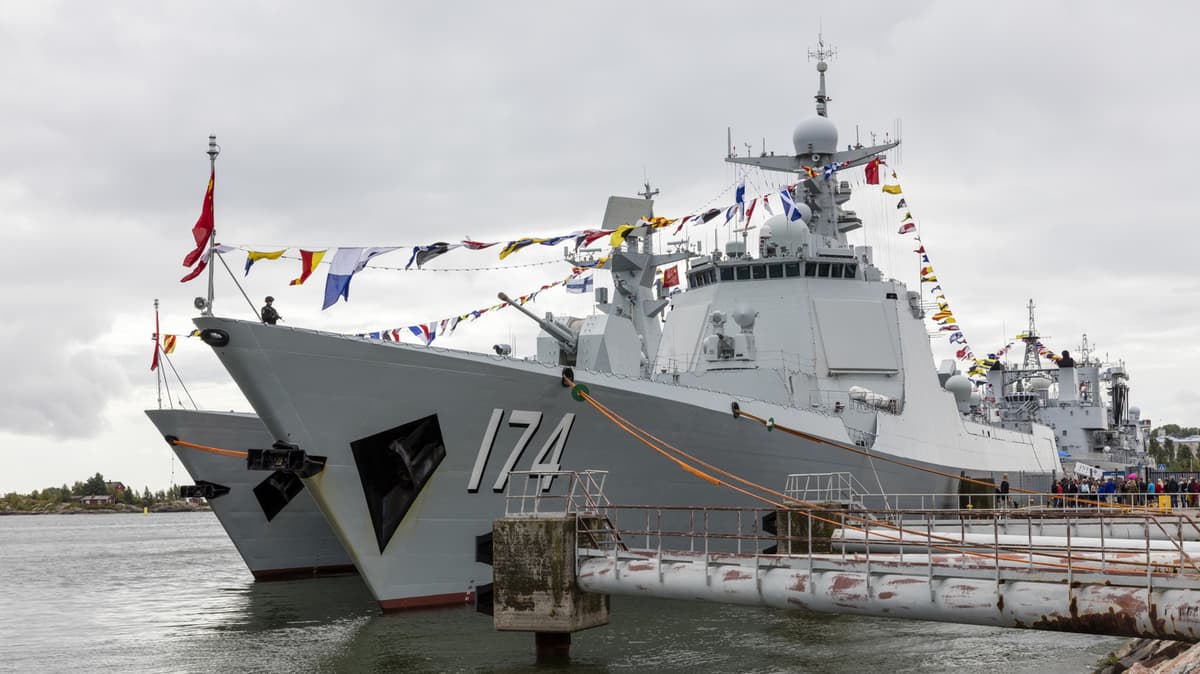
China's Destroyer Fleet Production Could Soon Outpace The US Navy
Why It Matters
A larger Chinese destroyer fleet could strain U.S. maritime dominance and force a strategic shift in force allocation, while the U.S.’s qualitative advantages remain critical to deterrence.
Key Takeaways
- •China built 35 Type 052D and 8 Type 055 destroyers in 10 years.
- •U.S. added only 18‑20 Arleigh Burke destroyers in same period.
- •Chinese fleet totals 234 warships, projected 425 by 2030.
- •Larger Chinese fleet offsets individual vessel performance gaps.
- •U.S. retains edge in carriers, nuclear subs, and 5th‑gen aircraft.
Pulse Analysis
China’s shipbuilding boom is rooted in a seamless blend of commercial and military production. State‑run conglomerate CSSC operates dual‑use yards that churn out container ships alongside warships, allowing economies of scale and rapid tooling changes. This model, combined with a massive domestic steel base and government subsidies, has driven annual destroyer output to a pace unseen since the Cold War. The lack of transparency makes precise forecasts difficult, but open‑source data suggest the current trajectory will deliver another 10‑12 destroyers per year through the early 2030s, cementing China’s numerical superiority.
The numerical gap reshapes naval strategy on both sides of the Pacific. With 43 destroyers versus roughly 20 new U.S. vessels, China can field larger surface action groups, saturate anti‑ship missile defenses, and sustain higher attrition rates in contested waters. The U.S. Navy, aware of this shift, has accelerated its DDG‑51 Flight III program and revived interest in larger DDG‑1000 and next‑generation frigates to offset the disparity. Budget debates now weigh the cost of adding hulls against investing in unmanned surface combatants, long‑range missiles, and advanced networking that can multiply the effectiveness of a smaller fleet.
Beyond raw ship counts, the contest pits quantity against quality. America’s carrier strike groups, nuclear‑powered submarines, and fifth‑generation aircraft provide force‑projection capabilities that a larger but less advanced Chinese surface fleet cannot match outright. However, a dense Chinese surface presence complicates U.S. freedom‑of‑navigation operations and forces allies to reconsider force‑posture and joint training. Policymakers must balance investments in high‑tech platforms with measures that preserve numerical resilience, such as modular ship designs and accelerated production pipelines, to ensure the U.S. retains a credible deterrent in an era of expanding Chinese maritime power.
China's Destroyer Fleet Production Could Soon Outpace The US Navy
Comments
Want to join the conversation?
Loading comments...