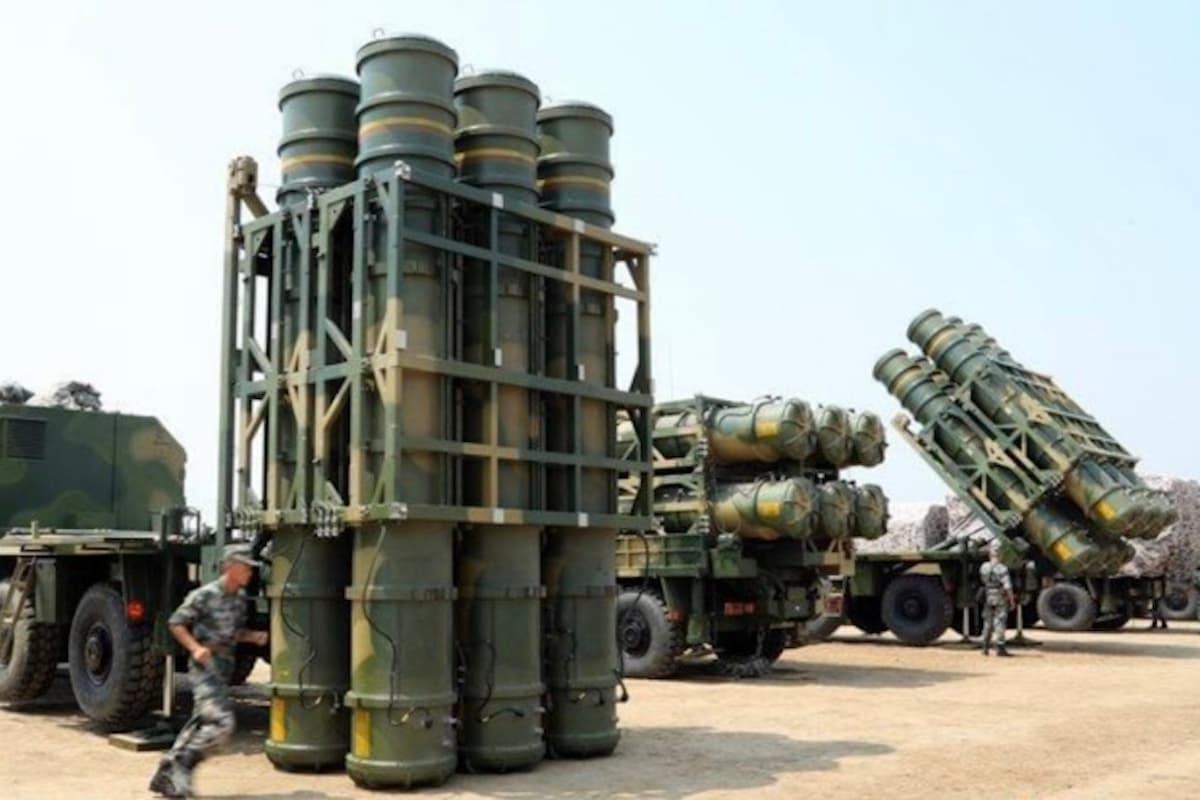
China’s HQ-16F Primed for Taiwan War Far Beyond the Strait
Why It Matters
The HQ‑16F narrows the air‑defense gap between China and Taiwan, altering the balance of power and raising the stakes for any cross‑strait confrontation. Its presence also underscores Beijing’s concern over precision‑strike threats to critical infrastructure and nuclear assets on the mainland.
Key Takeaways
- •HQ‑16F deployed opposite Taiwan, boosting PLA Eastern Theater air defense
- •System’s 50 km intercept range matches or exceeds US Patriot capabilities
- •Taiwan’s ATACMS and Hsiung Feng IIE missiles drive China’s defensive shift
- •HQ‑16F may protect nuclear silo fields and leadership command centers
- •Deployment hints future Taiwan wars could extend deep into mainland
Pulse Analysis
China’s recent fielding of the HQ‑16F medium‑range surface‑to‑air missile (SAM) opposite Taiwan marks a strategic escalation in the cross‑strait balance. The system, unveiled during a live‑fire drill by the 73rd Group Army, combines thrust‑vectoring propulsion, four tail fins and an active electronically scanned array (AESA) radar that can track targets beyond 250 km. With a proven 50‑km intercept capability, the HQ‑16F narrows the qualitative gap with US‑made Patriot PAC‑2 and PAC‑3 batteries that currently shield Taiwan, offering Beijing a mobile, high‑efficiency shield for its Eastern Theater Command.
Taiwan’s expanding long‑range strike portfolio intensifies Beijing’s defensive calculus. US‑supplied ATACMS missiles can reach 300 km, putting Chinese invasion staging areas within striking distance, while domestically produced Hsiung Feng IIE cruise missiles boast a 1,200 km range capable of hitting deep‑interior targets. These capabilities force the PLA to consider layered air‑defense solutions beyond the immediate Strait, prompting the deployment of the HQ‑16F to protect critical rear‑area assets such as the Hami nuclear silo complex and the Beijing Military City command hub. The missile’s directional fragmentation warhead is specifically designed to counter low‑altitude, supersonic threats that could otherwise breach China’s air‑defense envelope.
The broader implication is a shift from a purely coastal defense posture to a mainland‑centric deterrence strategy. By positioning the HQ‑16F near potential invasion embarkation sites and strategic infrastructure, China signals that any Taiwan conflict may spill over into its interior, complicating U.S. and allied planning. Moreover, the system’s ability to shield nuclear and command‑and‑control facilities could lower Beijing’s threshold for escalating a conventional clash into a nuclear‑risk scenario, challenging the long‑standing no‑first‑use policy. Analysts therefore view the HQ‑16F deployment as both a tactical upgrade and a strategic warning that future Taiwan crises could be fought far beyond the 180‑km Strait.
China’s HQ-16F primed for Taiwan war far beyond the Strait
Comments
Want to join the conversation?
Loading comments...