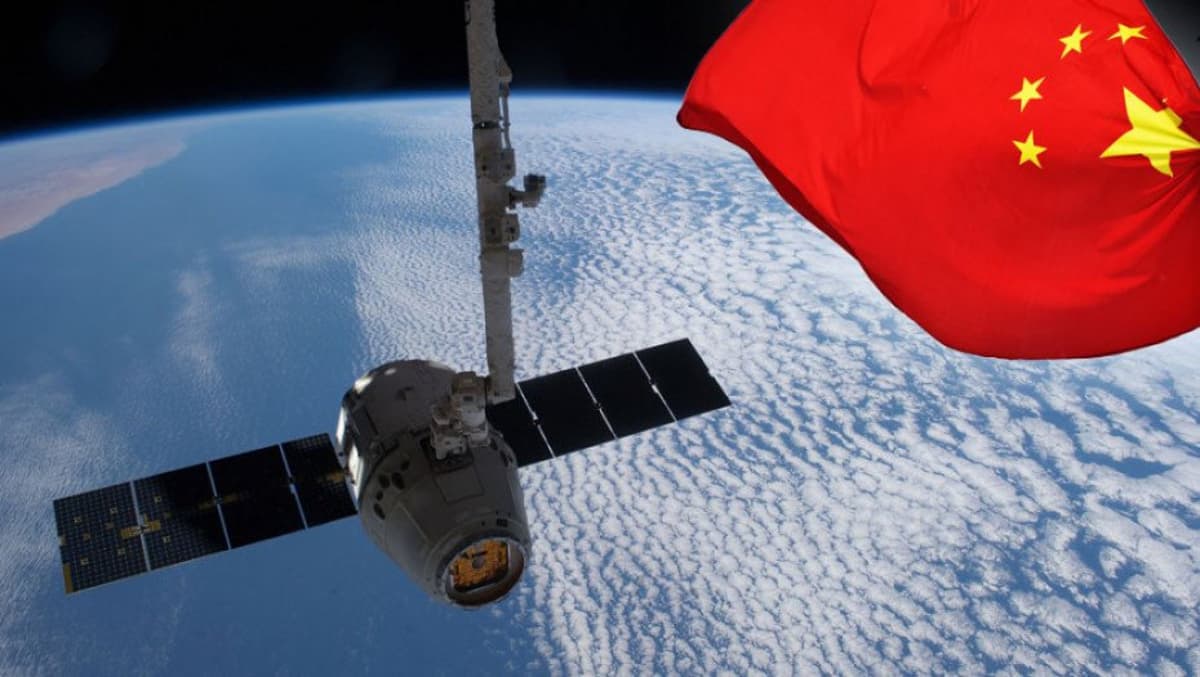
China’s “Secret Role” In India-Pakistan & US-Iran War? Did Chinese Satellites Help Tehran With Precision Strikes on US & Gulf Bases
Why It Matters
Commercial Chinese satellite services are enabling adversaries to acquire near‑real‑time targeting data, forcing the United States and its allies to rethink space‑based security and supply‑chain controls.
Key Takeaways
- •Iran bought China’s TEE‑01B satellite in 2024 for targeting US bases
- •Satellite imagery captured Prince Sultan, Bahrain Fifth Fleet, and Jordan bases
- •China allegedly fed live ISR to Pakistan during 2025 India‑Pakistan war
- •US Space Command warns commercial imagery threatens military operations worldwide
- •US intel flags possible Chinese MANPAD transfers to Iran later 2026
Pulse Analysis
The revelation that Iran may have leveraged a Chinese‑built TEE‑01B satellite to guide precision strikes marks a turning point in how commercial space assets are weaponized. Unlike traditional military constellations, the satellite was sold through a civilian channel, yet its high‑resolution imagery and orbital data were reportedly fed to the Islamic Revolutionary Guard Corps. By capturing sequential photos of Prince Sultan Air Base, the U.S. Fifth Fleet’s Bahrain hub, and Jordanian airfields, the system gave Iranian planners a transparent view of high‑value targets just weeks before the February 2026 “Operation Epic Fury” campaign. This case illustrates the thin line between commercial geospatial services and strategic intelligence.
China’s involvement extends beyond Iran. During the 2025 India‑Pakistan conflict, Pakistani forces allegedly received live ISR feeds, radar adjustments, and positioning data from Chinese satellite operators, boosting their situational awareness against Indian offensives. Companies such as MizarVision combined AI‑driven analysis with open‑source and commercial imagery, even tapping China’s BeiDou navigation network to refine targeting. These activities reveal a broader pattern: Beijing’s private sector is increasingly acting as a conduit for advanced geospatial intelligence, blurring the distinction between civilian commerce and state‑directed support for proxy forces.
U.S. defense leaders are now confronting a reality where any nation with sufficient funding can purchase near‑real‑time global imagery. General Stephen Whiting of U.S. Space Command warned that the Pentagon must adapt to an environment where commercial satellites expose operational footprints, and even low‑tech weapons like MANPADS—rumored to be on the verge of Chinese transfer to Iran—can exploit that visibility. The emerging threat prompts calls for stricter export controls on high‑resolution data, investment in counter‑satellite tactics, and diplomatic pressure on Beijing to curb the flow of dual‑use space technologies. The stakes are high: without new safeguards, commercial space may become an inadvertent force multiplier for adversaries, reshaping the strategic calculus of U.S. and allied militaries.
China’s “Secret Role” in India-Pakistan & US-Iran War? Did Chinese Satellites Help Tehran With Precision Strikes on US & Gulf Bases
Comments
Want to join the conversation?
Loading comments...