Chinese Drone Exposes Indonesia’s ‘Insufficient’ Undersea Capabilities
Why It Matters
The discovery reveals a critical gap in Indonesia's undersea surveillance, potentially compromising national security and regional stability amid rising Chinese maritime assertiveness. It also pressures Jakarta to accelerate defence modernization without jeopardising vital economic ties with China.
Key Takeaways
- •Indonesia operates only four submarines for a vast archipelago
- •Analysts recommend at least 12 submarines and upgraded sensors
- •Chinese UUV likely conducting seabed‑mapping for submarine operations
- •Jakarta pursues quiet diplomacy to protect $167.5 billion trade with China
Pulse Analysis
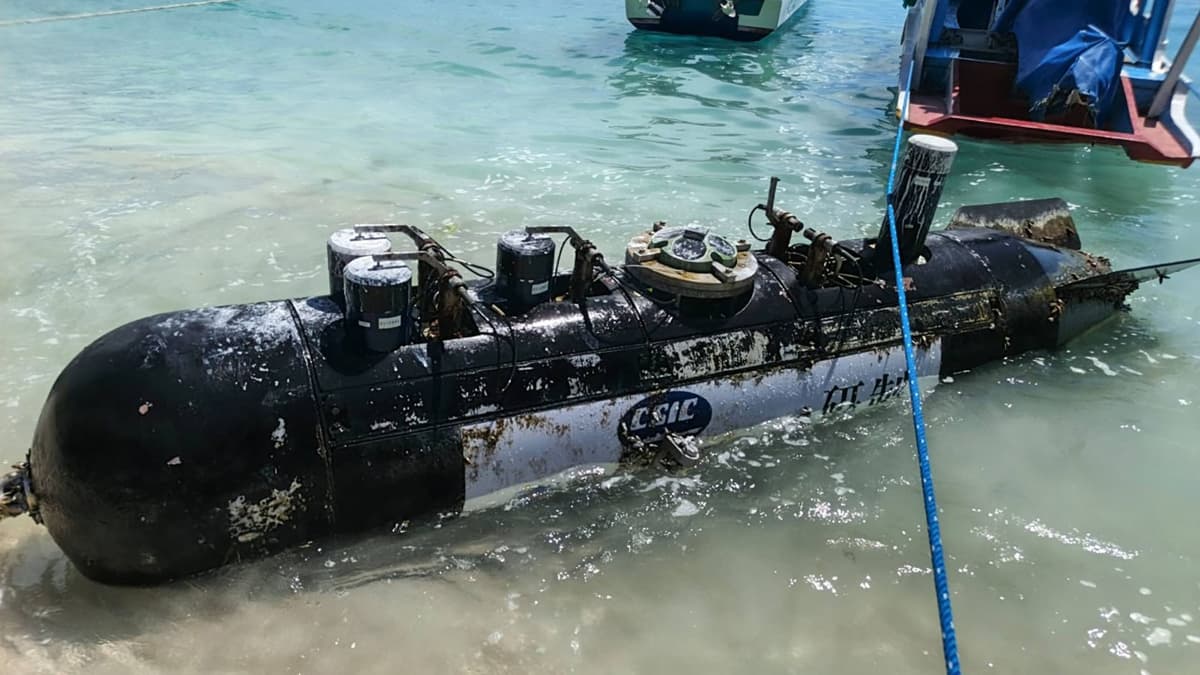
Indonesia’s undersea security posture has come under sharp scrutiny after a Chinese‑built unmanned underwater vehicle was hauled ashore in the Lombok Strait. The device, bearing the China Shipbuilding Industry Corporation (CSIC) logo, is believed to have been conducting covert seabed‑mapping—a capability that can dramatically improve the effectiveness of submarines operating in narrow, deep waterways. For a nation that relies on four aging Nagapasa‑ and Cakra‑class submarines to patrol an area the size of the United States, the incident starkly illustrates a surveillance shortfall that could be exploited by any power with advanced UUV technology.
Regional dynamics further amplify the stakes. The Lombok Strait is a strategic choke point watched closely by the United States and Australia, and China’s growing fleet of autonomous underwater platforms signals a shift toward persistent, low‑visibility intelligence gathering. Southeast Asian navies, aside from Indonesia, Malaysia, Singapore and Vietnam, lack comparable undersea capabilities, creating a pronounced military imbalance. Experts argue that without a rapid expansion—potentially to a dozen submarines and modern sonar networks—Indonesia risks ceding critical maritime domains to external actors, undermining its deterrence and its role as a gatekeeper of vital sea lanes.
Jakarta’s response has been deliberately muted, reflecting a diplomatic calculus that balances security concerns with a $167.5 billion trade relationship with Beijing, its largest partner. By handling the matter through “quiet diplomacy,” the government seeks to avoid public escalation while still investigating the intrusion. However, scholars warn that such discretion may embolden further incursions and erode public confidence. The episode therefore serves as a catalyst for Indonesia to accelerate defence procurement, deepen cooperation with allies on anti‑submarine warfare, and reassess its strategic communication strategy in an increasingly contested Indo‑Pacific environment.
Chinese drone exposes Indonesia’s ‘insufficient’ undersea capabilities
Comments
Want to join the conversation?
Loading comments...