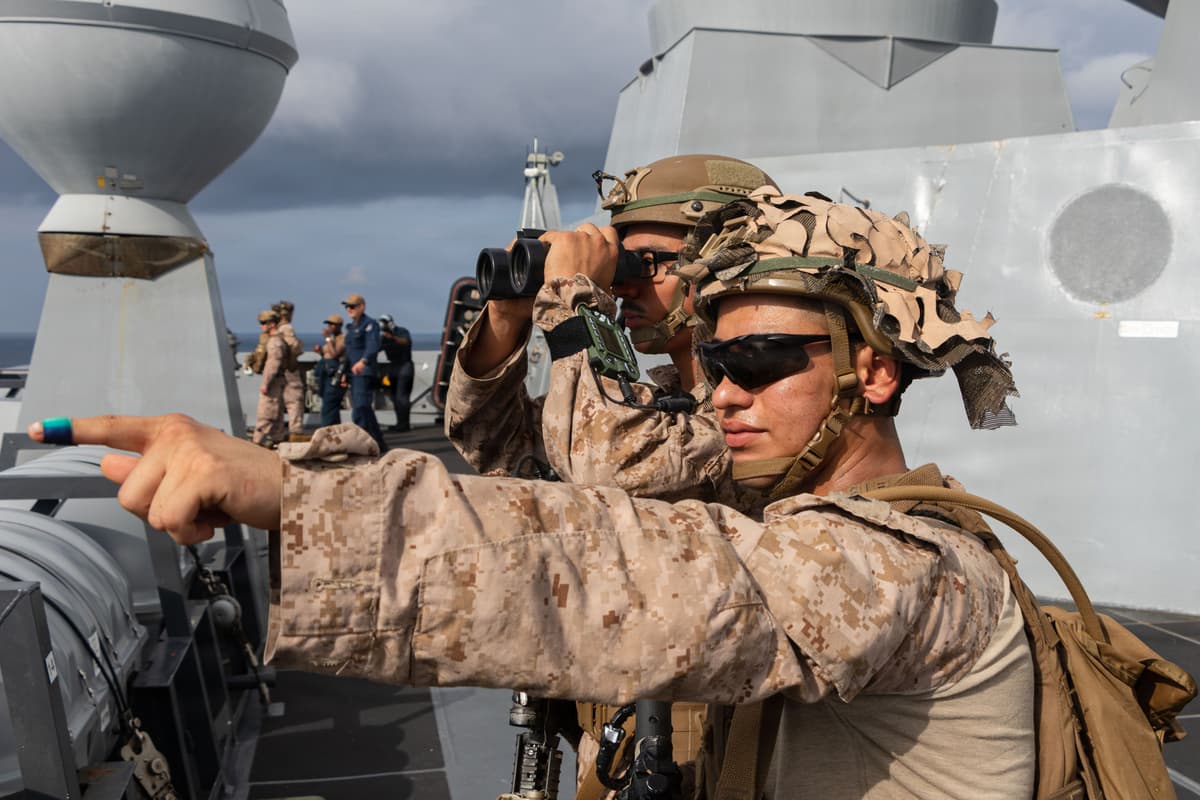
Chokepoint Busters: Marines Seek Toolkit to Help Aviators Clear Way for Amphibs
Why It Matters
Effective chokepoint‑busting tools will preserve U.S. amphibious mobility in contested littorals, a critical factor for power projection in regions such as the Strait of Hormuz. The initiative also opens a sizable market for defense innovators developing AI‑driven operational modeling.
Key Takeaways
- •Marine Corps issues RFI for AI-driven chokepoint analysis tools
- •FASt program targets replacement of AV-8B, AH-1Z, F/A-18 with drones and missiles
- •Deadline for vendor responses is July 23, with FY27 completion goal
- •Tools must model kinetic and non‑kinetic strikes against mobile ASCM batteries
- •Open to major primes, small firms, and non‑traditional vendors
Pulse Analysis
The Marine Corps is confronting a strategic inflection point as it phases out aging aircraft and embraces the Future Attack/Strike (FASt) concept. Amphibious operations traditionally rely on close air support from platforms such as the AV‑8B Harrier and F/A‑18 Hornet, but contested littoral zones—especially narrow straits—now demand precision long‑range fires and autonomous systems. By soliciting advanced analytical tools, the Corps aims to simulate complex threat environments, identify capability gaps, and validate new concepts before they reach the battlefield.
Emerging technologies are at the heart of the FASt vision. Long‑range hypersonic missiles, the MQ‑58 Valkyrie combat drone, and sophisticated electronic‑warfare suites promise to strike high‑value targets like anti‑ship cruise‑missile batteries from beyond the reach of integrated air‑defense systems. However, integrating these assets requires a “joint kill web” that links sensor data, target identification, and battle‑damage assessment in real time. AI‑driven modeling can evaluate how kinetic strikes, cyber effects, and non‑kinetic jamming interact, offering commanders a predictive edge against swarms of fast‑attack boats, unmanned surface vessels, and underwater threats.
For the defense industry, the RFI represents a multi‑year procurement window worth billions of dollars in research, development, and sustainment contracts. The Marine Corps explicitly welcomes proposals from large primes, niche small businesses, and non‑traditional innovators, signaling a willingness to explore unconventional solutions. Successful tools will not only enhance U.S. amphibious readiness but also reinforce deterrence in flashpoints like the Strait of Hormuz, where Iranian missile and drone capabilities pose a persistent challenge. The deadline of July 23 and a FY 2027 fielding target set a clear timeline for vendors to deliver next‑generation operational analytics.
Chokepoint busters: Marines seek toolkit to help aviators clear way for amphibs
Comments
Want to join the conversation?
Loading comments...