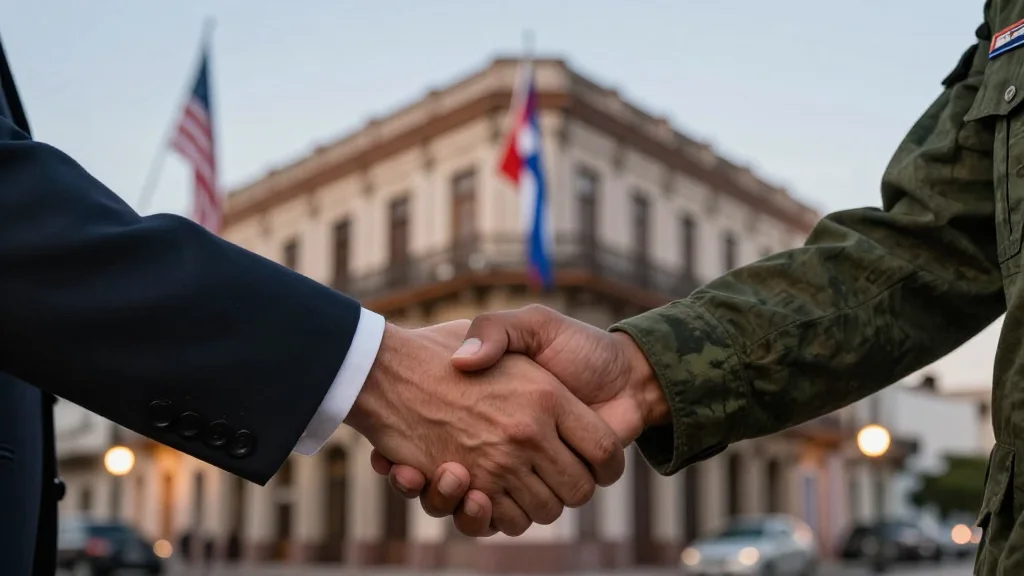
CIA Director John Ratcliffe Meets Cuban Officials as U.S. Readies Raúl Castro Indictment

Why It Matters
The Ratcliffe visit and pending indictment represent a convergence of diplomatic, legal, and military tools that could reshape U.S. strategy toward a neighboring adversary. For defense planners, the situation tests the limits of economic coercion versus kinetic options, especially as the Caribbean sits within the operational reach of U.S. Southern Command. A destabilized Cuba could force a reallocation of assets, heighten humanitarian concerns, and influence the political calculus in Florida, a key swing state. Beyond the immediate bilateral tension, the episode signals how the United States may blend intelligence outreach with prosecutorial pressure to achieve strategic objectives. This hybrid approach could become a template for future engagements with regimes deemed hostile, affecting how defense agencies coordinate with the Justice Department and the State Department in complex geopolitical contests.
Key Takeaways
- •CIA Director John Ratcliffe met senior Cuban officials in Havana, the first high‑level U.S. visit since 2016.
- •U.S. Justice Department preparing indictment of former President Raúl Castro over the 1996 Brothers to the Rescue shoot‑down.
- •Cuba’s energy crisis: produces ~40,000 barrels/day vs. ~100,000 barrels needed, leaving a 60,000‑barrel deficit.
- •65% of Cuban territory experienced simultaneous blackouts; some areas faced up to 22 hours without power.
- •President Trump has hinted at a "friendly takeover" of Cuba, raising the specter of possible military action.
Pulse Analysis
The Ratcliffe mission illustrates a strategic pivot where intelligence agencies are deployed as diplomatic envoys, blurring the traditional separation between covert operations and overt statecraft. By sending the CIA chief, the Trump administration signals that the U.S. is prepared to intensify pressure without immediately resorting to force, leveraging the agency’s credibility in security matters to extract concessions or at least gauge Havana’s response.
The pending indictment of Raúl Castro adds a legal dimension to this pressure campaign. While criminal prosecution may satisfy domestic political demands—particularly among Cuban‑American voters—it also introduces a new escalation ladder. If the indictment proceeds, it could trigger reciprocal legal or cyber retaliation from Cuban-aligned actors, compelling the Department of Defense to consider defensive postures in the region.
From a defense budgeting perspective, the situation may spur increased funding for Southern Command’s rapid‑response capabilities, including pre‑positioned equipment and intelligence‑surveillance assets to monitor any spill‑over from Cuba’s energy collapse. The convergence of energy scarcity, civil unrest, and U.S. legal action creates a volatile environment where miscalculation could quickly lead to a kinetic encounter, a scenario that defense planners will be forced to model in their contingency planning.
In the longer term, the episode could set a precedent for using a blend of diplomatic outreach, economic sanctions, and targeted prosecutions as a coordinated strategy against adversarial states. This multi‑track approach may become a template for future U.S. engagements, especially in regions where direct military intervention carries high political costs. For the defense community, understanding how these tools intersect will be essential for shaping both policy and operational readiness.
CIA Director John Ratcliffe meets Cuban officials as U.S. readies Raúl Castro indictment
Comments
Want to join the conversation?
Loading comments...