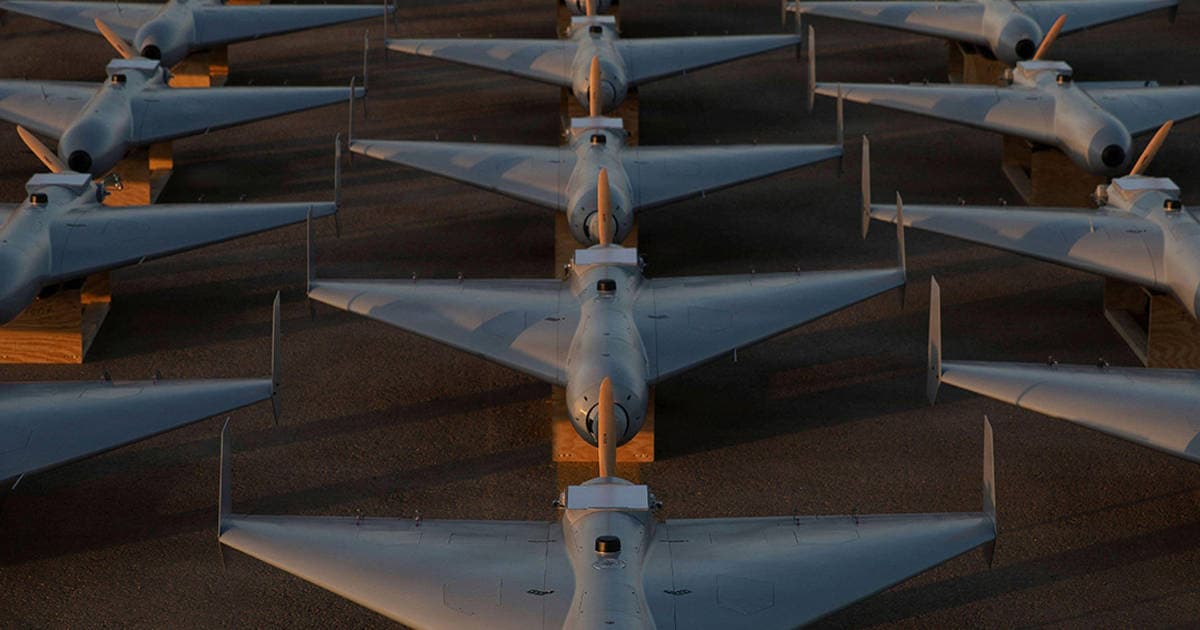
Clear Warning: The Iran War and the Loitering Munitions Threat
Why It Matters
Loitering munitions are reshaping modern battlefields, forcing militaries to rethink cost‑effective air‑defence architectures before the threat spreads to other flashpoints.
Key Takeaways
- •Iran and proxies deployed Shahed‑136 loitering munitions extensively in 2026 war
- •Allied forces lost 24 MQ‑9 drones, yet loitering munitions caused higher casualties
- •Intercepting a Shahed‑136 costs roughly 28 times its production price
- •Ukraine’s $1,000 UAV interceptors demonstrate affordable counter‑loitering solutions
- •Clear distinction between drones and loitering munitions guides layered air‑defence design
Pulse Analysis
The Iran‑Israel‑US confrontation has become a watershed moment for loitering‑munition warfare. Unlike conventional drones, these one‑way attack systems combine the persistence of a UAV with the lethality of a missile, allowing Iran and its proxies to launch swarms that saturate radar, slip through low‑altitude corridors, and strike high‑value targets with minimal cost. Their prevalence in the early weeks of the conflict—most famously the Shahed‑136 attacks on Kuwait, Cyprus and Azerbaijan—has forced analysts to separate the public narrative of "drones" from the distinct operational challenges posed by loitering munitions.
Operational data reveal a stark asymmetry: while the United States reported the loss of 24 MQ‑9 Reaper UAVs, the deadliest incidents stemmed from loitering‑munition strikes that killed the single largest number of U.S. personnel to date. The cost differential is alarming; each Shahed‑136 can be produced for a few thousand dollars, yet interceptors such as Patriot or SAMP/T missiles cost roughly 28 times more per engagement. This imbalance strains already‑stretched interceptor inventories and highlights the vulnerability of traditional radar‑centric air‑defence nets against low‑RCS, slow‑moving threats that exploit the "air littoral" between ground‑based and high‑altitude systems.
Solutions are emerging from the field. Ukraine’s deployment of disposable UAV interceptors priced near $1,000 demonstrates that affordable, mass‑produced counter‑UAV platforms can blunt swarm attacks without exhausting high‑value missile stocks. Coupled with a layered sensor suite—radar, RF, electro‑optical and acoustic—these systems enable early detection, prioritisation, and human‑in‑the‑loop decision‑making, preserving proportional response. Israel’s integrated air‑defence architecture, which blends missile interceptors with directed‑energy and kinetic options, offers a blueprint for NATO allies. As loitering‑munition use spreads to potential flashpoints in Taiwan, the High North and non‑state conflicts, militaries must accelerate procurement of low‑cost interceptors, invest in advanced sensor fusion, and retain expert operators to avoid the costly complacency that the Iran war has starkly exposed.
Clear Warning: The Iran War and the Loitering Munitions Threat
Comments
Want to join the conversation?
Loading comments...