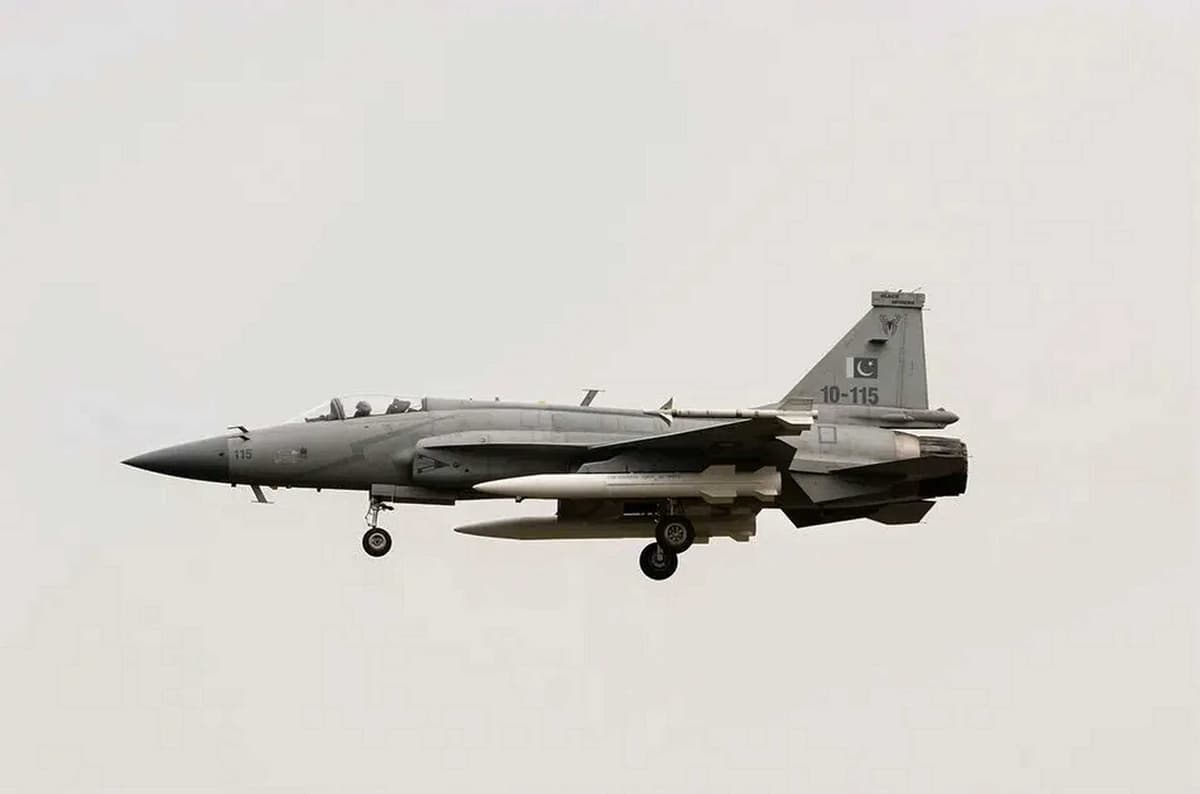
CM-400AKG Air-Launched Anti-Ship and Anti-Radiation Missile
Why It Matters
The weapon gives Pakistan and potential buyers a high‑speed, stand‑off anti‑ship and SEAD capability that forces navies to rethink traditional air‑defence and missile‑defence architectures.
Key Takeaways
- •Pakistan procured 60 CM-400AKG missiles in 2017‑18 for JF‑17 fighters
- •Missile claims 400 km range and Mach 5 terminal speed after 2025 conflict
- •First combat use alleged against Indian S‑400 radar during May 2025 war
- •Serbia became second export customer, integrating missiles on MiG‑29SM+ jets
Pulse Analysis
The CM‑400AKG represents a distinct class of air‑launched weapons, blending solid‑fuel rocket propulsion with a quasi‑ballistic trajectory. Unlike ramjet‑powered cruise missiles such as the BrahMos or China’s CM‑302, the missile climbs to altitude, coasts, then dives steeply at Mach 5, compressing the defender’s reaction window. This flight profile demands high‑angle tracking and terminal‑phase intercept capabilities, shifting the threat from traditional sea‑skimming engagements to a vertical, kinetic‑energy strike that challenges existing naval radar and missile‑defence suites.
During the May 2025 India‑Pakistan conflict, Pakistan asserted that a JF‑17 launched a CM‑400AKG equipped with a passive radar seeker to suppress an Indian S‑400 air‑defence battery. While Indian sources dispute the kill, the episode highlights a doctrinal shift: the missile’s dual‑role seeker enables both anti‑ship and anti‑radiation missions, allowing a fighter‑borne platform to threaten high‑value air‑defence assets from above. The steep‑dive, high‑speed attack reduces engagement time to seconds, forcing adversaries to integrate ballistic‑missile‑defence concepts into naval air‑defence planning.
The export of the CM‑400AKG to Serbia in 2026 broadens its potential market, demonstrating compatibility with Russian‑derived airframes like the MiG‑29. This flexibility, combined with a lighter weight (≈910 kg) and claimed 400 km reach, makes it attractive to nations lacking access to Western or Indo‑Russian systems. Compared with BrahMos, the CM‑400AKG offers higher terminal speed and a built‑in SEAD capability, though it lacks the proven service record and larger warhead of its rival. As more air forces evaluate high‑speed quasi‑ballistic options, the CM‑400AKG could shape a new multi‑axis anti‑ship architecture that compels navies to develop layered, high‑angle interception solutions.
CM-400AKG Air-Launched Anti-Ship and Anti-Radiation Missile
Comments
Want to join the conversation?
Loading comments...