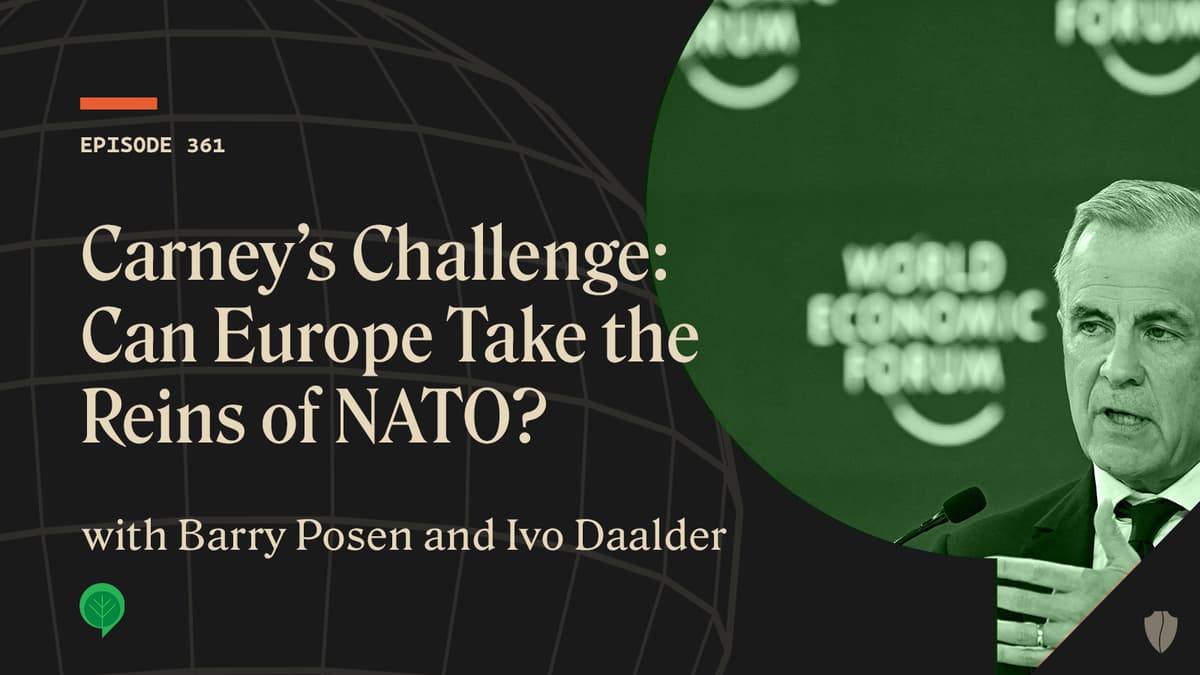
CNAS Podcast | Carney’s Challenge: Can Europe Take the Reins of NATO?
•February 10, 2026
0
Why It Matters
Shifting NATO leadership could reshape transatlantic security dynamics and limit U.S. leverage, impacting defense spending, alliance cohesion, and global stability.
Key Takeaways
- •Carney warns of systemic rupture, not transition
- •Middle powers urged to diversify away from US dependence
- •Posen and Daalder discuss Europe's NATO leadership potential
- •Podcast explores feasibility of new transatlantic partnerships
- •Debate centers on strategic autonomy versus alliance cohesion
Pulse Analysis
Mark Carney’s Davos address sparked a fresh debate about the durability of the post‑World‑War II security architecture. By labeling the current moment a "rupture" rather than a smooth transition, Carney highlighted the growing uncertainty that middle powers face as great‑power competition intensifies. His call for diversified partnerships reflects a broader trend among countries like Canada, Australia, and Japan to seek alternatives to exclusive reliance on the United States, a shift that could recalibrate diplomatic and economic ties across the Indo‑Pacific and Atlantic corridors.
The CNAS podcast episode featuring Barry Posen and Ivo Daalder dives into whether Europe can step into a more assertive NATO role. Both scholars note that while European nations possess the political will to assume greater responsibility, structural challenges—such as uneven defense spending, divergent threat perceptions, and the legacy of U.S. strategic primacy—remain formidable. They explore the concept of "strategic autonomy," arguing that a Europe‑led NATO could enhance collective resilience but also risk fragmenting the alliance if not carefully coordinated with Washington.
For policymakers and defense industry leaders, the discussion signals a potential reallocation of resources and a redefinition of alliance priorities. A Europe‑centric NATO might accelerate investment in indigenous capabilities, cyber defenses, and rapid‑reaction forces, while prompting the United States to reassess its forward‑deployed footprint. Understanding these dynamics is crucial for firms navigating procurement cycles and for governments crafting long‑term security strategies in an era where geopolitical fault lines are being redrawn.
CNAS Podcast | Carney’s Challenge: Can Europe Take the Reins of NATO?
0
Comments
Want to join the conversation?
Loading comments...