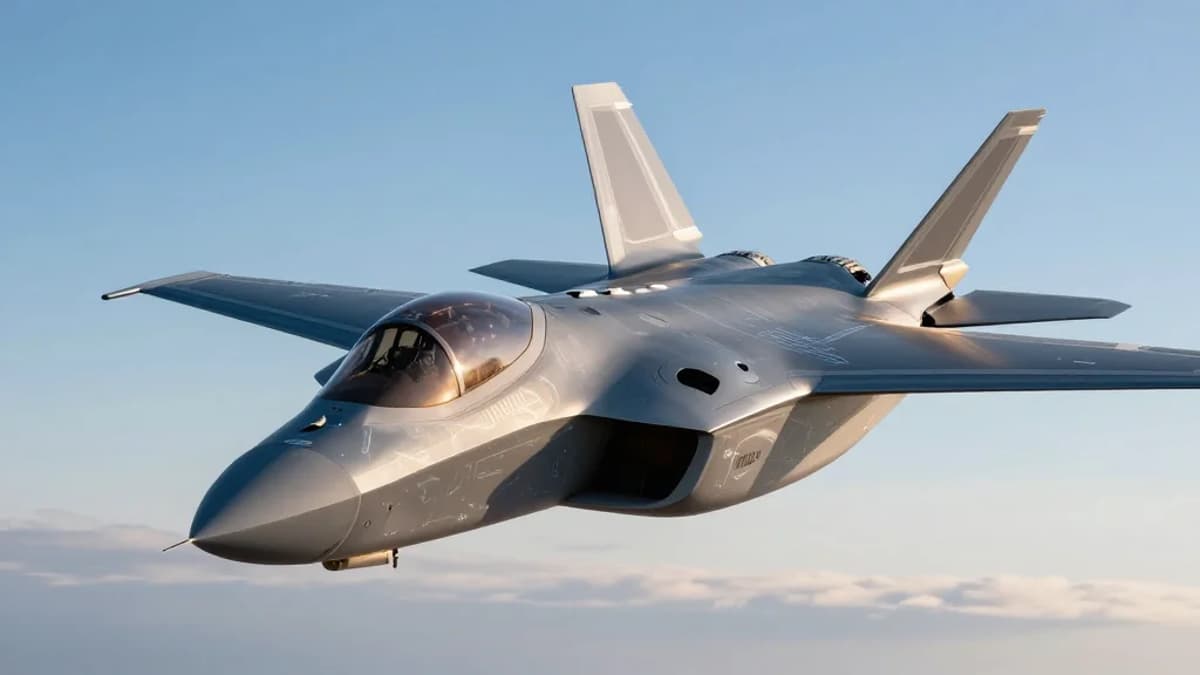
Collins and GA-ASI Advance CCA with Sidekick Flight Demonstration
•February 23, 2026
0
Why It Matters
The flight validates a scalable autonomy solution that can accelerate the Air Force’s shift toward crew‑uncrewed teaming, reshaping future combat operations and procurement strategies.
Key Takeaways
- •Sidekick software completed four‑hour autonomous flight
- •Integration achieved on GA‑ASI YFQ‑42A platform
- •Demonstrates open‑systems approach for crew‑uncrewed collaboration
- •Supports USAF CCA Increment 1 development goals
- •Targets 100+ collaborative combat aircraft in five years
Pulse Analysis
The U.S. Air Force’s Collaborative Combat Aircraft (CCA) initiative is redefining how legacy platforms and emerging autonomous systems cooperate in contested airspaces. By pairing crewed fighters with uncrewed jets, the program seeks to multiply sensor coverage, increase survivability, and reduce pilot workload. Early-stage contracts awarded to industry leaders such as Anduril, Boeing, and GA‑ASI signal a strategic pivot toward modular, open‑architecture solutions that can be rapidly fielded and upgraded as technology evolves.
Collins Aerospace’s Sidekick software played a pivotal role in the recent YFQ‑42A flight test, delivering four continuous hours of autonomous operation while remaining under the supervision of a ground‑based operator. The system’s open‑systems design allowed it to interface directly with the jet’s mission avionics, issuing precise flight commands without extensive re‑coding. This flexibility not only shortens integration timelines but also enables mission‑specific tailoring, allowing commanders to adjust autonomy levels to match pilot preferences and operational objectives.
Looking ahead, the successful demonstration positions Sidekick as a cornerstone technology for the broader CCA fleet, which aims to field more than a hundred collaborative aircraft in the next half‑decade. The ability to seamlessly blend human decision‑making with machine precision could drive cost efficiencies, reduce attrition, and open new tactical concepts such as swarming and distributed lethality. As defense budgets increasingly prioritize autonomous capabilities, vendors that deliver interoperable, open‑source platforms are likely to capture a larger share of future procurement, reshaping the competitive landscape of aerospace and defense.
Collins and GA-ASI advance CCA with Sidekick flight demonstration
0
Comments
Want to join the conversation?
Loading comments...