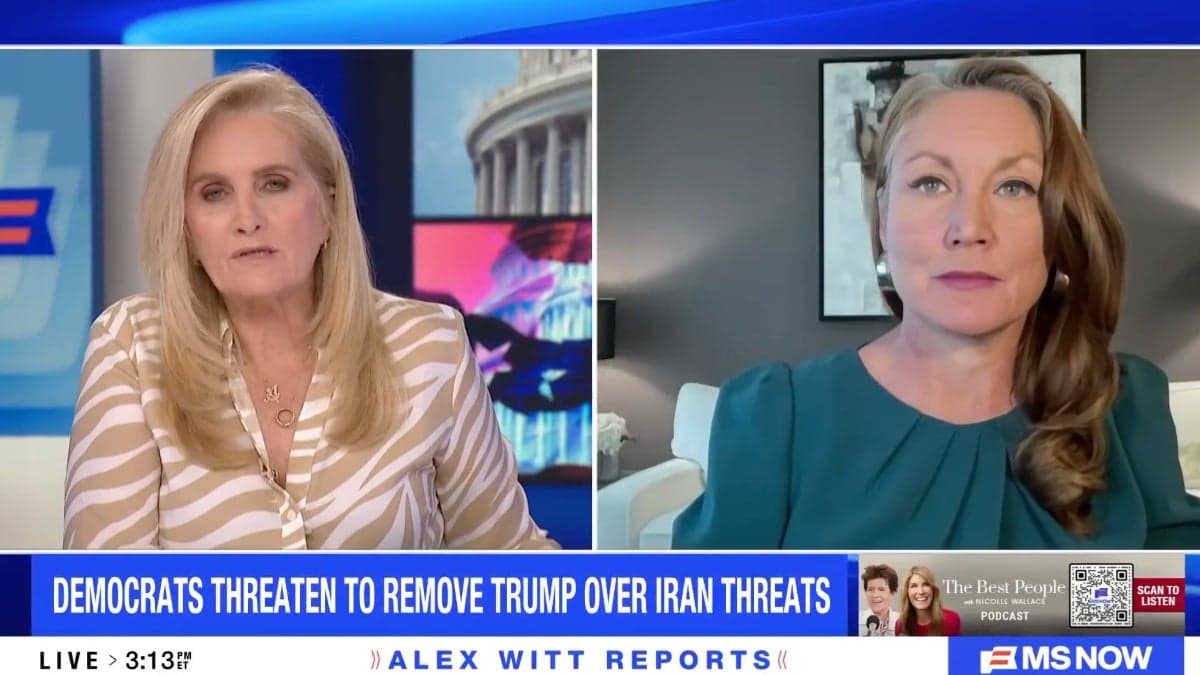
Congresswoman Behind 25th Amendment Effort Says Trump ‘Has No Idea What He’s Doing’ as Iran Conflict Escalates | Video
Why It Matters
The push to invoke the 25th Amendment amid an active Iran‑U.S. conflict underscores a rare constitutional challenge to presidential authority and could reshape both domestic accountability and foreign‑policy decision‑making.
Key Takeaways
- •Stansbury co‑sponsors 25th Amendment bill to remove Trump
- •50 Democrats back the removal effort; cabinet approval required
- •Iran halted Strait of Hormuz reopening, firing on two vessels
- •Trump claimed peace talks progressing despite rising tensions
Pulse Analysis
The Strait of Hormuz, a critical chokepoint for global oil shipments, has become a flashpoint as Iran halted its reopening and engaged two U.S. vessels with gunfire. The escalation follows a series of U.S. strikes and a mounting death toll that includes 13 service members killed and thousands of civilians displaced across the region. Analysts warn that any prolonged closure could disrupt energy markets and force multinational navies to reassess navigation protocols, while the humanitarian fallout adds pressure on Washington to de‑escalate quickly.
Against this backdrop, Rep. Melanie Stansbury has escalated the political battle by co‑authoring legislation that would trigger the 25th Amendment, a constitutional mechanism designed for a president deemed mentally or physically unfit. Historically invoked only once—in 1973 when Vice President Spiro Agnew resigned and again during the 1974 Nixon resignation process—the amendment requires a majority of the cabinet and the vice president to declare the president unable to discharge the powers of his office. Stansbury’s bill, supported by 50 House Democrats, aims to formalize that process for Trump, arguing his contradictory statements on the Iran conflict reveal a lack of coherent strategy. However, the Republican‑controlled cabinet and a vice president loyal to the president present formidable obstacles.
If the amendment effort gains traction, it could set a precedent for congressional and executive branch checks during foreign crises, potentially curbing unilateral presidential war powers. Conversely, a failed attempt may deepen partisan divides and embolden the administration’s aggressive posture in the Middle East. Stakeholders—from defense contractors to energy traders—are watching closely, as the outcome will influence not only U.S. political stability but also the broader calculus of international conflict resolution.
Congresswoman Behind 25th Amendment Effort Says Trump ‘Has No Idea What He’s Doing’ as Iran Conflict Escalates | Video
Comments
Want to join the conversation?
Loading comments...