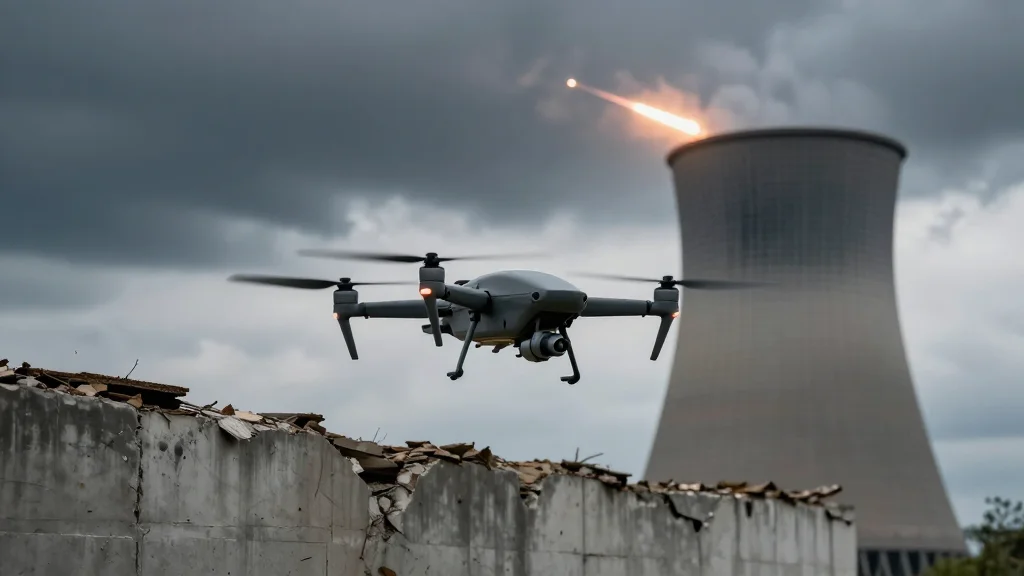
Coordinated Strikes on Chernobyl Anniversary Kill 16, Raise Nuclear Safety Fears

Why It Matters
The attacks on the Chernobyl anniversary illustrate how the Ukraine war is intersecting with nuclear safety, raising the specter of a radiological incident that could have trans‑border consequences. Prompt repairs to the New Safe Confinement are essential to prevent a release of radioactive material, and the $586 million funding gap underscores the need for swift international financial support. Beyond the immediate safety concerns, the strikes demonstrate the increasing use of long‑range drones to hit strategic targets deep inside Russia, reshaping the conflict’s geography and forcing both sides to reconsider rules of engagement around critical infrastructure. The diplomatic overtures between Russia and North Korea further complicate the security calculus, potentially expanding the pool of actors with advanced military capabilities in the region.
Key Takeaways
- •Coordinated strikes on the 40th Chernobyl anniversary killed at least 16 people across Ukraine, occupied territories and Russia.
- •Dnipro suffered nine fatalities; Sevastopol, Luhansk and Belgorod also reported deaths.
- •IAEA warns that damage to Chernobyl’s New Safe Confinement requires immediate repairs costing $586 million.
- •Ukraine’s long‑range drones can reach targets up to 900 miles inside Russia, striking oil facilities and civilian sites.
- •Russia’s Defense Minister Andrei Belousov announced a new long‑term military cooperation pact with North Korea.
Pulse Analysis
The convergence of symbolic timing and tactical escalation marks a new phase in the Ukraine conflict. By aligning strikes with the Chernobyl anniversary, both Kyiv and Moscow are leveraging historical trauma to amplify international attention. Zelensky’s framing of Russian attacks as "nuclear terrorism" is designed to pressure Western capitals into accelerating financial and technical assistance for Chernobyl’s containment, a move that could reshape aid flows beyond conventional military support.
From a strategic standpoint, Ukraine’s deployment of 900‑mile‑range drones signals a shift from defensive posturing to offensive deep‑strike capability. This not only strains Russian logistics—by threatening fuel production at facilities like Yaroslavl—but also forces Moscow to allocate air‑defense resources across a broader front, potentially diluting its ability to concentrate forces in the eastern theater. The Russian response, including claims of full control over Luhansk and diplomatic outreach to North Korea, suggests an attempt to offset military pressure with political alliances.
Looking ahead, the risk calculus surrounding Chernobyl will likely dominate diplomatic discourse. Any further degradation of the New Safe Confinement could trigger emergency protocols under the Convention on Early Notification of a Nuclear Accident, compelling the International Atomic Energy Agency to coordinate a multinational response. The $586 million repair estimate, while substantial, is modest compared to the broader economic costs of a radiological release. Stakeholders—governments, insurers, and energy markets—will be watching closely as the IAEA mobilizes resources, and the outcome may set a precedent for how conflict zones manage legacy nuclear hazards in real time.
Coordinated Strikes on Chernobyl Anniversary Kill 16, Raise Nuclear Safety Fears
Comments
Want to join the conversation?
Loading comments...