Why It Matters
The surge positions Qatar as a fast‑growing market for global defence suppliers and reshapes the security calculus in the Persian Gulf, prompting rivals to reassess their own capabilities.
Key Takeaways
- •Defence budget projected at $12 billion for 2026 fiscal year
- •Air‑defence systems receive 40% of total allocation
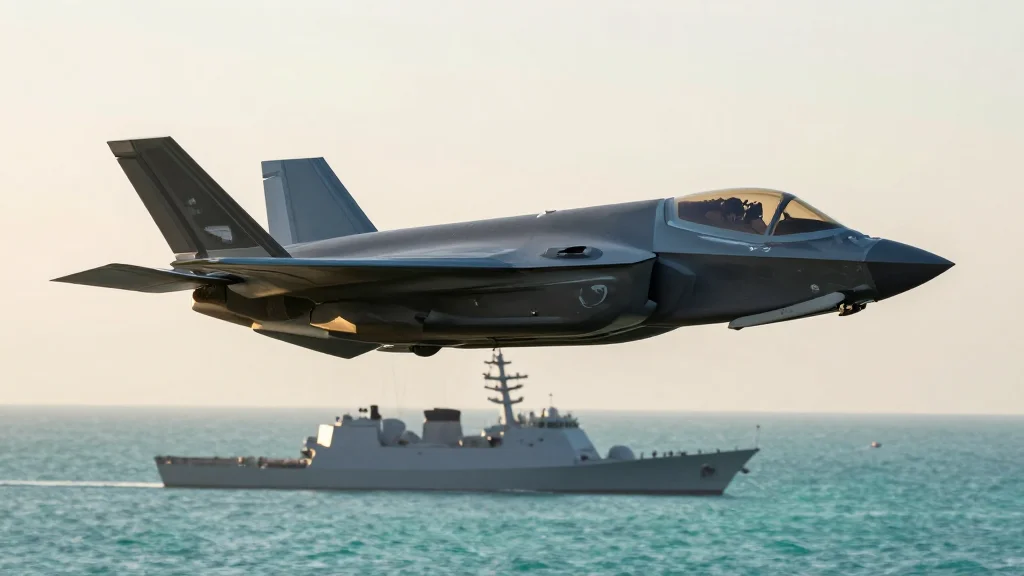
- •Qatar signs $3.5 billion contract with US for F‑35 jets
- •Domestic shipyard aims to produce first indigenous frigate by 2028
- •Strategic partnership with Turkey expands joint‑venture drone production
Pulse Analysis
Qatar’s defence budget has entered a new growth phase, climbing to an estimated $12 billion for the 2026 fiscal year. The increase, driven by regional security concerns and the desire to diversify revenue streams, represents a roughly 90% jump from the 2022 allocation. Analysts attribute the surge to heightened rivalry with neighboring states, the need to protect critical infrastructure, and Qatar’s ambition to transition from a net importer of weapons to a partial producer. By allocating nearly half of the budget to air‑defence, Doha signals a priority on protecting its airspace against advanced missile threats.
The procurement strategy is heavily weighted toward high‑technology platforms. A landmark $3.5 billion contract with the United States secures 36 F‑35 Lightning II jets, while parallel agreements with France and the United Kingdom bring in Eurofighter Typhoons and naval frigates. Simultaneously, Qatar is nurturing a domestic shipbuilding sector; the state‑owned Qatar Shipbuilding and Offshore Company plans to launch its first indigenously built frigate by 2028, supported by technology transfer from European partners. A strategic partnership with Turkey further expands local capabilities, establishing a joint‑venture to assemble and export tactical drones, a move that aligns with the Gulf’s growing appetite for unmanned systems.
For defence contractors, Qatar’s market now offers a multi‑billion‑dollar pipeline across air, sea and land domains. The country’s willingness to blend foreign procurement with domestic industrial development creates opportunities for offset agreements, technology transfer and long‑term maintenance contracts. Moreover, the heightened spending underscores a broader shift in Gulf security dynamics, prompting neighboring states to accelerate their own modernisation programmes. Companies that can navigate Qatar’s regulatory environment and deliver integrated solutions stand to gain a foothold in a market that is set to remain a focal point of regional defence investment for the foreseeable future.
Country analysis: Qatar defence market
Comments
Want to join the conversation?
Loading comments...