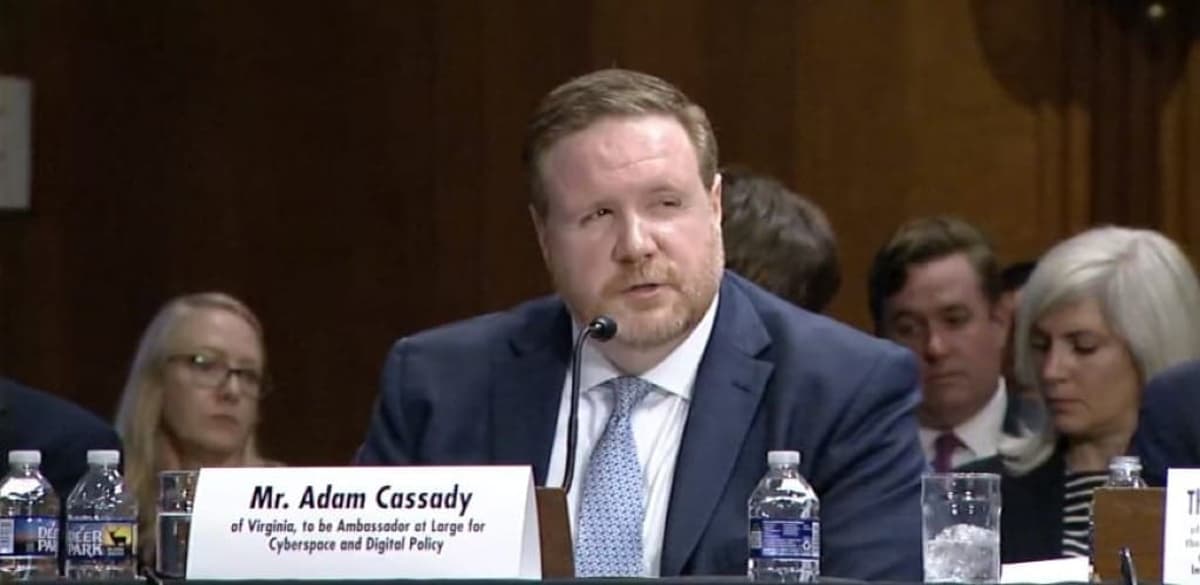
Cyber Nominee Warns U.S. Could ‘Cede Strategic Ground’ on Digital Infrastructure
Why It Matters
The nomination signals a heightened U.S. focus on protecting digital supply chains and influencing international standards, a prerequisite for maintaining economic and security leadership in the digital age.
Key Takeaways
- •Cassady nominated as ambassador at large for cyberspace and digital policy
- •He warns U.S. could lose strategic ground in digital infrastructure
- •Focus on securing supply chains, trusted vendors, and open internet standards
- •Role will coordinate cyber policy across agencies and represent U.S. globally
- •U.S. competitors invest heavily to dominate digital supply chains and standards
Pulse Analysis
The Senate hearing underscored a shift in how policymakers view digital infrastructure, treating subsea fiber routes, satellite constellations and semiconductor fabs as extensions of traditional strategic assets. Cassady, a former FCC chief of staff and NTA deputy assistant secretary, leveraged his experience with the $42.45 billion BEAD broadband rollout to argue that economic security now hinges on resilient, trusted networks. By framing "economic security as national security," he linked private‑sector innovation to broader geopolitical stability.
Cassady’s warning reflects growing anxiety that adversaries could embed coercive actors into critical supply chains, eroding U.S. leverage in global standards‑setting bodies. China’s aggressive push for domestic chip production and Europe’s push for data‑localization illustrate a fragmented digital landscape. The nominee emphasized that without coordinated defense of trusted vendors and interoperable protocols, the United States risks falling behind in emerging technologies such as 6G, quantum communications, and AI‑driven networking. His testimony highlighted the need for a unified approach to protect the backbone of the digital economy.
If confirmed, Cassady will head the State Department’s Bureau of Cyberspace and Digital Policy, a role designed to synchronize cyber initiatives across the Treasury, Commerce and Defense departments while representing U.S. interests at the ITU, WTO and other multilateral forums. The position aims to forge "coalitions of trusted partners" that can counter coercive trade practices and promote open, interoperable standards. For industry leaders, this translates into clearer guidance on compliance, heightened scrutiny of foreign equipment, and potential incentives for domestic supply‑chain investments, all of which could reshape capital allocation in telecom, cloud services and semiconductor manufacturing.
Cyber Nominee Warns U.S. Could ‘Cede Strategic Ground’ on Digital Infrastructure
Comments
Want to join the conversation?
Loading comments...