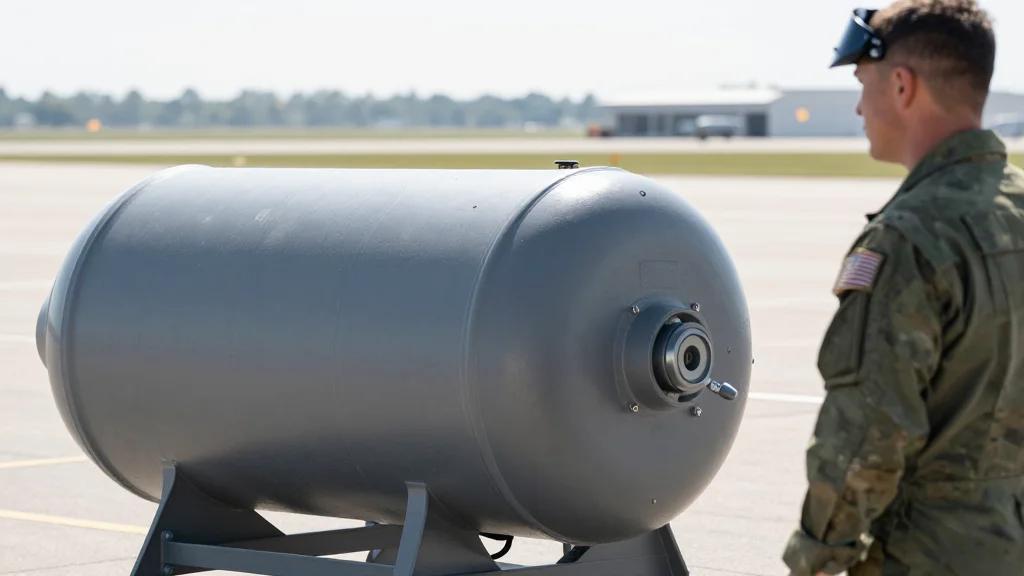
DAF Announces Next Steps in Advanced Nuclear Power for Installations Initiative
Why It Matters
Deploying compact nuclear reactors gives the Air Force a strategic edge by securing reliable, low‑maintenance power for remote and contested sites, while also driving broader defense‑energy innovation. The initiative signals a shift toward sustainable, high‑density energy solutions across the U.S. military.
Key Takeaways
- •DAF aims to field 10‑MW modular reactors by 2029
- •Program leverages Department of Energy’s advanced reactor designs
- •Initial deployments focus on remote airbases and space launch sites
- •Funding includes $250 million FY‑2025 allocation for R&D
- •Partnerships formed with private firms like BWX Technologies
Pulse Analysis
The Air Force’s renewed focus on advanced nuclear power reflects a broader defense trend toward energy independence and operational resilience. Traditional diesel generators are vulnerable to supply chain disruptions and emit high levels of carbon, constraints that are increasingly untenable in high‑tempo, forward‑deployed environments. By integrating small modular reactors (SMRs), the DAF aims to provide continuous, low‑maintenance electricity that can sustain critical communications, radar, and launch operations even under contested conditions. This shift also aligns with the Pentagon’s Climate‑Ready Defense strategy, reducing the service’s carbon footprint while enhancing mission readiness.
At the heart of the initiative are collaborations with the Department of Energy’s national labs and industry leaders such as BWX Technologies, NuScale Power, and X-energy. These partners contribute proven reactor designs that have passed rigorous safety and licensing milestones, accelerating the path from prototype to fielded system. The DAF’s roadmap outlines a phased deployment: initial pilot plants at remote airbases, followed by scaling to larger installations supporting space launch complexes. The $250 million FY‑2025 budget earmarked for research and development underpins critical activities, including fuel fabrication, modular construction techniques, and integration with existing grid infrastructure.
The strategic implications extend beyond the Air Force. Successful SMR deployment could set a precedent for other services, catalyze commercial nuclear innovation, and stimulate a domestic supply chain for advanced reactor components. Energy‑secure bases reduce logistical burdens, freeing up transport assets for other operational priorities. Moreover, the initiative positions the United States as a leader in next‑generation nuclear technology, potentially influencing allied defense postures and export opportunities in the emerging global SMR market.
DAF announces next steps in Advanced Nuclear Power for Installations initiative
Comments
Want to join the conversation?
Loading comments...