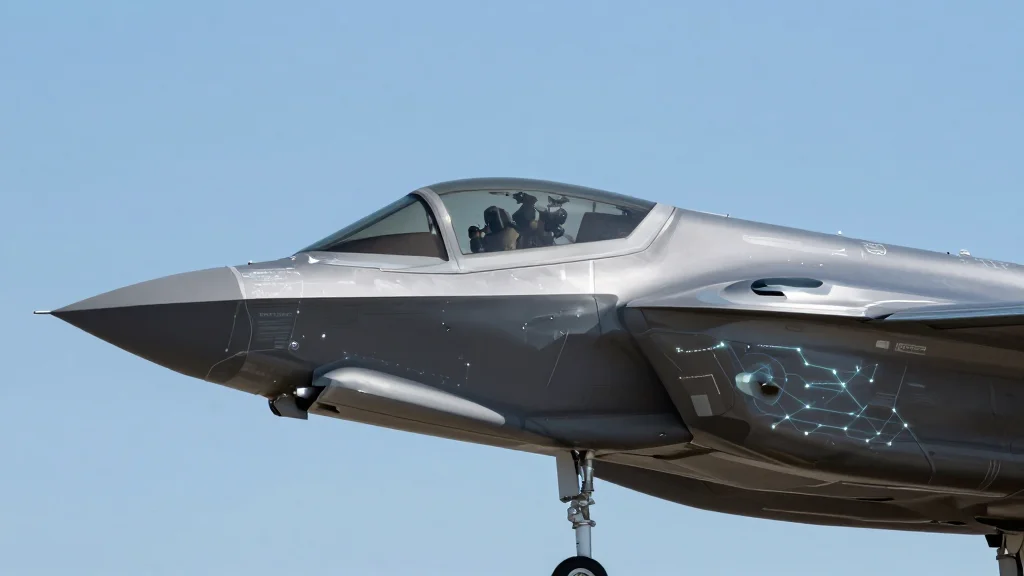
DAF Releases Data, AI Strategies to Accelerate Military Dominance
Why It Matters
Embedding AI and data as core mission enablers gives the Air Force a decisive decision advantage over near‑peer rivals and accelerates the delivery of combat‑ready capabilities.
Key Takeaways
- •DAF publishes Data and AI strategies to become AI‑first force
- •Strategies align with 2026 National Defense and Department of War AI plans
- •Decentralized data architecture aims to deliver trusted data at mission speed
- •AI priorities span training, readiness, and multi‑domain combat operations
- •Goal: institutionalize data/AI as core mission components by FY2026
Pulse Analysis
The Air Force’s public rollout of its Data and AI Strategies marks a watershed moment in U.S. defense modernization. By codifying a clear AI‑first doctrine, the service signals that artificial intelligence is no longer a peripheral tool but a central pillar of operational superiority. The strategies dovetail with the 2026 National Defense Strategy’s emphasis on technological overmatch, ensuring that the Air Force’s investments are synchronized with broader Department of Defense priorities and the Department of War’s AI roadmap. This alignment not only streamlines budgeting and acquisition but also sends a strong message to allies and adversaries about America’s commitment to maintaining air and space dominance through cutting‑edge tech.
A cornerstone of the new approach is a decentralized data architecture that treats data as the ammunition of modern warfare. By moving away from monolithic data silos, the Air Force can provide warfighters with real‑time, trusted information at the speed of mission execution. This shift supports a spectrum of use cases—from AI‑driven training simulators that accelerate skill acquisition to predictive maintenance algorithms that keep aircraft mission‑ready. Multi‑domain operations, which integrate air, space, cyber, and ground elements, stand to benefit from seamless data sharing, enabling faster decision cycles and more precise targeting against near‑peer threats.
For the defense industry and the broader tech ecosystem, the strategies create a clear demand pipeline for AI solutions, data platforms, and secure cloud services. Contractors that can deliver interoperable, low‑latency AI tools will find a receptive customer in the Air Force’s push for rapid fielding. Moreover, the emphasis on speed and operational relevance may spur public‑private partnerships focused on agile development and continuous integration. As the Air Force institutionalizes data and AI by FY2026, the ripple effect will likely accelerate innovation across the defense sector, shaping the next generation of combat‑ready technologies.
DAF releases data, AI strategies to accelerate military dominance
Comments
Want to join the conversation?
Loading comments...