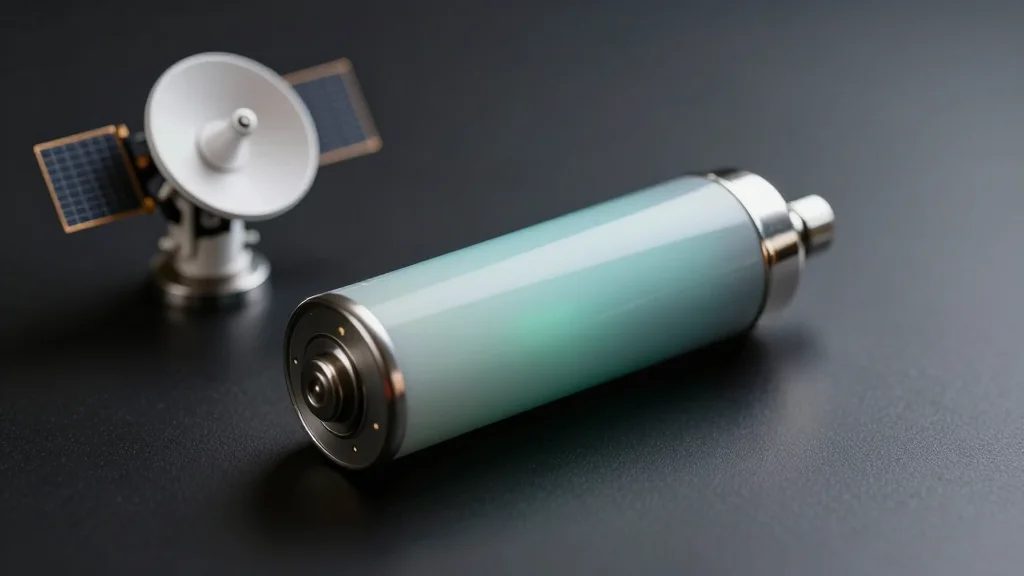
DARPA Grants $5.2 Million to Avalanche Energy for Space Radioactive Batteries

Companies Mentioned
Why It Matters
The DARPA contract underscores a strategic shift toward nuclear‑based power sources that can operate independently of sunlight, a critical advantage for contested space missions where solar panels are vulnerable. By pushing the energy density of radioactive batteries, the program could reduce satellite mass, extend mission lifespans, and enable new classes of low‑observable or deep‑space platforms that are currently limited by conventional battery technology. Beyond immediate defense uses, the research could accelerate commercial space endeavors, offering a reliable power source for lunar habitats, asteroid mining equipment, and long‑duration probes. The cross‑pollination of fusion‑related technology with radioisotope power also positions Avalanche Energy at the nexus of two high‑risk, high‑reward energy domains, potentially reshaping the future of portable power for both military and civilian applications.
Key Takeaways
- •DARPA awarded Avalanche Energy $5.2 million under the Rads to Watts program.
- •Goal: a radioactive battery delivering >10 watts per kilogram to power a laptop‑class system for months.
- •Current radioactive batteries provide ~2 Wh/kg; target represents a ten‑fold increase in power density.
- •Consortium includes University of Utah, Caltech, Los Alamos National Lab and McQuaide Microsystems.
- •Prototype testing and environmental validation expected by late 2026.
Pulse Analysis
DARPA’s investment in Avalanche Energy reflects a broader defense trend of diversifying power architectures away from traditional chemical batteries. The ability to generate sustained power in harsh, radiation‑filled environments could give the U.S. a decisive edge in low‑Earth orbit where adversaries are developing anti‑satellite capabilities that target solar arrays and conventional power systems. By embedding nuclear‑grade power in small form factors, future constellations could maintain operational readiness even after prolonged eclipse periods or in deep‑space missions where solar flux is insufficient.
Historically, the military has relied on radioisotope thermoelectric generators (RTGs) for deep‑space probes, but their bulk and low power output have limited adoption in tactical platforms. Avalanche’s alpha‑voltaic approach promises a solid‑state, scalable solution that could be mass‑produced for a range of platforms, from CubeSats to high‑value reconnaissance assets. If the prototype meets its performance targets, we may see a rapid cascade of contracts from other services—Air Force Space Command, Navy’s Space and Missile Defense Command, and even the intelligence community—seeking to integrate these batteries into next‑generation payloads.
However, the path forward is fraught with regulatory and safety hurdles. Handling radioactive material in orbit raises proliferation concerns and requires stringent launch‑vehicle certification. Moreover, the technology’s reliance on alpha emitters means that shielding and thermal management will be critical design considerations. The success of this DARPA effort will likely hinge on Avalanche’s ability to demonstrate not just raw power density but also robust, fail‑safe operation under the extreme conditions of space. Should they succeed, the ripple effect could accelerate the commercialization of compact nuclear power, opening new markets for both defense and civilian space enterprises.
DARPA Grants $5.2 Million to Avalanche Energy for Space Radioactive Batteries
Comments
Want to join the conversation?
Loading comments...