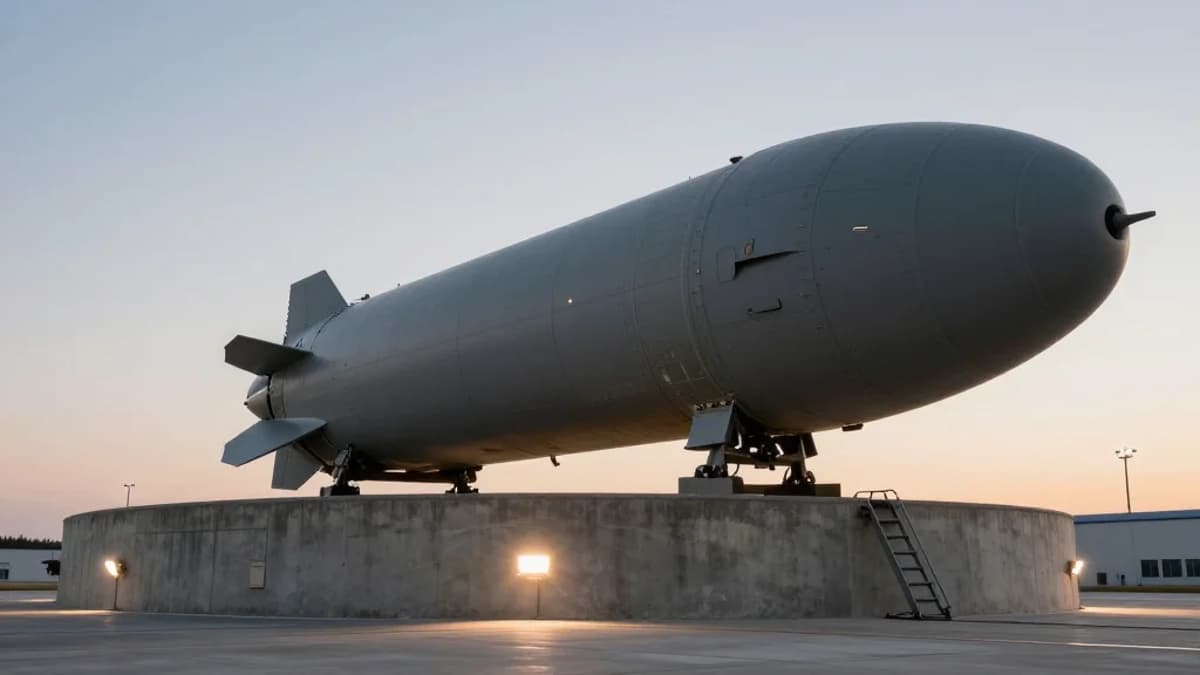
Delivering Deterrence: Sentinel Restructure to Complete in 2026; Initial Capability Timeline Set
•February 17, 2026
0
Why It Matters
Sentinel delivers a modernized, survivable land‑based nuclear deterrent, reinforcing U.S. strategic stability and meeting the 2026 National Defense Strategy’s speed imperative. Accelerated acquisition and infrastructure reforms reduce risk and ensure credible deterrence for decades.
Key Takeaways
- •DRPM centralizes authority for critical weapon systems
- •Sentinel restructure to finish 2026, Milestone B decision
- •First full three‑stage test missile assembled last fall
- •New silo construction replaces aging Minuteman sites
- •First operational launch targeted for 2027
Pulse Analysis
The Sentinel program reflects a decisive shift in U.S. defense procurement, driven by the 2026 National Defense Strategy’s call for rapid modernization. By installing a Direct Reporting Portfolio Manager, the Air Force has streamlined governance across the most complex weapon systems, allowing cross‑functional teams to resolve trade‑offs without the traditional bureaucratic lag. This governance model not only accelerates the Milestone B decision but also aligns acquisition, infrastructure, and operational transition under a single accountable leader, setting a new benchmark for high‑stakes defense projects.
Technical maturity has surged in the past year, with the first complete three‑stage ground‑test missile assembled and the Stage‑2 solid‑rocket motor successfully qualified. These achievements validate core propulsion and launch‑support technologies, reducing developmental risk ahead of flight testing. Simultaneously, the program has adopted an agile "crawl, walk, run" testing cadence, enabling incremental validation of components and faster feedback loops. The decision to build new, purpose‑engineered silos—rather than retrofit legacy Minuteman structures—further cuts cost overruns and safety hazards, delivering a more resilient launch architecture that can be fielded on an accelerated schedule.
Beyond the hardware, Sentinel’s progress reshapes the strategic calculus for the United States and its allies. A modern, digital‑ready ICBM force complicates adversary decision‑making and reinforces deterrence credibility, a cornerstone of global stability. The program also sustains the industrial base, with Northrop Grumman and partner firms scaling up advanced manufacturing and construction capabilities. As the first missile‑pad launch approaches in 2027, the initiative signals a broader transformation in how the Department of Defense tackles large‑scale, high‑risk modernization, balancing speed, affordability, and long‑term security.
Delivering deterrence: Sentinel restructure to complete in 2026; initial capability timeline set
0
Comments
Want to join the conversation?
Loading comments...