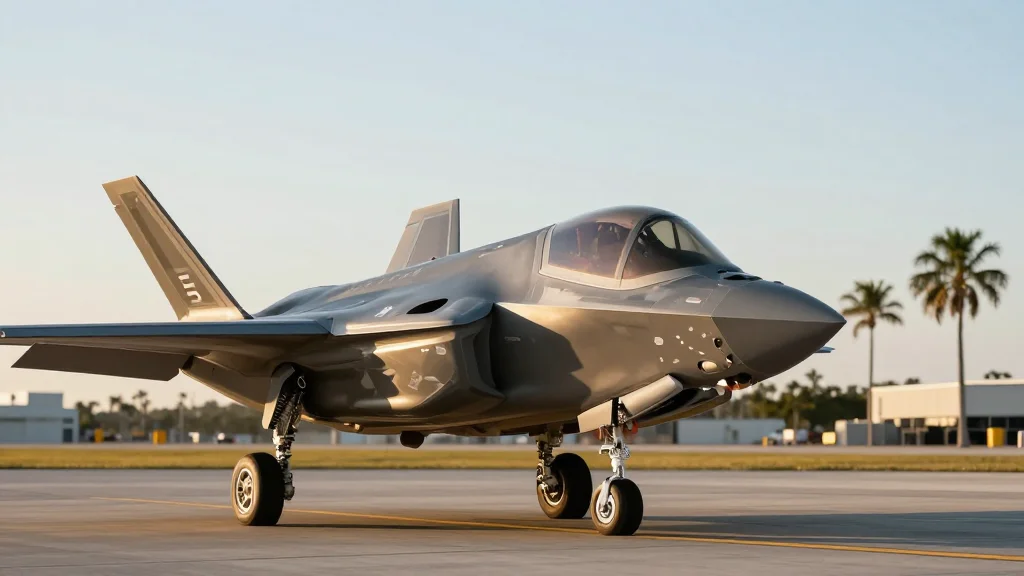
Department of the Air Force Announces Homestead ARB as Candidate for Future F-35A Basing
Why It Matters
The shift brings fifth‑generation fighter capability to the Reserve component, enhancing deterrence in the Southern Command area and driving economic activity in South Florida.
Key Takeaways
- •Homestead ARB selected as candidate for F‑35A basing
- •Recapitalization will replace 24 F‑16s with 24 F‑35As
- •Initial operational capability targeted for fall 2034
- •Full operational capability expected in 2035 after environmental review
- •Move strengthens Air Force Reserve presence in Southeast U.S.
Pulse Analysis
The Air Force’s selection of Homestead Air Reserve Base (ARB) as a candidate for future F‑35A basing reflects a broader effort to disperse fifth‑generation fighters across the service’s footprint. Situated just 30 miles from the Caribbean and the Gulf of Mexico, Homestead offers rapid access to the Southern Command’s area of responsibility, a region where the United States is increasingly focused on counter‑drug, humanitarian, and great‑power competition missions. By positioning the Lightning II at this forward‑looking installation, the Air Force can project advanced airpower closer to potential flashpoints while reducing reliance on congested mainland bases.
The proposed recapitalization will retire 24 legacy F‑16 Fighting Falcons and introduce an equal number of F‑35As, a transition that modernizes the Reserve’s combat fleet and aligns it with active‑duty capabilities. This swap is expected to generate roughly 1,200 construction and sustainment jobs over the next decade, bolstering the local economy in Homestead and surrounding Miami‑Dade County. Additionally, reserve pilots will gain hands‑on experience with stealth, sensor‑fusion, and network‑centric warfare, narrowing the readiness gap between reserve and active components.
While the basing decision is still subject to a final environmental impact analysis, the projected timeline—initial operational capability in fall 2034 and full capability by 2035—provides a clear roadmap for stakeholders. Achieving these milestones will enhance the United States’ deterrence posture in the Western Hemisphere, complementing allied air forces in the Caribbean and Central America. Moreover, the move underscores the Air Force’s commitment to a resilient, geographically diversified force structure, ensuring that next‑generation fighters remain operationally viable even as global threats evolve.
Department of the Air Force announces Homestead ARB as candidate for future F-35A basing
Comments
Want to join the conversation?
Loading comments...