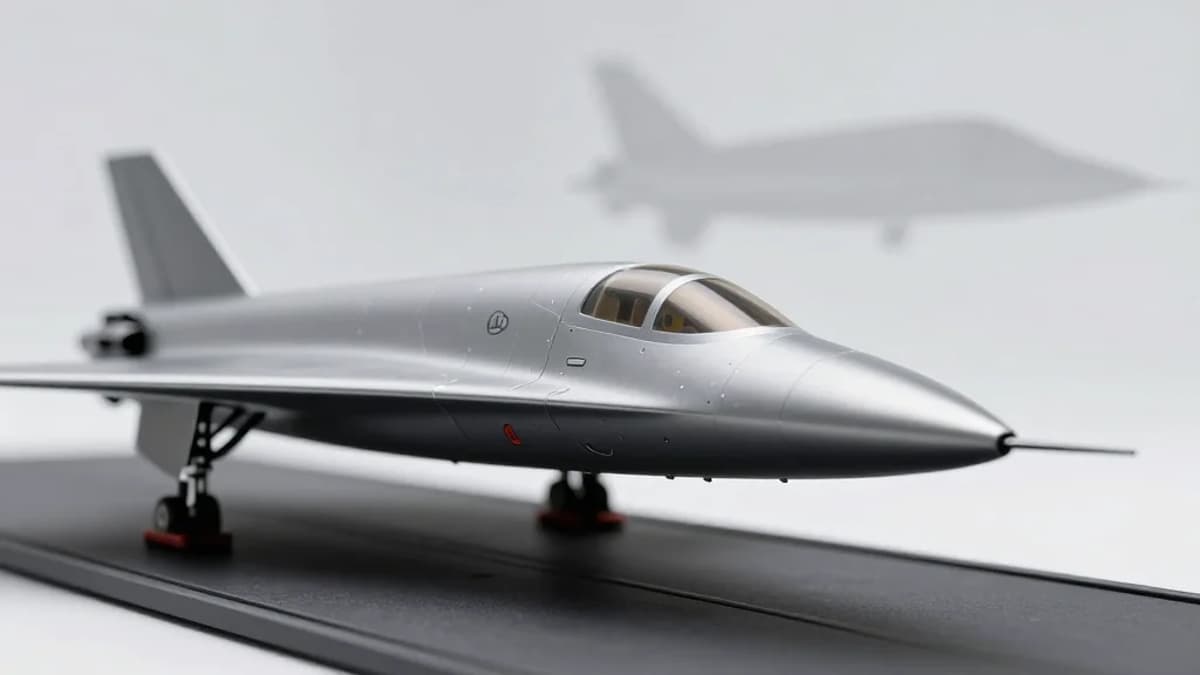
DIU Eyes First Launch for Its Commercial Hypersonic Testbed
•February 21, 2026
0
Why It Matters
By leveraging private launch services and scramjet technology, the test shortens development cycles and reduces costs, directly supporting the Department of Defense’s push for rapid, scalable hypersonic weapons deployment.
Key Takeaways
- •DIU targets late‑February launch of Hypersonix DART AE.
- •Rocket Lab’s HASTE suborbital launcher provides commercial boost.
- •Test will gather propulsion, aerothermal, and control data.
- •Program aims to increase Pentagon test cadence to weekly.
- •Success could enable reusable hypersonic vehicles for allies.
Pulse Analysis
The Pentagon’s hypersonic ambition has outpaced its testing infrastructure, prompting a strategic shift toward high‑cadence, low‑cost flight campaigns. Traditional test ranges are expensive and limited, constraining the ability to validate scramjet engines, thermal protection systems, and guidance algorithms. Initiatives such as the Multi‑Service Advanced Hypersonics Testbed and DIU’s HyCAT program aim to close that gap, targeting a future cadence of one test per week to keep pace with rapid advances in adversary capabilities.
HyCAT’s second mission epitomizes the commercial‑military partnership model. Rocket Lab repurposes its Electron‑derived HASTE vehicle as a sub‑orbital booster, while Australian firm Hypersonix supplies the DART AE testbed powered by its SPARTAN scramjet. By using a liquid‑fuel booster and a reusable test vehicle, the program extracts high‑value data on propulsion, aerothermal loads, and control dynamics without the overhead of a dedicated government launch system. This approach also enables rapid prototyping of subsystems and materials, accelerating the transition from laboratory to flight.
If successful, the DART AE flight could pave the way for reusable hypersonic platforms that serve both U.S. forces and allied partners such as Australia. Reusability promises lower per‑flight costs and faster iteration cycles, essential for fielding operational weapons like the Air‑Launched Rapid Response Weapon and the Army’s Long‑Range Hypersonic Weapon. Moreover, demonstrating commercial viability attracts private investment, expanding the supply chain and fostering innovation across the aerospace sector. The outcome may well define the next generation of hypersonic testing and operational capability.
DIU Eyes First Launch for Its Commercial Hypersonic Testbed
0
Comments
Want to join the conversation?
Loading comments...