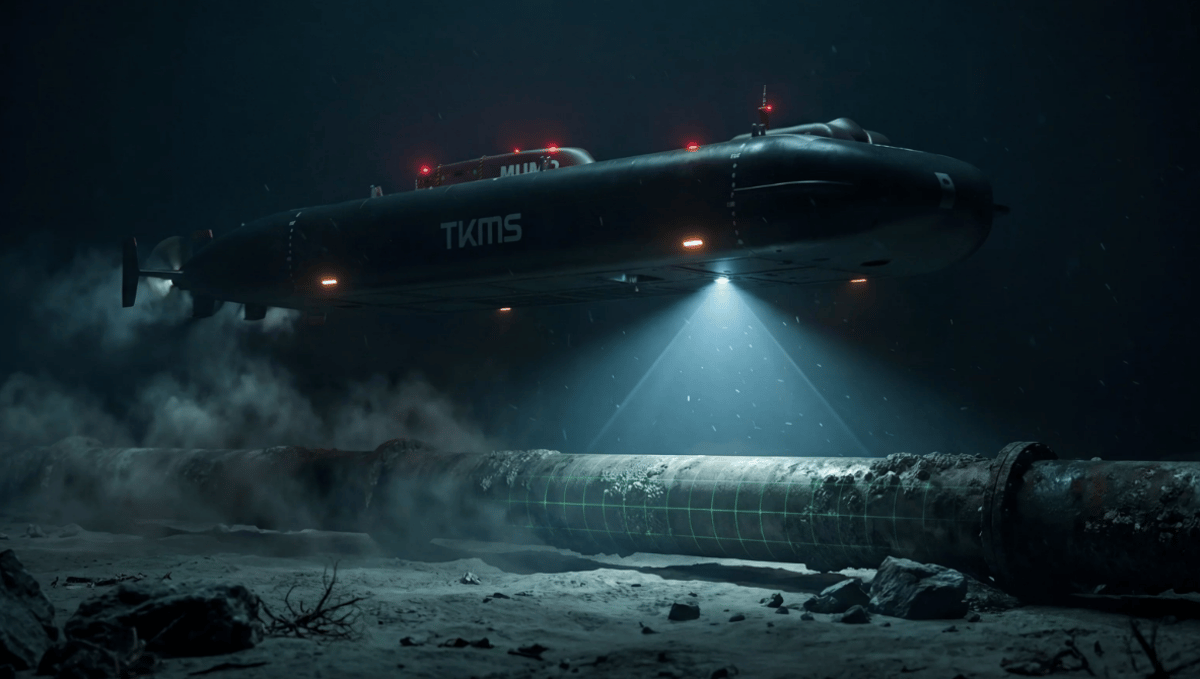
DNV Greenlights TKMS Autonomous Unmanned Watercraft
Companies Mentioned
Why It Matters
Securing DNV’s AiP removes a major regulatory barrier, accelerating the commercialization of autonomous maritime platforms and positioning Germany as a leader in next‑generation unmanned vessels. The milestone signals market readiness for larger scale adoption across defense, offshore, and logistics sectors.
Key Takeaways
- •DNV grants Approval in Principle for TKMS's MUM autonomous watercraft.
- •25‑meter demonstrator set for first sea trial in late 2026.
- •TKMS leads consortium with universities, DLR, EvoLogics, and Fraunhofer.
- •Project funded by Germany’s Federal Ministry for Economic Affairs and Energy.
- •Milestone clears class‑rule hurdle, paving way for series production.
Pulse Analysis
The maritime industry is on the cusp of a transformation driven by autonomous vessels, yet regulatory acceptance remains a critical bottleneck. Classification societies such as DNV play a gatekeeper role, ensuring that new technologies meet rigorous safety and performance standards. By issuing an Approval in Principle for TKMS’s MUM demonstrator, DNV validates the vessel’s compliance with its Underwater Technology rule and the Autonomous and Remotely Operated Vessels guideline, effectively setting a benchmark for future unmanned craft.
TKMS’s MUM platform, a 25‑meter by 7‑meter scalable demonstrator, represents a collaborative effort that unites shipbuilding expertise with cutting‑edge research from the University of Rostock, Technical University of Berlin, the German Aerospace Center (DLR), EvoLogics, and the Fraunhofer Institute for Communication, Information Processing and Ergonomics. Funded by the Federal Ministry for Economic Affairs and Energy, the project aims to conduct its first sea trials in late 2026 under specially designed scenarios. The consortium’s multidisciplinary approach addresses challenges ranging from autonomous navigation and acoustic communication to energy efficiency, positioning the MUM as a testbed for a new generation of unmanned maritime solutions.
The approval carries significant commercial implications. With the regulatory hurdle cleared, TKMS can transition from prototype to low‑rate production, offering customers in defense, offshore wind, and logistics a proven autonomous platform. Germany’s strategic investment underscores a broader national ambition to lead in maritime autonomy, potentially attracting further public and private funding. As more operators seek to reduce crew costs and enhance operational safety, the MUM’s successful deployment could catalyze a wave of series‑produced autonomous watercraft, reshaping supply chains and naval capabilities worldwide.
DNV greenlights TKMS autonomous unmanned watercraft
Comments
Want to join the conversation?
Loading comments...