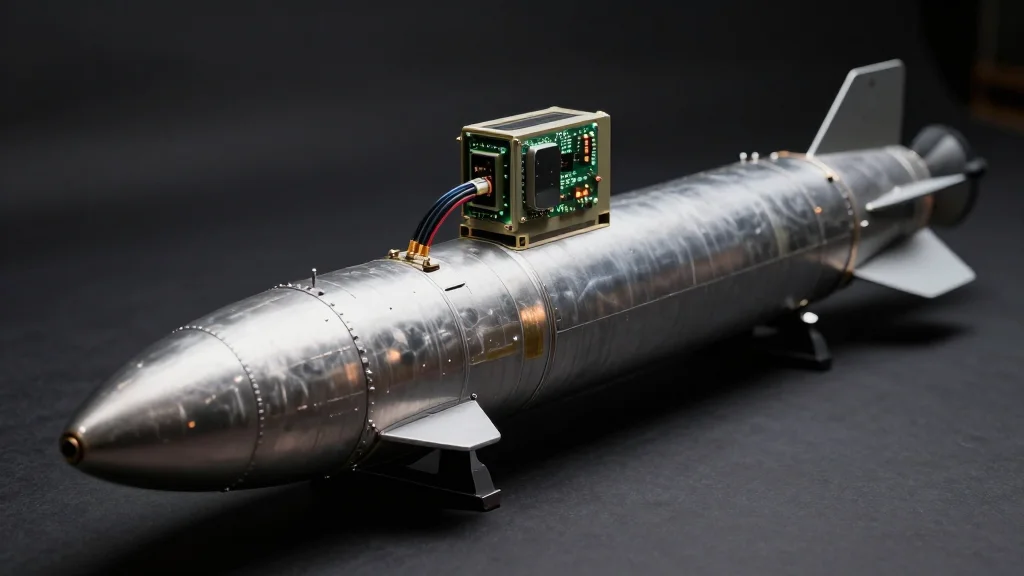
DoD Awards L3Harris Contract to Modernize Trident II D5 Missile Tracking

Companies Mentioned
Why It Matters
The Trident II D5 remains the linchpin of the United States’ sea‑based nuclear deterrent, a critical component of the broader nuclear triad that guarantees a survivable second‑strike capability. Upgrading its flight‑test instrumentation ensures that the missile’s performance can be validated with unprecedented precision, reinforcing confidence in the system’s reliability amid rising great‑power competition. Moreover, the contract underscores the DoD’s commitment to sustain legacy strategic assets while simultaneously pursuing next‑generation weapons, balancing immediate deterrence needs with long‑term modernization goals. For allies and partners, a modernized Trident testing regime signals that the United States maintains a robust and credible deterrent posture, deterring potential aggression and stabilizing strategic calculations. For adversaries, the enhanced telemetry capability reduces uncertainty about U.S. missile readiness, potentially influencing their own force planning and escalation thresholds.
Key Takeaways
- •DoD awarded L3Harris a contract modification on May 1, 2026 to upgrade Trident II D5 flight‑test instrumentation.
- •Funding covers engineering services and high‑fidelity data‑acquisition systems for missile test launches.
- •Trident II D5 missiles, deployed on Ohio‑class and future Columbia‑class submarines, form the sea‑based leg of the U.S. nuclear triad.
- •Upgraded telemetry will capture detailed trajectory, guidance, and re‑entry data to certify missile reliability.
- •The modernization supports continued deterrent credibility while the Navy develops a Trident II D5‑LE life‑extension variant.
Pulse Analysis
The L3Harris contract reflects a pragmatic approach by the Pentagon: rather than replace a proven strategic system, it opts to extend its relevance through incremental, high‑impact upgrades. Historically, the Trident fleet has undergone periodic life‑extension programs, but the focus on telemetry marks a shift toward data‑centric assurance. In an era where adversaries are fielding advanced anti‑access/area‑denial capabilities, the ability to prove that each missile can reliably navigate complex trajectories and deliver multiple warheads is a strategic differentiator.
From a market perspective, the award reinforces the value chain around defense testing and instrumentation, a niche but critical segment where a handful of firms like L3Harris dominate. The contract may stimulate further investment in sensor miniaturization, high‑speed data links, and AI‑driven analysis tools that can parse the massive telemetry streams generated during launches. Competitors will likely seek to capture ancillary contracts for software analytics, creating a ripple effect across the defense tech ecosystem.
Looking forward, the success of this upgrade could set a precedent for similar modernization efforts across other legacy platforms, such as the Minuteman III ICBM or the B61 nuclear bomb. As the United States balances the need to maintain a credible deterrent with budgetary pressures, data‑rich testing may become the linchpin for extending the service lives of existing arsenals while new systems mature.
DoD awards L3Harris contract to modernize Trident II D5 missile tracking
Comments
Want to join the conversation?
Loading comments...