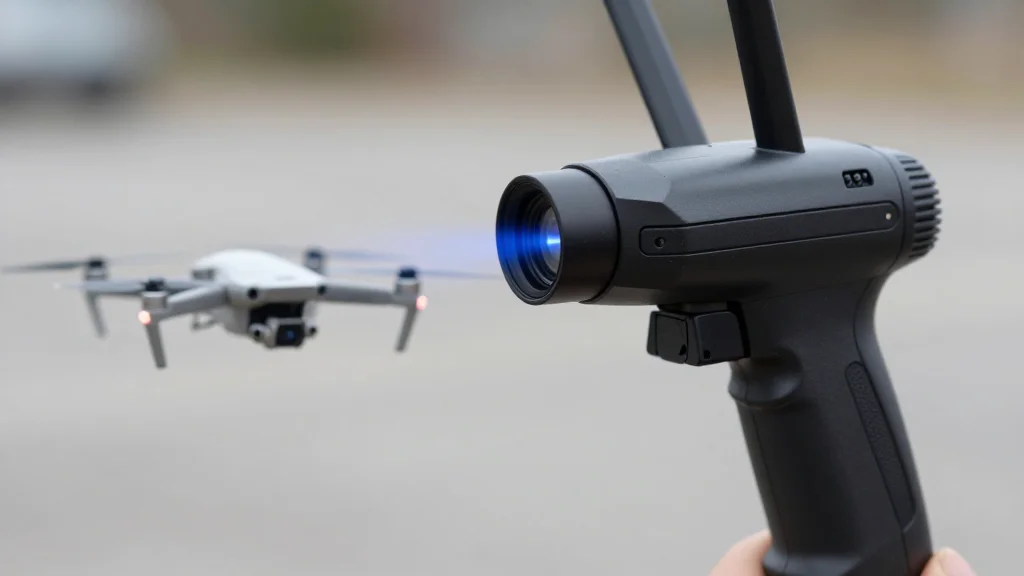
DoD Seeks Expanded Investment in Counter-UAS Capabilities
Why It Matters
Enhanced counter‑UAS capabilities protect personnel and infrastructure while unlocking a multi‑billion‑dollar market for defense innovators.
Key Takeaways
- •DoD requests over $580 million for FY2027 counter‑UAS RDT&E
- •Funding targets rapid development of small‑drone detection and neutralization
- •Procurement budget remains undisclosed, indicating future acquisition phases
- •Counter‑UAS market expected to exceed $10 billion by 2030
- •Industry firms vie for contracts under new Pentagon task force
Pulse Analysis
The rise of inexpensive, off‑the‑shelf drones has transformed battlefield dynamics, giving hostile actors a low‑cost means to conduct surveillance, deliver payloads, or disrupt operations. In response, the Department of Defense has consolidated its counter‑UAS efforts under a dedicated task force, seeking to streamline technology maturation and reduce the time from prototype to fielded system. By earmarking over $580 million for FY 2027 RDT&E, the Pentagon signals a strategic shift from ad‑hoc solutions to a coordinated, technology‑driven defense against small‑drone threats.
The requested RDT&E budget will fund a spectrum of capabilities, from radar and radio‑frequency sensors that spot drones at extended ranges to directed‑energy weapons and electronic‑attack systems that can disable or destroy them. While the research spend is explicit, the procurement portion remains undisclosed, suggesting a phased approach where successful prototypes transition to larger acquisition programs in subsequent years. This structure allows the DoD to evaluate performance, integrate lessons learned, and avoid premature large‑scale purchases, ultimately delivering more effective and cost‑efficient solutions to warfighters.
For industry, the funding announcement opens a lucrative window. Analysts project the global counter‑UAS market to surpass $10 billion by 2030, driven by military, critical‑infrastructure, and commercial demand. Companies specializing in sensor fusion, AI‑based threat classification, and kinetic or non‑kinetic neutralization technologies are poised to compete for contracts. The task force’s emphasis on rapid development also favors firms that can demonstrate agile engineering and rapid prototyping, reshaping the competitive landscape and accelerating innovation across the defense supply chain.
DoD Seeks Expanded Investment in Counter-UAS Capabilities
Comments
Want to join the conversation?
Loading comments...