Why It Matters
Trump’s disengagement threatens transatlantic security cohesion, forcing Europe to reassess defense spending and strategic autonomy. The shift could reshape global power balances and undermine collective defense guarantees.
Key Takeaways
- •Trump views NATO as a tool for personal agenda.
- •US withdrawal threatens alliance cohesion and European defense planning.
- •Trump's Iran stance escalates tensions, undermining collective security.
- •European militaries lack capacity to fill US commitment gap.
- •Alliance credibility erodes without consistent American leadership.
Pulse Analysis
NATO was forged in the crucible of the Cold War, binding the United States and Europe in a mutual defense pact against Soviet expansion. Decades later, the alliance remains a cornerstone of Western security, yet its relevance is increasingly judged through the lens of domestic politics. Donald Trump’s recent comments reveal a stark departure from the traditional bipartisan support that has sustained NATO, framing the partnership as a lever for personal ambition rather than a strategic necessity. This re‑characterization challenges the alliance’s foundational principle of collective defense and raises questions about its future direction.
European capitals are now confronting a stark reality: the United States may no longer guarantee the level of military commitment that underpins NATO’s deterrence posture. With limited defense budgets and divergent threat assessments, many European nations lack the rapid‑deployment capabilities to fill the void left by a potentially disengaged America. Consequently, the push for greater strategic autonomy accelerates, prompting investments in indigenous capabilities, deeper bilateral defense agreements, and a reevaluation of the alliance’s burden‑sharing formula. The emerging gap could also incentivize the European Union to solidify its own security framework, reshaping the transatlantic relationship.
Beyond Europe, Trump’s antagonistic stance toward multilateral institutions reverberates across global geopolitics. A weakened NATO may embolden adversaries such as Russia and Iran, altering risk calculations in contested regions from Eastern Europe to the Middle East. Meanwhile, the U.S. defense industry, long reliant on NATO contracts, faces uncertainty that could redirect procurement toward domestic priorities or new alliances. The long‑term stability of the liberal international order hinges on whether Washington re‑engages with NATO or accepts a fragmented security architecture, a decision that will define the strategic landscape for years to come.
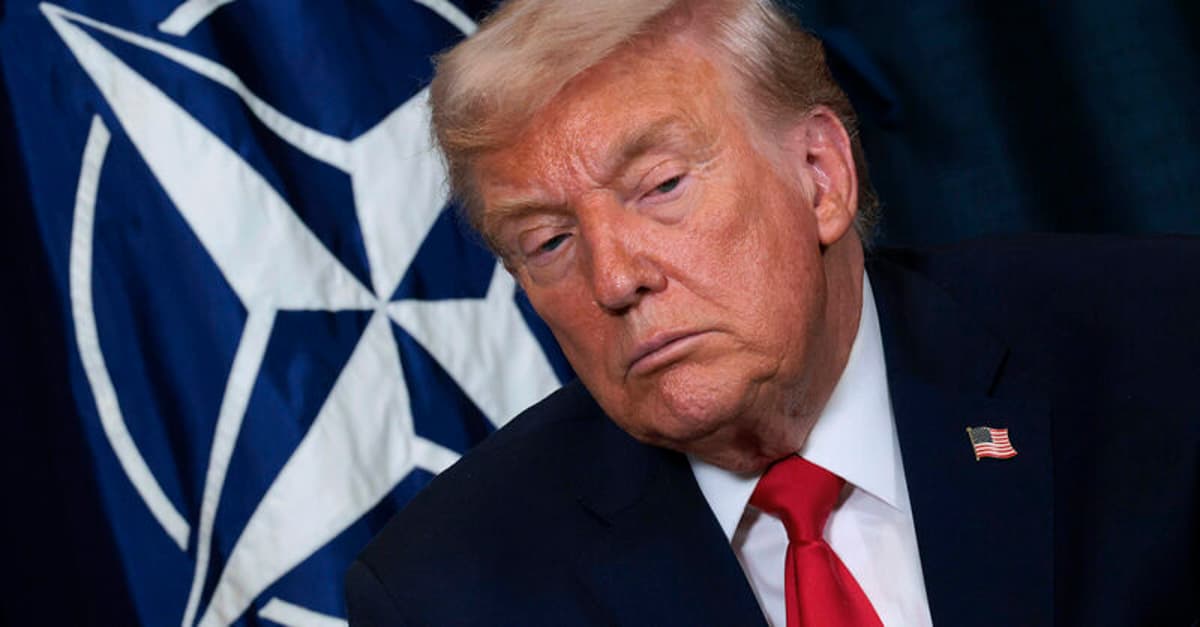
Donald Trump is done with Nato
Comments
Want to join the conversation?
Loading comments...