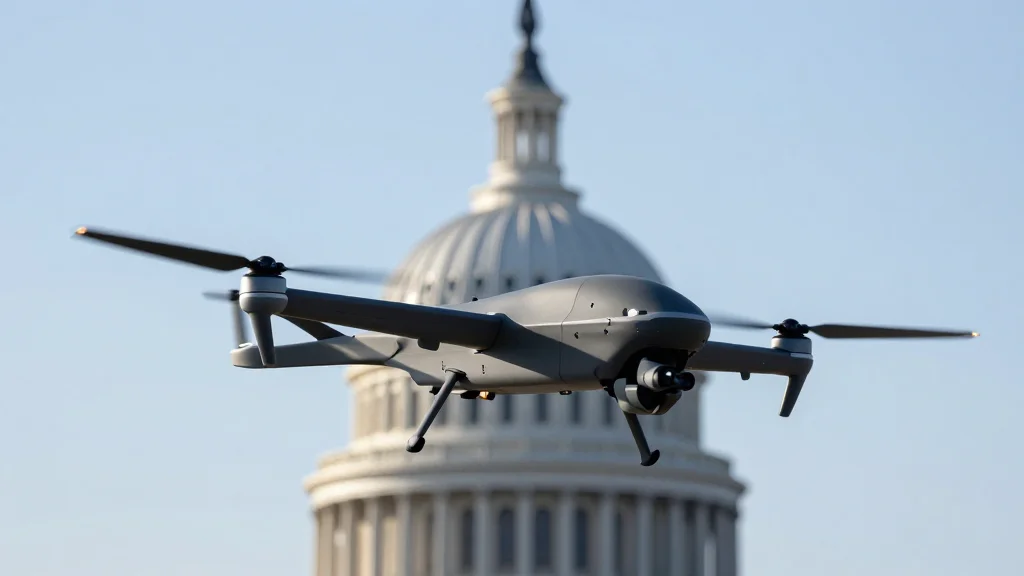
Don’t Wait for a Disaster to Develop Strong US Counter-Drone Capabilities
Why It Matters
Unaddressed drone proliferation jeopardizes aviation safety, critical infrastructure, and public events, demanding coordinated national‑level counter‑UAS capabilities.
Key Takeaways
- •Over 1 million drones operate in the U.S., numbers keep rising
- •27,000 UAS sightings near the southern border in H2 2024, many linked to drug smuggling
- •Safer Skies Act gives state and local law‑enforcement C‑UAS authority
- •FEMA allocated $250 million for World Cup host‑state C‑UAS programs
- •Joint Interagency Task Force 401 coordinates federal, military, and civilian counter‑drone actions
Pulse Analysis
The surge in civilian and illicit drone activity is reshaping U.S. security priorities. While hobbyists and commercial operators contribute to economic growth, the same low‑cost platforms enable surveillance, contraband delivery, and potential attacks on critical infrastructure. Recent data shows more than 27,000 unmanned aircraft detected near the southern border in late 2024, underscoring how smugglers exploit the technology. Simultaneously, unexplained incursions over Langley and Barksdale Air Force Bases highlight the strategic risk of adversaries probing high‑value sites with increasingly autonomous systems.
Legislative and executive actions are finally catching up. The Safer Skies Act, passed in December, broadens Counter‑UAS authority beyond a handful of federal agencies, empowering state, local, tribal and territorial law‑enforcement to deploy detection and mitigation tools. Complementary executive orders signed by President Trump in 2025 mandate tighter integration of UAS into national airspace and protect critical infrastructure. Funding streams, such as FEMA’s $250 million grant for World Cup host states and the Pentagon’s Joint Interagency Task Force 401, provide the resources needed for advanced sensors, laser‑based neutralization, and coordinated response protocols.
Effective implementation, however, hinges on three pillars: comprehensive airspace awareness, inter‑agency coordination, and rapid training. Expanding remote‑ID to cellular networks and mandating geofencing can improve real‑time tracking, while a unified command structure like JIATF‑401 ensures that military, federal, and local responders share intelligence and assets. Scaling the FBI’s National Counter‑Unmanned Training Center and authorizing third‑party trainers will address the looming talent gap. Without decisive leadership and sustained investment, the United States risks lagging behind adversaries who are already fielding autonomous, beyond‑visual‑line‑of‑sight drones capable of evading current defenses.
Don’t wait for a disaster to develop strong US counter-drone capabilities
Comments
Want to join the conversation?
Loading comments...