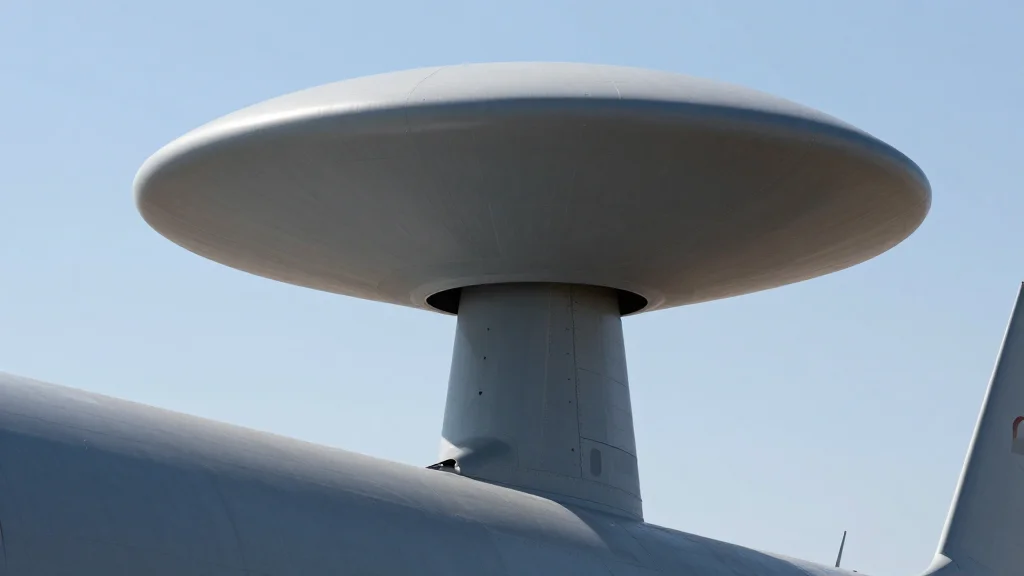
DREXR Upgrade Flight Trials Completed on US Navy E-2D Advanced Hawkeye
Companies Mentioned
Why It Matters
The DREXR upgrade enhances the Navy’s detection and tracking capabilities, ensuring the E‑2D remains a vital force‑multiplier as threats become more sophisticated. It also demonstrates a cost‑effective path for modernizing legacy platforms across the defense sector.
Key Takeaways
- •DREXR merges Exciter and Receiver into one compact unit.
- •Upgrade supports next‑gen radar performance and extends platform life.
- •Flight tests validated wideband transmission and independent element control.
- •Data will aid AI‑driven mission analysis and future capabilities.
Pulse Analysis
The U.S. Navy’s E‑2D Advanced Hawkeye has become the backbone of carrier‑based airborne early warning, integrating the APY‑9 radar, a powerful mission computer and a multi‑domain sensor suite. As adversaries field more sophisticated stealth and hypersonic threats, the platform’s relevance hinges on continual upgrades rather than costly new aircraft programs. Lockheed Martin and Northrop Grumman’s recent DREXR flight trials illustrate a strategic shift toward modular, software‑centric enhancements that keep the Hawkeye competitive while preserving the Navy’s existing investment.
DREXR, short for Digital Receiver Exciter Recorder, consolidates two legacy subsystems—Exciter and Receiver—into a single, lighter module. The upgrade delivers wideband transmission and reception, independent control of each radar element, and a software‑defined waveform capability that can be reprogrammed for emerging mission sets. By embedding a digital recorder, the system captures raw radar data for post‑flight analysis, feeding machine‑learning models that can refine detection algorithms and automate threat classification. This data‑centric approach accelerates the development of AI‑enabled radar functions without hardware redesign.
The successful flight tests translate into tangible operational benefits for carrier strike groups, offering commanders faster situational awareness and more reliable tracking in contested environments. For the defense industry, DREXR showcases a profitable pathway for legacy platform modernization, potentially spurring similar upgrades across other airborne early warning assets. Moreover, the modular nature of the upgrade aligns with the Navy’s broader push for open‑architecture systems, reducing lifecycle costs and enabling rapid integration of future sensors. As the Navy prepares for great power competition, such incremental innovations are critical to maintaining air‑sea dominance.
DREXR upgrade flight trials completed on US Navy E-2D Advanced Hawkeye
Comments
Want to join the conversation?
Loading comments...