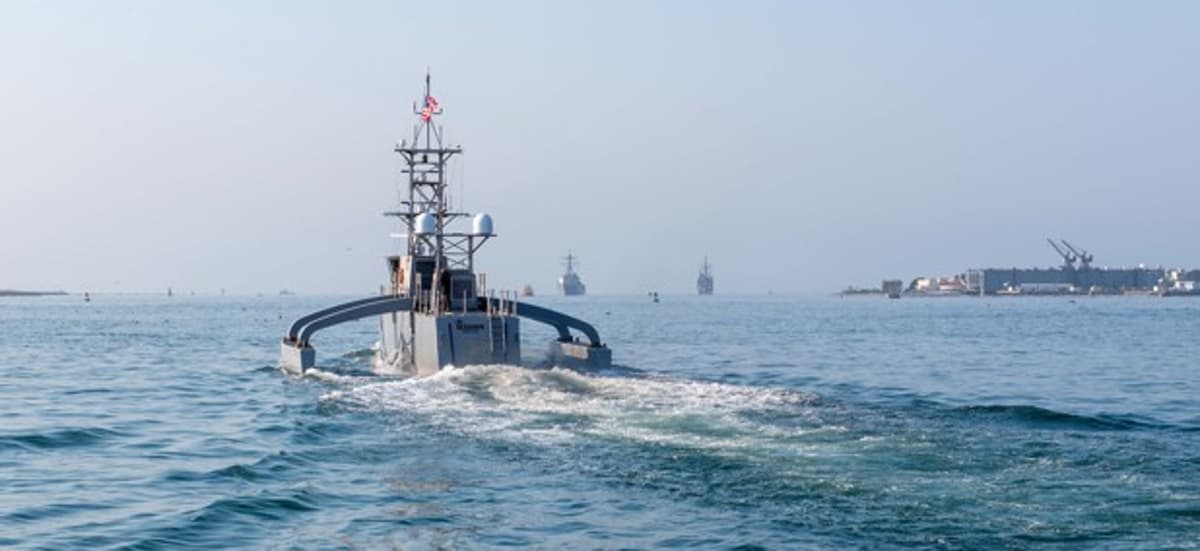
Drone Boats Make Debut in Navy’s 30-Year Shipbuilding Plan
Why It Matters
By prioritizing unmanned systems and nuclear surface combatants, the Navy reshapes its force structure and pressures the U.S. industrial base to adopt new manufacturing capabilities. The shift will drive long‑term budget allocations and influence global naval power dynamics.
Key Takeaways
- •Navy targets 80+ unmanned surface vessels within five years
- •Plan calls for 15 nuclear‑powered battleships costing $43.5 B by 2031
- •47 medium unmanned surface vessels to reach 72 by 2056
- •Distributed modular construction goal: 50% of work at multiple sites
- •FY27 budget allocates $135.8 M for UUVs, $1.1 B through 2031
Pulse Analysis
The Navy’s latest shipbuilding roadmap marks a decisive turn toward a blended fleet of high‑end warships and high‑volume unmanned platforms. While the traditional focus has been on destroyers and carriers, the plan now envisions over 80 robot boats and a rapid buildup of medium unmanned surface vessels (MUSVs). This high‑low strategy aims to multiply combat capability without proportionally inflating personnel costs, positioning the service to counter peer adversaries across the full spectrum of maritime domains.
Perhaps the most headline‑grabbing element is the revival of a nuclear‑powered battleship, dubbed the Trump‑class, with a projected price tag of $43.5 billion for three ships through 2031. Analysts warn that the nuclear propulsion requirement could push per‑unit costs toward $20 billion, far exceeding earlier estimates. The industrial base faces a steep learning curve, as few shipyards currently possess the certification to assemble nuclear surface combatants. This could spur new partnerships or force legacy yards like Newport News to stretch already‑tight production schedules, reshaping the supply chain for future capital ships.
To meet the ambitious timeline, the Navy is championing modular, distributed construction, targeting a jump from 10% to 50% of work performed at multiple sites. Digital design tools and interchangeable hull sections will enable parallel production, reducing bottlenecks and enhancing resilience against regional disruptions. Coupled with a FY27 allocation of $135.8 million for two unmanned underwater vehicles and $1.1 billion for a broader UUV fleet, the plan signals a sustained investment in autonomous technology. Together, these initiatives promise a more adaptable, cost‑effective fleet, but they also raise questions about long‑term sustainment funding and the capacity of U.S. shipyards to deliver on such a complex, high‑tech agenda.
Drone boats make debut in Navy’s 30-year shipbuilding plan
Comments
Want to join the conversation?
Loading comments...