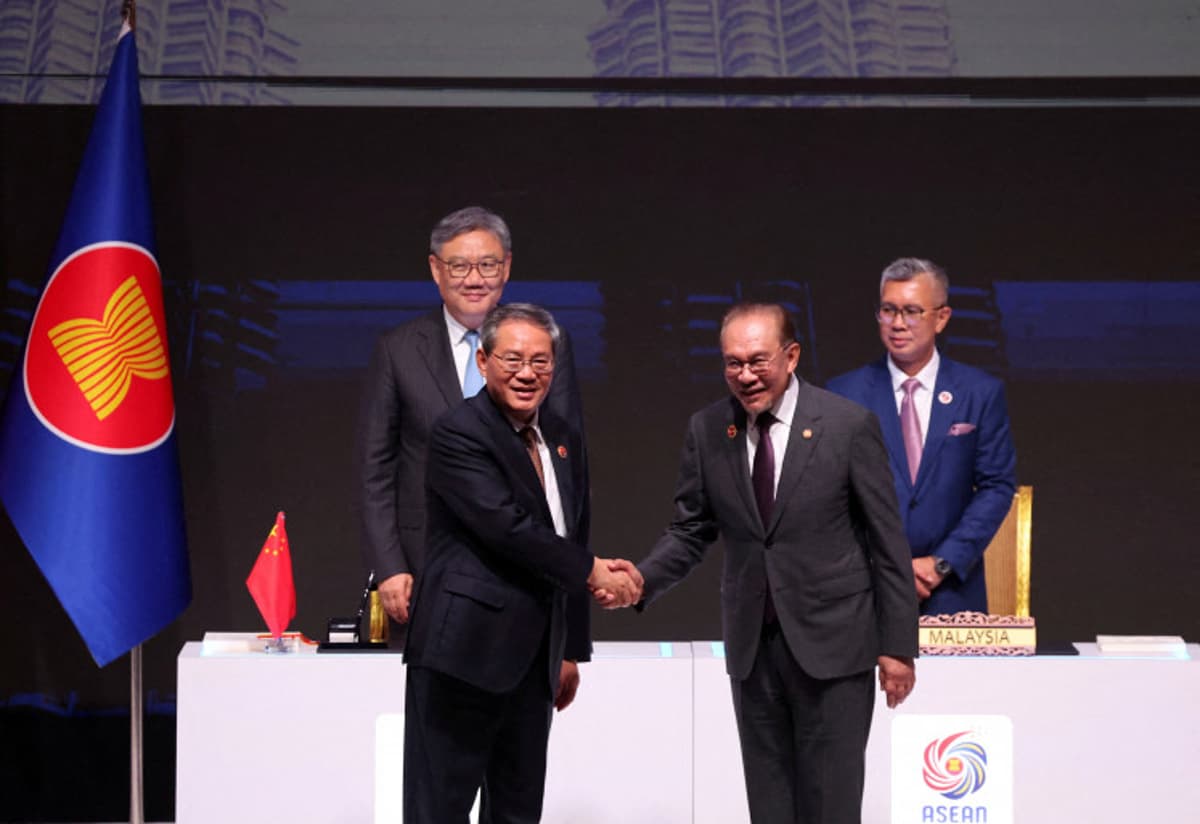
East Asia’s Stability Cannot Be Taken for Granted
Why It Matters
If unchecked, emerging security tensions could disrupt supply chains and dampen investment, undermining East Asia’s economic engine. A cooperative security model offers a pathway to preserve stability and sustain growth.
Key Takeaways
- •East Asia's peace faces unresolved territorial disputes
- •China proposes cooperative security to counter neo‑militarism
- •Exclusive “small‑circle” alliances risk regional confrontation
- •Development‑driven conflict resolution underpins sustainable security
- •Shared‑future mindset challenges Cold War‑style zero‑sum thinking
Pulse Analysis
East Asia has long been a paradox of rapid growth and relative calm, standing apart from the turmoil that has engulfed Europe’s post‑Ukraine landscape and the Middle East’s protracted wars. The region’s economic engines—China, Japan, South Korea, and the ASEAN bloc—have thrived on stable supply chains, low‑cost manufacturing, and expanding consumer markets. Yet the article warns that this equilibrium is fragile, especially as Beijing steps onto the diplomatic stage with Xi Jinping’s four‑point peace proposal for the Middle East and a joint China‑Pakistan initiative. Such moves signal a broader ambition to shape a security architecture that protects regional prosperity.
Underlying the veneer of stability are persistent flashpoints: the South China Sea, the Taiwan Strait, and lingering border tensions between India and China. These disputes are compounded by a resurgence of ‘neo‑militarism,’ where individual states invest heavily in advanced weaponry, raising the risk of miscalculation. Meanwhile, external powers are forging exclusive security ‘small circles,’ from the Quad to AUKUS, which can entrench zero‑sum dynamics and provoke local actors to align with competing blocs. For businesses, such volatility threatens trade routes, foreign investment flows, and the predictability that underpins long‑term strategic planning.
The article advocates a shift toward ‘common, comprehensive, cooperative and sustainable security,’ a framework that blends development assistance with confidence‑building measures. By addressing root causes—economic disparity, resource competition, and political mistrust—regional states can create a win‑win environment that deters aggression. Embracing a shared‑future mindset also means rejecting Cold‑War mentalities and prioritising multilateral institutions like ASEAN and the East Asia Summit. For investors, this approach promises a more resilient market landscape, where stability is reinforced by collaborative governance rather than coercive power plays, sustaining growth well into the 2030s.
East Asia’s stability cannot be taken for granted
Comments
Want to join the conversation?
Loading comments...