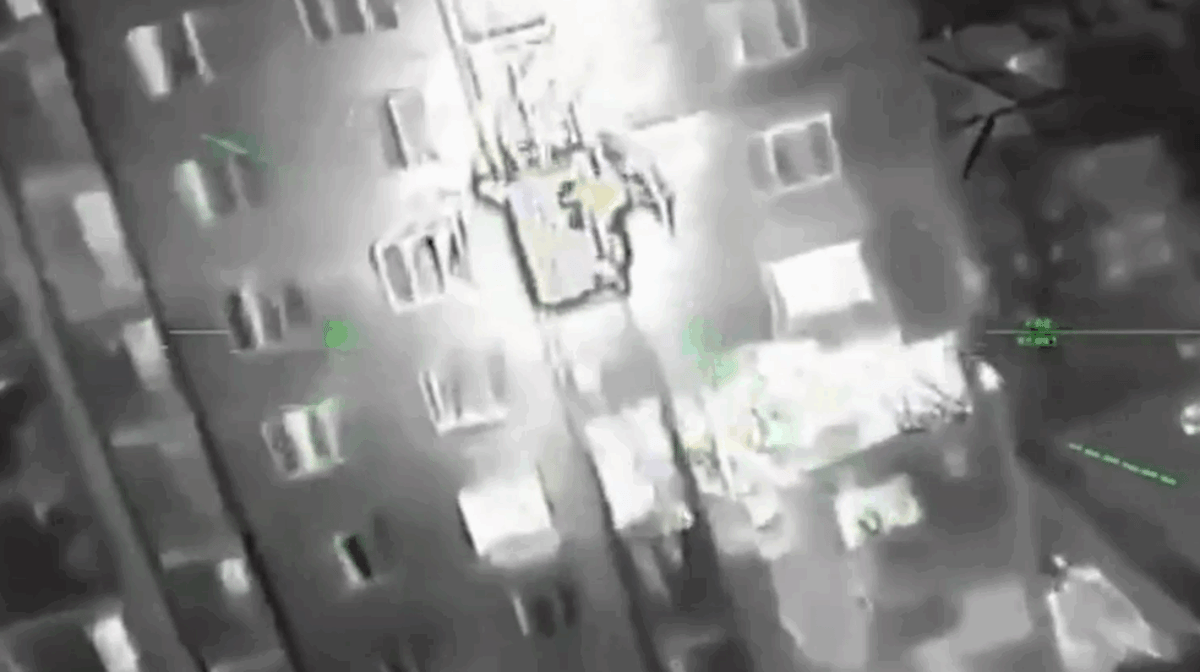
Eight Drones Enter a Flat in Donetsk – How Ukrainians Attacked the FSB (Ukraine Battlefield Update, Day 1,520)
Why It Matters
The attacks reveal Ukraine’s growing ability to deliver high‑precision, high‑payload drone strikes against Russian security assets deep behind the front line, potentially degrading FSB operational capacity. Russian silence underscores the information‑war dimension, hinting at the sensitivity of such losses for Moscow’s narrative.
Key Takeaways
- •Eight FP‑2 drones hit Donetsk flat, killing 12 FSB officers
- •Payloads ranged 60‑100 kg, demonstrating high‑explosive drone capacity
- •Russian media largely silent, suggesting operational embarrassment or censorship
- •Six drones attacked Kadiyivka HQ, uneven warhead quality reduced effectiveness
- •Ukraine’s drone units coordinate Unmanned Systems Forces and 1st Army Corps
Pulse Analysis
Ukraine’s drone warfare has entered a new phase, moving from single‑strike missions to coordinated swarms capable of delivering large explosive payloads. The eight‑drone sortie over Donetsk illustrates how the Unmanned Systems Forces and the 1st Army Corps can mass‑launch FP‑2 platforms, each loaded with up to 100 kg of high‑explosive material. This approach bypasses traditional artillery constraints, allowing strikes on fortified or hidden targets deep within occupied territory while maintaining a low radar signature. The precision demonstrated—two floors heavily damaged and minimal collateral fallout—suggests refined targeting algorithms and real‑time intelligence integration.
Strategically, the elimination of 12 FSB officers strikes at the heart of Russia’s counter‑intelligence network in the Donbas. The FSB’s role in coordinating sabotage, managing agent networks, and suppressing dissent makes its personnel a high‑value target for Ukrainian forces seeking to disrupt Russian command and control. The muted Russian response, with major Telegram channels offering only a brief acknowledgment, indicates a deliberate effort to downplay the incident and prevent morale erosion among troops and collaborators. Such silence may also reflect concerns about exposing vulnerabilities in Russian security infrastructure to both domestic and international audiences.
The broader conflict has turned into a technology‑driven attrition battle, where drone availability, warhead quality, and pilot expertise become decisive factors. Variations in explosive performance, as noted in the Kadiyivka strike, highlight supply‑chain challenges and the need for standardised munitions. As both sides accelerate drone production and refine tactics, the battlefield will likely see more swarm attacks, targeting logistics hubs, command posts, and even civilian structures used for military purposes. Observers should watch for further integration of autonomous guidance systems and the emergence of counter‑drone measures, which will shape the next stage of the war’s kinetic and informational dimensions.
Eight drones enter a flat in Donetsk – how Ukrainians attacked the FSB (Ukraine Battlefield update, Day 1,520)
Comments
Want to join the conversation?
Loading comments...