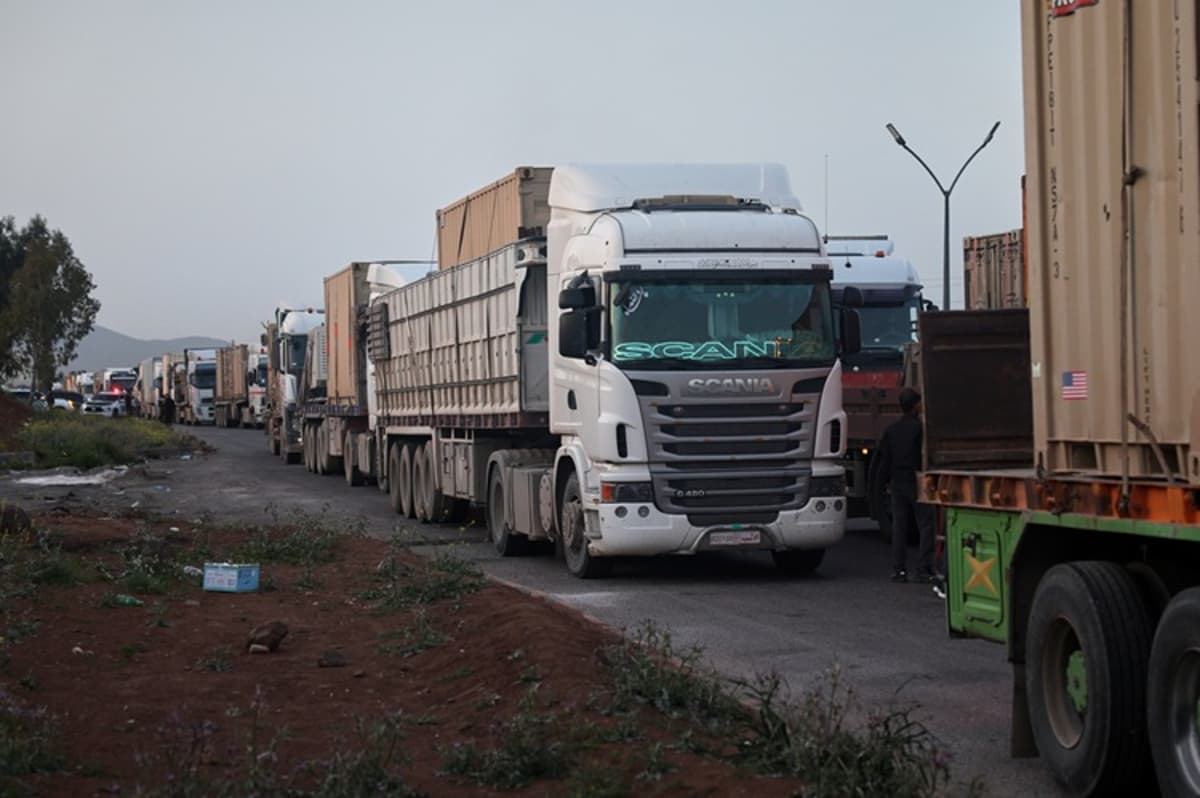
Estimating Wartime Damage to US Military Bases in the Middle East as Part of Operation Epic Fury
Why It Matters
The $5 billion price tag forces the Pentagon to reconsider force posture and allocate supplemental funding, while Gulf allies must reassess the strategic value of U.S. installations amid heightened security concerns.
Key Takeaways
- •Estimated $5 billion damage to 11 US bases in seven countries
- •Repairs cover SATCOM terminals, radomes, warehouses, runways, and hangars
- •Rebuilding costs include 30% contingency for logistics and material shortages
- •Base relocations may shrink US forward presence across the Gulf region
- •Past overseas construction spending (2007‑2011) averaged $1‑4.3 billion annually
Pulse Analysis
The opening weeks of Operation Epic Fury saw Iranian forces strike eleven U.S. installations across Bahrain, Iraq, Jordan, Kuwait, Qatar, Saudi Arabia, and the United Arab Emirates. An independent analysis tallies roughly 70 structures—ranging from SATCOM terminals and radomes to warehouses and runway sections—at an estimated $5 billion in damage. The figure incorporates direct reconstruction costs, engineering overhead, debris removal, unexploded‑ordnance handling, and a 30 percent contingency for the current logistics bottlenecks caused by the Strait of Hormuz blockage and regional fuel price spikes. This methodology mirrors the Pentagon’s own post‑conflict cost‑estimation practices.
The financial hit forces a reassessment of America’s forward‑deployed posture in the Gulf. Shrinking or relocating assets could reduce the U.S. footprint, prompting allies such as Saudi Arabia, Qatar and the UAE to question whether the remaining bases still deliver a net security benefit. Loss of critical communications nodes like the Fifth Fleet’s SATCOM hub may also degrade command‑and‑control capabilities, compelling the Department of Defense to prioritize hardened, modular facilities over sprawling, permanent structures. Such a shift would reshape force‑planning cycles and could accelerate regional partners’ pursuit of indigenous defense infrastructure.
Historically, overseas construction budgets during the height of the War on Terror hovered between $1 billion and $4.3 billion per year, far below today’s projected $5 billion single‑event bill. The disparity underscores how supply‑chain fragility, rising material costs, and constrained maritime routes amplify reconstruction expenses. Policymakers are likely to seek a supplemental appropriations bill to cover the immediate rebuilding and longer‑term modernization of damaged sites. Beyond the raw numbers, the episode highlights a broader trend: U.S. defense spending must now account for rapid, high‑intensity damage to overseas infrastructure, a factor that could reshape future budgeting and acquisition strategies.
Estimating Wartime Damage to US Military Bases in the Middle East as Part of Operation Epic Fury
Comments
Want to join the conversation?
Loading comments...