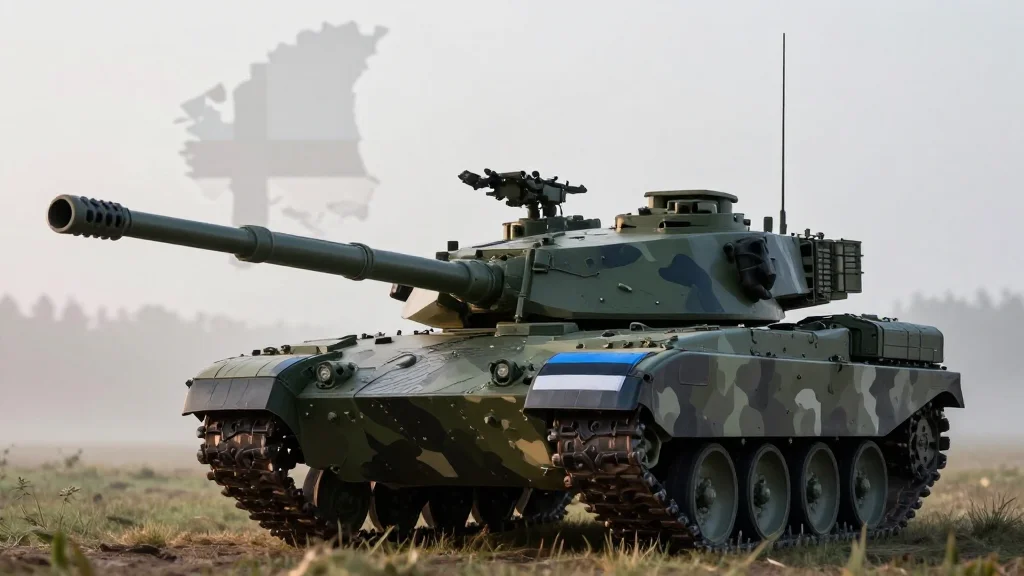
Estonia Boosts Defence Budget to 5.4% of GDP Amid NATO Eastern Flank Concerns

Why It Matters
Estonia’s decision to lift defence spending to 5.4% of GDP reflects a broader recalibration of NATO’s posture in Europe. By allocating more resources to its own armed forces, the Baltic state reduces the alliance’s vulnerability to a potential Russian thrust across the Narva River, a flashpoint that has long been cited in Moscow’s strategic playbook. The move also signals to allies that the burden‑sharing debate is moving from rhetoric to concrete fiscal commitments. Beyond Europe, the Kenyan mock burial underscores how the Ukraine war has become a recruiting ground for foreign fighters, creating security spillovers that reach into Africa and other regions. If unchecked, such recruitment pipelines could destabilize fragile states and complicate international efforts to contain the conflict. Both stories illustrate how defence decisions—whether budgetary or recruitment‑related—have cascading effects across the global security landscape.
Key Takeaways
- •Estonia will raise defence spending to 5.4% of GDP by end‑2026, the highest level among NATO members.
- •Prime Minister Kristen Michal warned that commitments in Ukraine and Hormuz must not weaken the eastern NATO flank.
- •Britain maintains a 1,000‑troop, Challenger‑2 tank presence in Estonia as part of its Baltic defence commitment.
- •Kenyan family of Oscar Khagola Mutoka called on their government to regulate recruitment of citizens into foreign militaries.
- •The budget increase could trigger new procurement contracts for air‑defence, cyber‑security and small‑arms suppliers.
Pulse Analysis
The Estonian budget surge is more than a symbolic gesture; it is a strategic hedge against a multi‑theater security environment where NATO resources are stretched thin. Historically, Baltic states have relied on U.S. forward deployments to deter Russian aggression. By committing 5.4% of GDP, Estonia is signaling a willingness to shoulder a larger share of the deterrence burden, potentially reshaping NATO’s internal cost‑allocation formulas. This could accelerate discussions on a permanent, region‑wide rapid reaction force that blends national troops with allied contributions, reducing the alliance’s dependence on ad‑hoc deployments.
From a market perspective, the budget hike will likely benefit niche European defence firms that specialize in network‑centric warfare and anti‑missile systems—areas where Estonia has previously invested. The British Challenger‑2 presence also serves as a proof point for heavy‑armor export prospects, especially as European armies modernize their ground‑combat capabilities. However, the fiscal reallocation from social services to defence may spark domestic political pushback, a factor that could temper the speed of procurement.
The Kenyan case adds a human dimension to the geopolitical calculus. As the war in Ukraine drags on, the allure of foreign military service for economically disadvantaged youths grows, creating a shadow market for mercenaries that can destabilize both sending and receiving states. If Kenya tightens recruitment controls, it could set a precedent for other African nations facing similar outflows, thereby limiting the pool of foreign fighters that Russia and other actors can draw upon. In sum, Estonia’s budget move and the Kenyan recruitment issue together illustrate how defence policy decisions reverberate far beyond the immediate theatres of conflict, shaping both strategic postures and the human cost of war.
Estonia Boosts Defence Budget to 5.4% of GDP Amid NATO Eastern Flank Concerns
Comments
Want to join the conversation?
Loading comments...