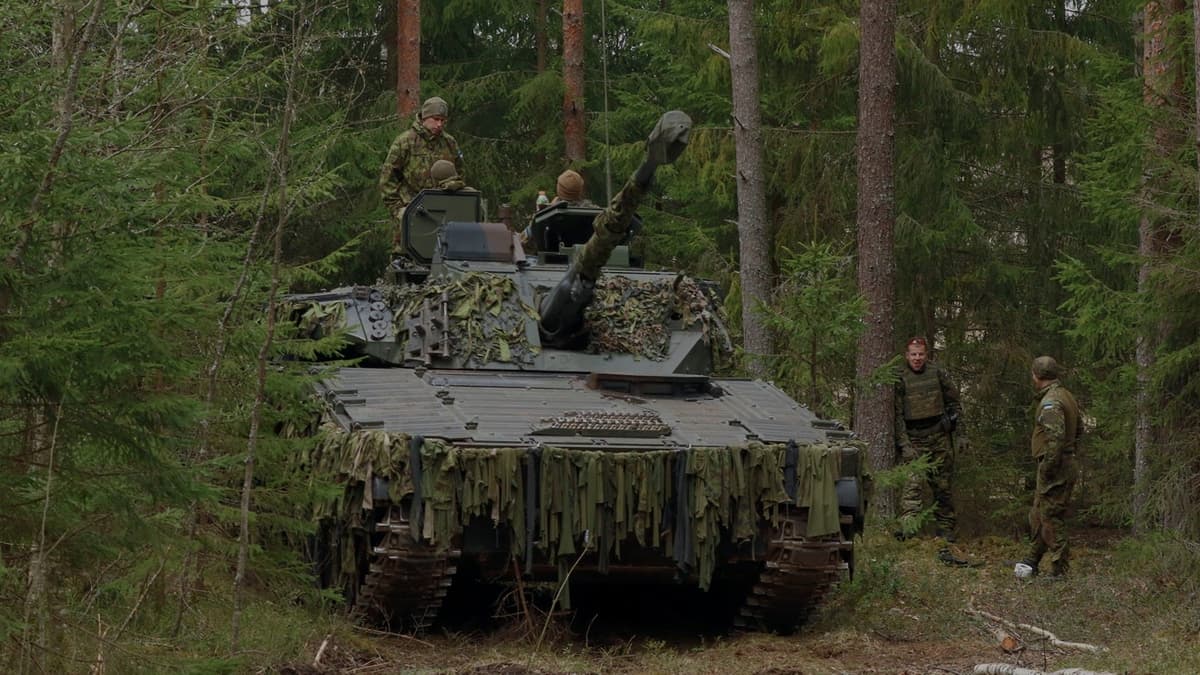
Estonia’s CV90 IFV Pivot Reflective of Changing Battlefield Threats
Companies Mentioned
Why It Matters
The reallocation underscores Estonia’s shift toward asymmetric air‑defense capabilities, aligning with NATO’s emphasis on counter‑drone solutions in a contested European sky.
Key Takeaways
- •Estonia upgrades 44 CV9035NL IFVs for $118 million.
- •Over $400 million redirected to counter‑UAS and FPV drones.
- •APC fleet now includes 133 Otokar and 96 Nurol vehicles.
- •2025 defense budget exceeds $1.6 billion, double 2022 level.
- •Shift reflects NATO focus on drone threats in Europe.
Pulse Analysis
Estonia’s decision to modernise its CV90 fleet rather than procure a new generation reflects a pragmatic response to fiscal constraints and evolving threat dynamics. The CV9035NL, already integrated into the Estonian Land Forces, offers a solid platform for incremental upgrades such as improved situational awareness, active protection systems, and hybrid power modules. By allocating $117.8 million to these enhancements, the country preserves combat capability while freeing up capital for emerging priorities, a strategy that mirrors broader European trends of extending the service life of legacy platforms.
The pivot toward counter‑UAS and first‑person‑view (FPV) strike drones is driven by lessons learned on the Ukrainian battlefield, where small, inexpensive drones have reshaped reconnaissance and precision‑strike doctrines. Estonia’s anticipated $400 million investment will likely fund a mix of detection radars, electronic‑attack pods, and autonomous loitering munitions capable of neutralising hostile UAVs before they can threaten ground forces. This shift not only addresses the immediate proliferation of hostile drones but also positions Estonia as a regional hub for drone‑defense expertise, enhancing interoperability with NATO allies who are rapidly fielding similar capabilities.
The budgetary surge to over $1.6 billion in 2025, more than double the 2022 allocation, signals Estonia’s commitment to meeting NATO’s 2 percent GDP defence target and to bolstering its deterrence posture amid heightened Russian activity in the Baltic region. Coupled with the recent delivery of 229 armored personnel carriers, the re‑allocation demonstrates a balanced approach: maintaining robust ground mobility while prioritising air‑space security. As NATO continues to emphasize integrated air‑defence and counter‑drone networks, Estonia’s procurement choices may serve as a blueprint for other small‑state allies seeking cost‑effective modernization pathways.
Estonia’s CV90 IFV pivot reflective of changing battlefield threats
Comments
Want to join the conversation?
Loading comments...