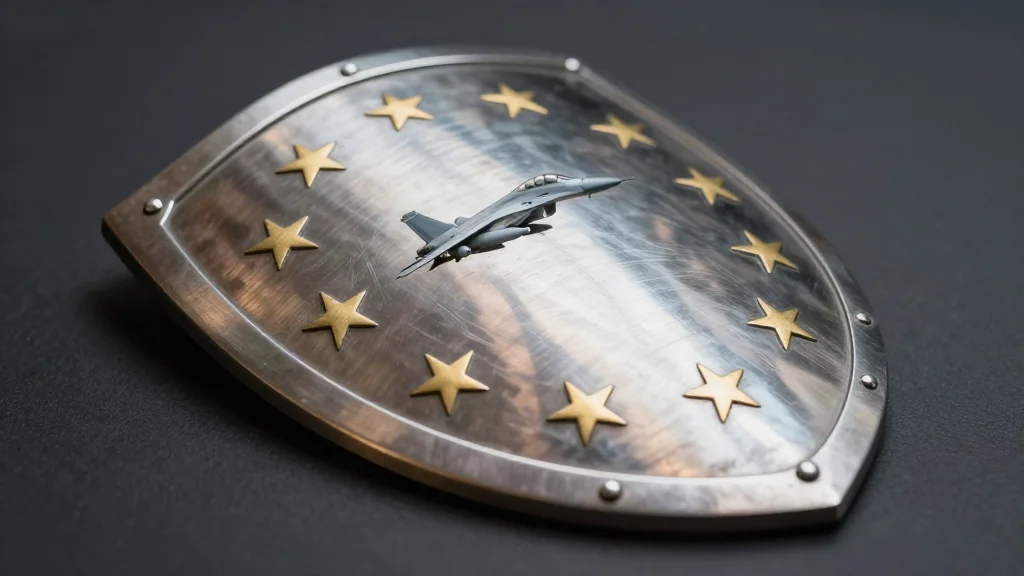
EU Commissioner Calls for Activation of Mutual Defense Clause as US Stockpiles Deplete

Why It Matters
Activating Article 42.7 would give the EU a legally binding framework to coordinate military responses when NATO is unable or unwilling to act, reducing strategic ambiguity and enhancing deterrence against Russian or Iranian aggression. It also forces European capitals to confront the reality that their defence industrial base is not yet capable of meeting the scale of demand generated by the Ukraine war and emerging regional threats. If the EU fails to operationalise the clause, member states risk a fragmented security posture, with each nation scrambling for limited U.S. supplies while their own production lines lag behind. Conversely, a functional mutual‑defence mechanism could accelerate joint procurement, spur investment in critical technologies such as AI‑enabled weapons and secure communications, and ultimately shift the balance of power toward a more autonomous European security architecture.
Key Takeaways
- •Andrius Kubilius urges EU to trigger Article 42.7, the bloc’s mutual‑defence clause.
- •U.S. defence industry is redirecting production to replenish its own depleted stockpiles.
- •Europe currently sources ~40 % of its weapons from the United States, a share now at risk.
- •Kubilius announces GovSatCom satellite communications deployment in Greece as part of EU security upgrades.
- •A high‑level working group will draft activation protocols, aiming for a functional mechanism by end‑2026.
Pulse Analysis
The call to operationalise Article 42.7 marks a watershed moment for European security policy. Historically, the EU has relied on NATO’s collective defence umbrella, but the current geopolitical climate – a protracted war in Ukraine, heightened Iranian tensions, and a U.S. pivot toward domestic stockpile replenishment – exposes the limits of that reliance. By moving the mutual‑defence clause from a symbolic provision to an actionable instrument, the EU can create a credible deterrent that compels adversaries to calculate the cost of aggression against a unified European force.
From an industrial perspective, the urgency expressed by Kubilius shines a light on the chronic under‑investment in European defence manufacturing. The mismatch between soaring defence budgets and the capacity of firms to scale production has been a recurring theme, especially in high‑tech domains like missile guidance and AI. The proposed European defence fund could act as a catalyst, pooling resources to fund joint R&D and streamline procurement, thereby reducing duplication and achieving economies of scale. However, success will hinge on political consensus; member states must reconcile national sovereignty concerns with the benefits of deeper integration.
Strategically, the activation of Article 42.7 could also reshape transatlantic dynamics. A more self‑sufficient EU may negotiate a different partnership model with Washington, moving from a buyer‑seller relationship to a more balanced alliance. This shift could pressure the United States to reconsider its own defence export policies, potentially opening space for European firms to fill gaps in the global arms market. In the short term, the EU’s ability to field a coordinated response to crises – whether in the Black Sea, the Mediterranean, or the Baltics – will be the litmus test for the clause’s effectiveness and for Europe’s broader ambition to become a strategic autonomous actor.
Overall, the push to trigger Article 42.7 is both a symptom and a catalyst of a larger transformation in European defence. It forces a reckoning with supply‑chain vulnerabilities, industrial capacity constraints, and the political will required to forge a truly collective security architecture. The next six months will reveal whether the EU can turn rhetoric into a robust, operational defence framework.
EU Commissioner Calls for Activation of Mutual Defense Clause as US Stockpiles Deplete
Comments
Want to join the conversation?
Loading comments...